
Mosquitoes Are Being Tested in Massachusetts. Here’s Why It Matters.
Published on: July 27, 2026
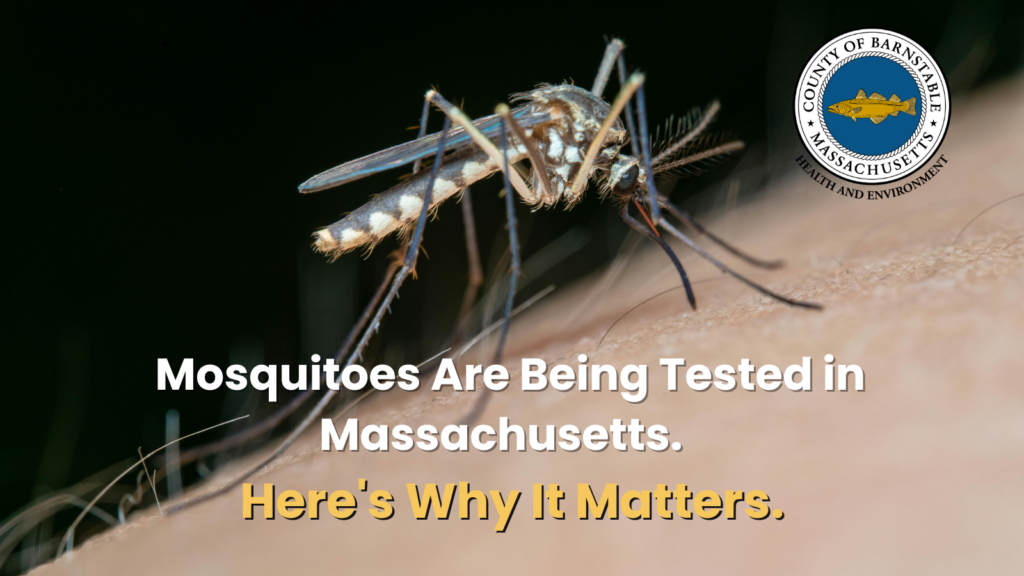
Summer in Massachusetts means spending more time outdoors, at the beach, in the backyard, at the ballfield, or enjoying a walk in the evening. It also means mosquito season. While most mosquito bites are simply an itchy nuisance, some mosquitoes can carry viruses that make people sick. That’s why mosquito surveillance is an important part of protecting public health in Massachusetts.
Throughout the mosquito season, spanning from April to November, mosquito samples are collected and tested for diseases such as West Nile virus (WNV) and Eastern Equine Encephalitis (EEE). This testing helps public health officials understand where these viruses are circulating and when additional precautions may be needed.
Mosquitoes Have Tested Positive This Year:
This mosquito season, The Massachusetts Department of Public Health (MDPH) has already identified mosquito samples that tested positive for West Nile virus. Finding positive mosquitoes does not mean people will become sick, but it does tell us that these viruses are present in the environment and that everyone should take simple steps to prevent mosquito bites.
What is West Nile Virus:
West Nile virus is a mosquito-borne disease found in Massachusetts. Most people who become infected never develop symptoms. About 1 in 5 people may experience a mild illness that can include:
In rare cases, the virus can affect the brain or nervous system, leading to serious illness such as encephalitis or meningitis. Adults over age 50 and people with weakened immune systems have a higher chance of developing severe illness.
What Is Eastern Equine Encephalitis (EEE)?
EEE is much rarer than West Nile virus, but it can be much more serious. Many people infected with EEE never become sick. However, when severe illness occurs, symptoms may include:
EEE can cause swelling of the brain (encephalitis). Some people recover fully, but others may have long-term neurological problems. Unfortunately, EEE can also be fatal. Although the disease is rare, accounting for an average of 11 human cases in the US annually, it is important to take precautions to avoid mosquito bites.
What Is The Current Risk?
According to the Massachusetts Department of Public Health (MDPH), the current arbovirus risk remains low for communities across Barnstable County, even though West Nile Virus positive mosquito samples have been detected. Public health officials use mosquito testing, human cases, weather conditions, and other data to monitor changing risk levels throughout the season.
A low risk level does not mean there is no risk. The best way to protect yourself is to make mosquito bite prevention part of your daily routine during mosquito season.
How to Protect Yourself:
Fortunately, a few simple steps can greatly reduce your chance of being bitten by mosquitoes.
- Use an EPA-registered insect repellent. Choose a repellent that contains DEET, picaridin, IR3535, oil of lemon eucalyptus (for children over 3 years old), or another EPA-approved active ingredient. Always follow the product label directions.
- Cover exposed skin. When mosquitoes are active, wear long sleeves, long pants, socks, and shoes whenever practical.
- Avoid peak mosquito activity. Many mosquitoes that spread West Nile virus and EEE are most active from dusk through dawn. If possible, limit outdoor activities during these hours or use extra protection.
-
Eliminate standing water. Mosquitoes can lay eggs in very small amounts of water. Once a week:
- Empty buckets, flowerpot saucers, toys, and tarps.
- Clean birdbaths and pet water bowls.
- Clear clogged gutters.
- Cover or drain rain barrels and other water containers.
- Keep mosquitoes outside.
- Repair window and door screens, and keep doors closed when possible to prevent mosquitoes from entering your home.
Stay Informed
Mosquito surveillance is one of the most important tools Massachusetts uses to monitor mosquito-borne diseases. As the season continues, public health officials will continue testing mosquito samples and updating community risk levels as needed. Staying informed and taking those few simple precautions can help you and your family enjoy the rest of the summer safely.
Working Together to Protect Cape Cod:
The Cape Cod Mosquito Control Project (CCMCP) plays an important role in protecting residents and visitors across Barnstable County. Their team conducts mosquito surveillance, collects mosquito samples for testing, monitors mosquito populations, and works to reduce mosquitoes using an Integrated Mosquito Management approach. This information helps state and local public health officials understand where mosquito-borne viruses are circulating and whether additional prevention measures are needed.
Report:
If you are experiencing unusually high mosquito activity around your property, the Cape Cod Mosquito Control Project can investigate and provide guidance. To contact the Cape Cod Mosquito Control Project call 508-775-1510 or visit Cape Cod Mosquito Control Project.
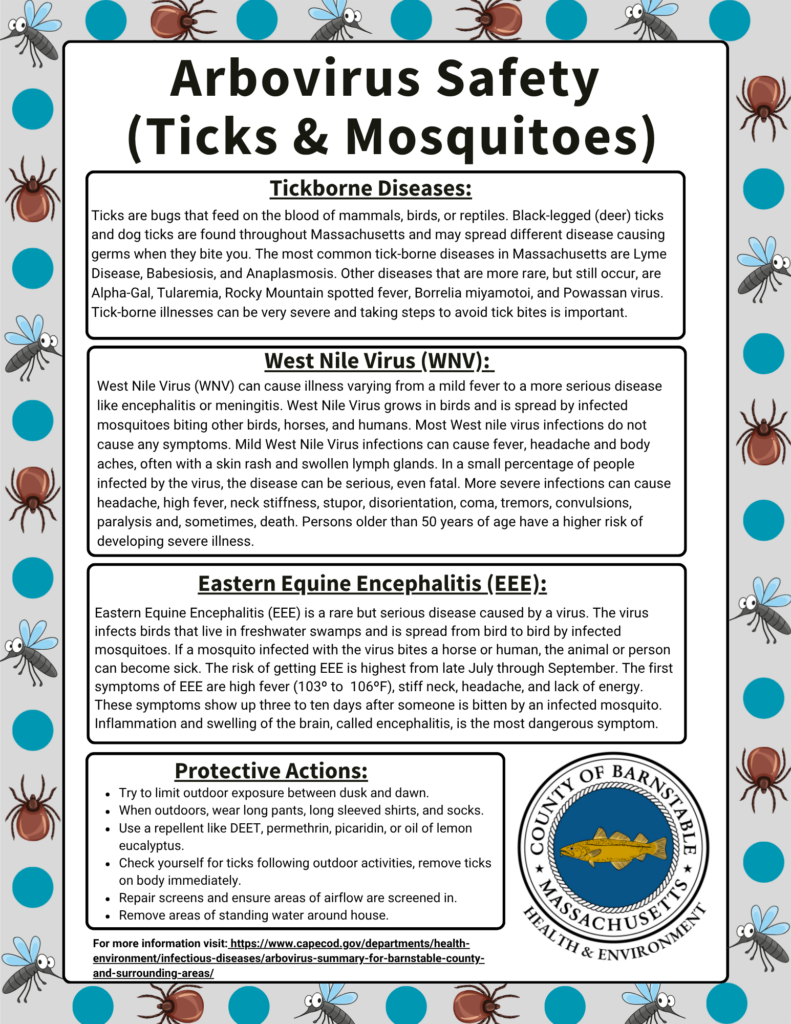
Arbovirus Safety Factsheet
Resources:
For additional information please visit the following websites:
Legal Disclaimer:
EIN Presswire provides this news content "as is" without warranty of any kind. We do not accept any responsibility or liability for the accuracy, content, images, videos, licenses, completeness, legality, or reliability of the information contained in this article. If you have any complaints or copyright issues related to this article, kindly contact the author above.
