
Summer Tree Care
Summer in Georgia is hot! We, our pets, and our AC bills are all feeling the heat. But don’t forget that our trees are also dealing with heat stress. They do a ton of work to cool our homes and communities, but also need some extra care in the intense summer heat.
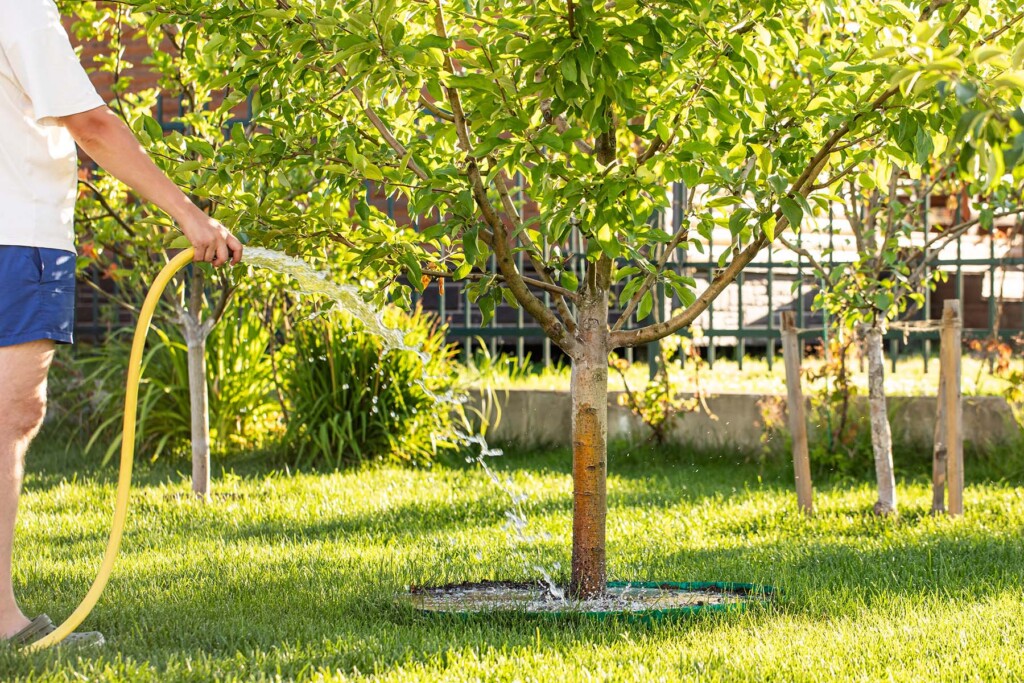
The most important thing to remember for summer tree care is water! Trees are 80% water and their water needs increase with heat. A tree can need eight times more water at 94◦ than during cool weather. If it’s not raining, it is important to water the trees around your home, especially the younger trees. (https://gatrees.org/wp-content/uploads/2020/02/How-to-Water-Your-Trees.pdf).
Recent cooling summer storms drop a large amount of rain in a short time, after a hot dry start to the season. That kind of rain leads to soil erosion because it doesn’t have time to soak into the ground as well as it would if it had been a longer lighter rain. On top of soil erosion, heavy rain does not seep into the soil or root system as well, so while we got a lot of rain, it does not all add up to inches of rain for your trees. Check around the trunk and root areas of your trees and make sure roots are still covered with soil. A soil berm can help retain soil on a slope. To retain that soil moisture, summer is also a good time to replenish mulch material around your trees. (https://gatrees.org/wp-content/uploads/2021/03/Proper-Tree-Mulching.pdf).
If English ivy, kudzu, and grape vines grew like crazy in your yard this spring, use the summer as a time to get the vines out of trees. Cut vines as low into the ground as you can, then cut them off the trunk as high as you can reach. This creates a gap so that when the vine sprouts again, the new shoots can’t just climb up the old ones. Don’t pull the vines off the trunk for a year, as doing so can pull off the tree’s bark.
Before storms happen, look at the branches of your trees and consider pruning for better storm and wind resistance. Remove dead and interior branches to allow increased airflow. Note any sunken, flattened, or misshapen areas on the bark that could indicate a canker caused by fungi or bacteria, requiring continued monitoring. Only light pruning should be done in summer, with major structural pruning better done in winter, when trees are dormant and branch arrangement is more visible. 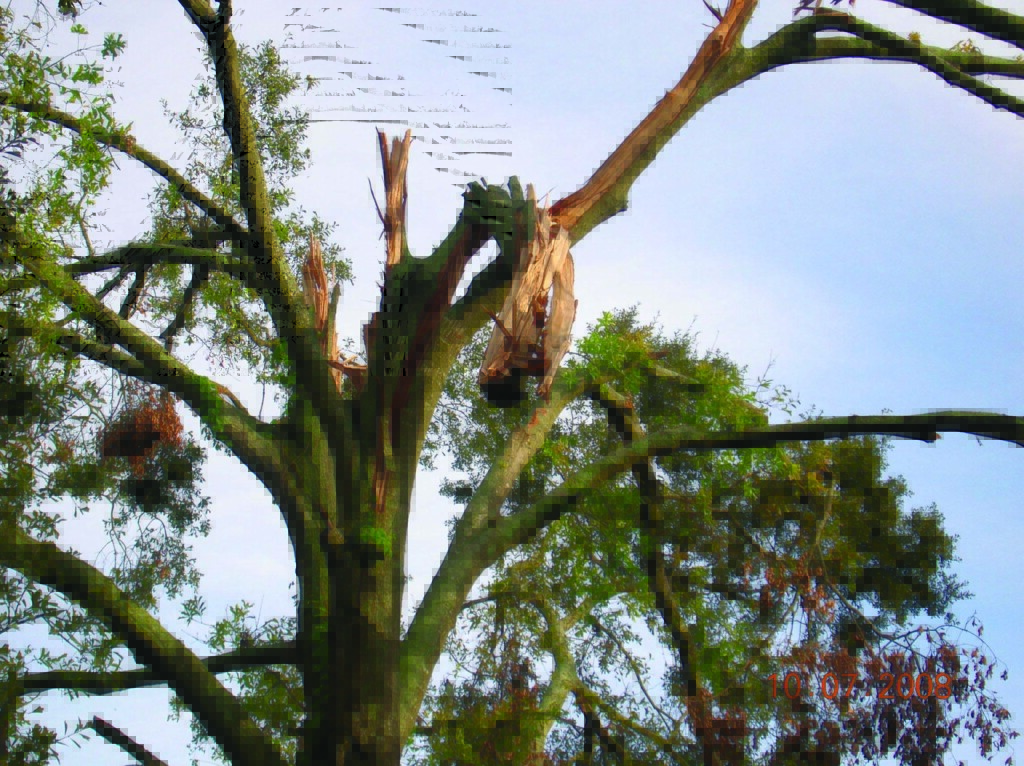

After a storm, check your trees for signs of lightning strikes and broken branches. Research shows that if one tree is hit by lightning, four others near it were also affected. Signs of a lightning strike include a vertical wound on the trunk, a dead leader at the top, branches on the ground, and in the worst case, heaving of the ground over the root ball, which indicates the tree is leaning. Lighting damage can often take some time to show and require long-term monitoring, but pruning broken branches after storms is an immediate and helpful activity. (https://gatrees.org/wp-content/uploads/2020/02/Lightning-Struck-Trees.pdf.
Another part of summer tree care is planning for fall. Identifying good planting locations for more trees and checking soil health around your existing trees to prepare for fall fertilization are great summer activities! Soil tests can be done at home or through the UGA Extension Office in your county. You may find that your soil has plenty of nutrients and doesn’t need any added fertilizer. If not, you have time to make a game plan to ensure your trees have all the tools they need to thrive.
For all things tree care any time of year, please visit https://gatrees.org/urban-community-forestry/ask-the-arborist/ or contact an International Society of Arboriculture Certified Arborist. To view GFC’s online seedling store, go to gaseedlings.org.
Blog by: Leah Clark, GFC Urban & Community Forestry Specialist
Legal Disclaimer:
EIN Presswire provides this news content "as is" without warranty of any kind. We do not accept any responsibility or liability for the accuracy, content, images, videos, licenses, completeness, legality, or reliability of the information contained in this article. If you have any complaints or copyright issues related to this article, kindly contact the author above.
