
Gov. Pillen Presents Annual State Threat Assessment
NEBRASKA, January 6 - CONTACT:
Laura Strimple, (402) 580-9495
Gov. Pillen Presents Annual State Threat Assessment
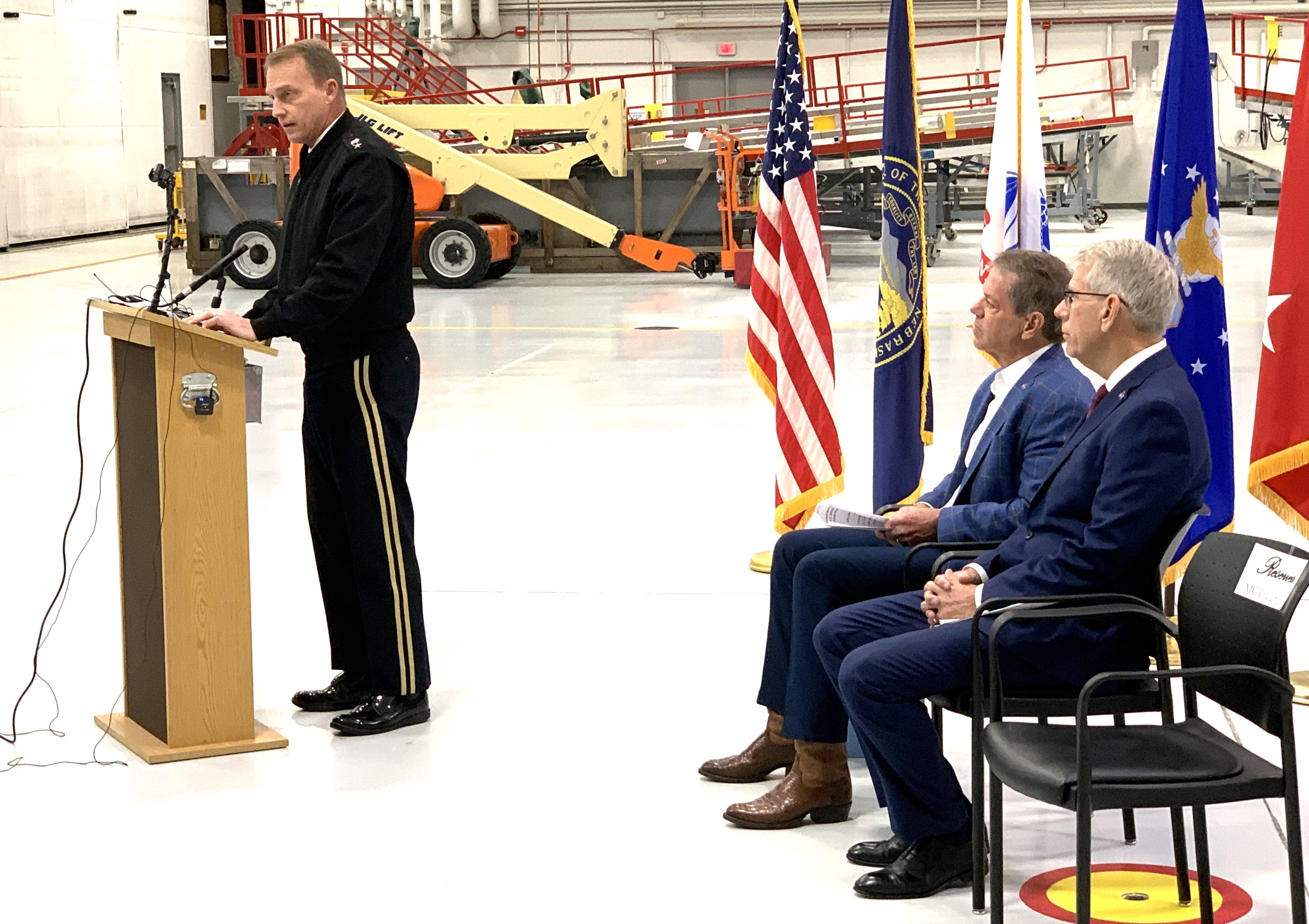
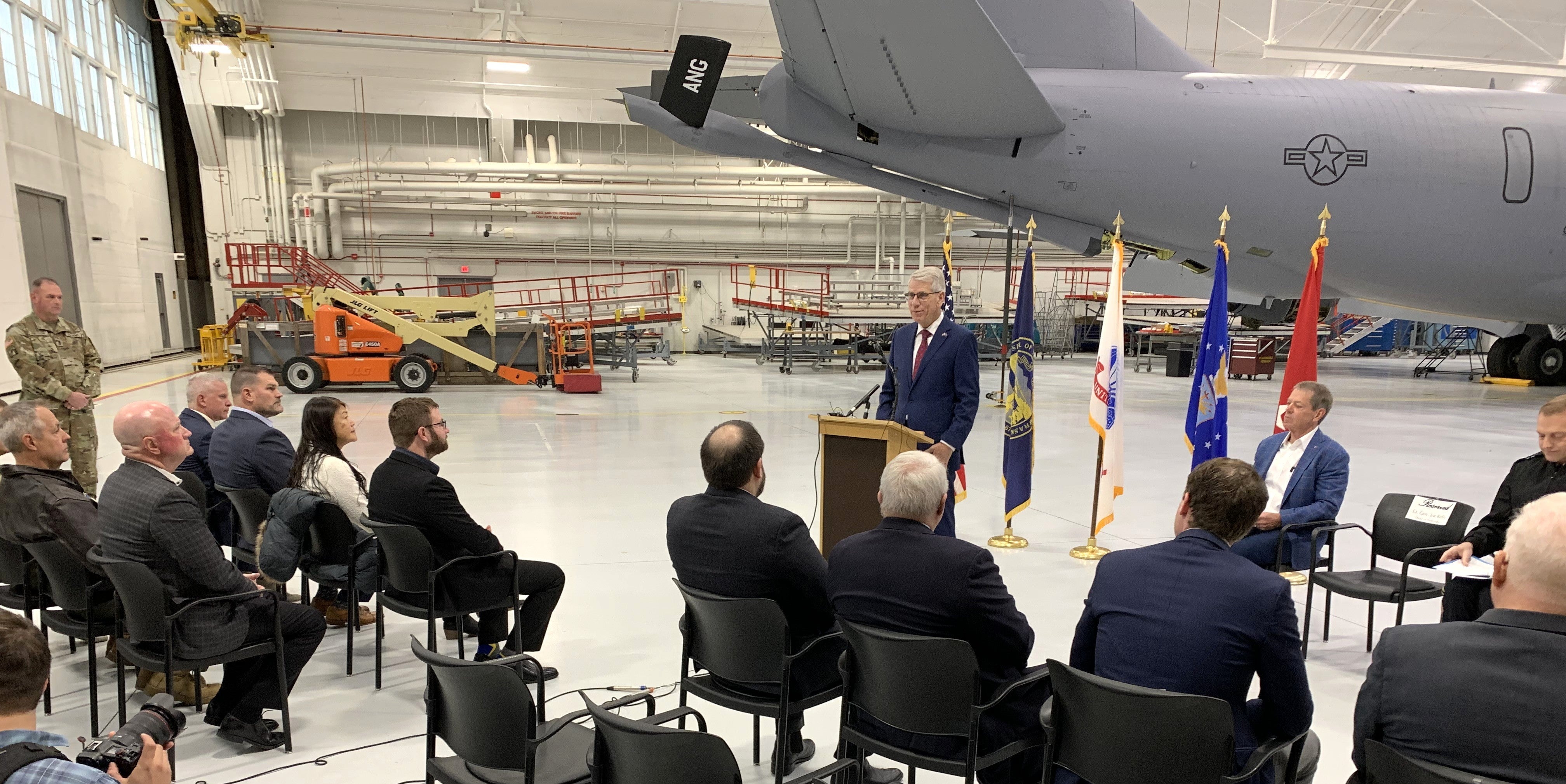
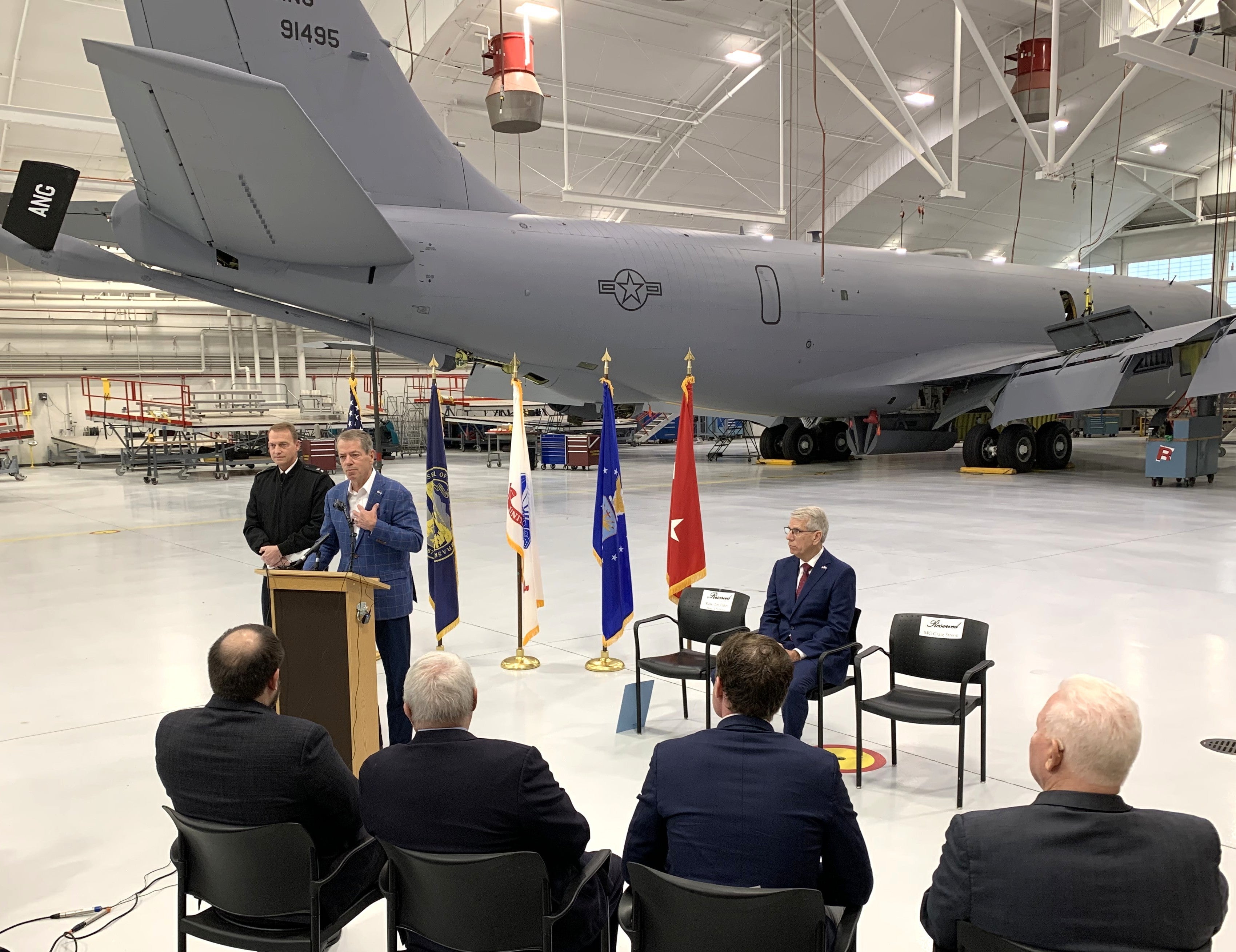
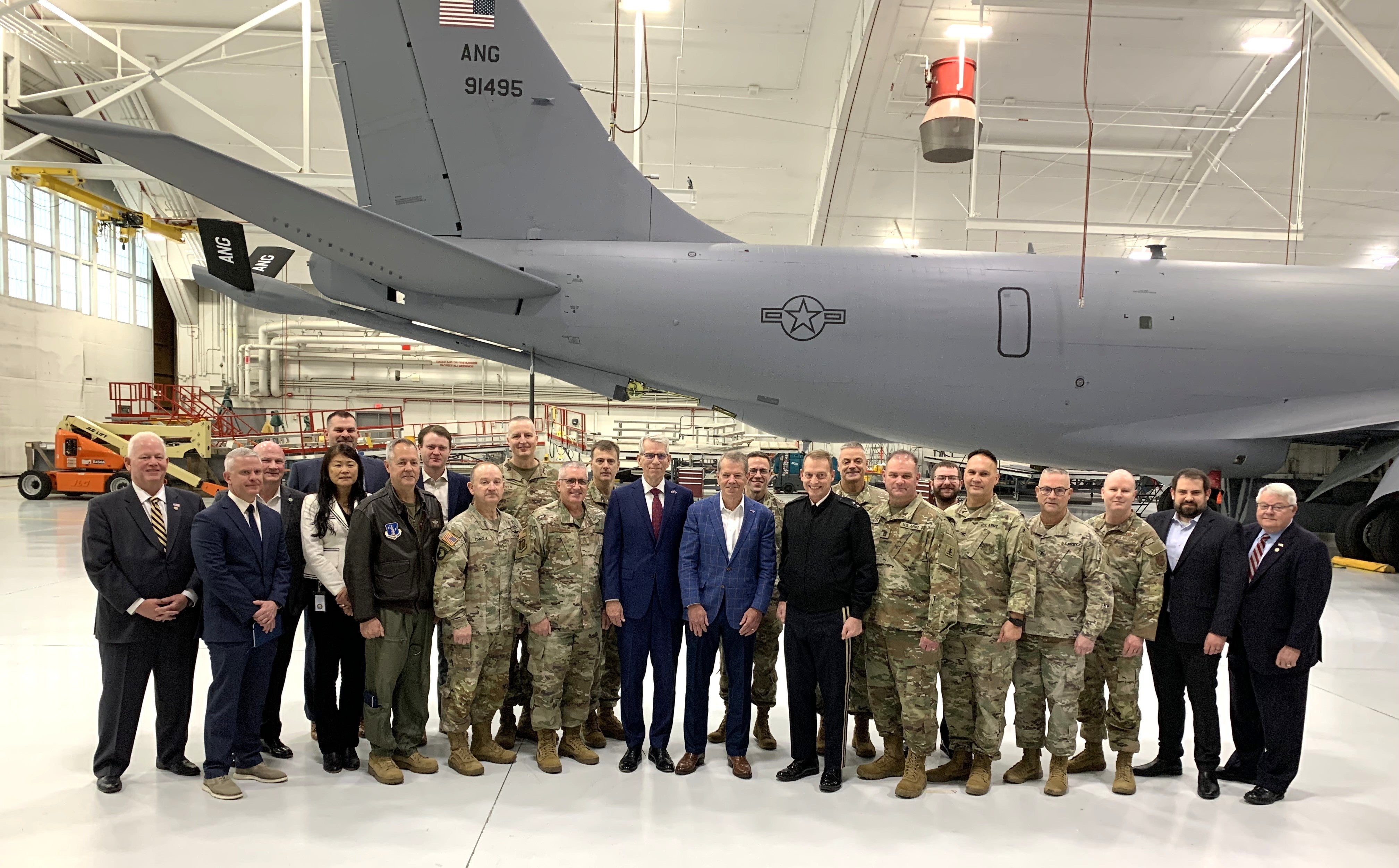
LINCOLN, NE – Against the backdrop of a KC-135 Stratotanker and an audience that included members of the Nebraska National Guard and the Committee on Pacific Conflict, Governor Jim Pillen announced the publication of the Annual State Threat Assessment. The report is a product of the Committee, which was created through the passage of LB 1300 in 2024. It was the first such committee created among U.S. states.
The report provides a non-classified overview of potential threats facing Nebraska, and concrete actions the Governor’s administration has taken during the 2025 calendar year to mitigate them. Among the findings identified in the assessment -- the administration has maintained aggressive enforcement of new statutory protections, expanded readiness capabilities and pursued governor-led trade outreach to trusted Indo-Pacific partners.
During today’s news conference, Gov. Pillen highlighted some of the features that put Nebraska on the front lines of not only state and national security, but also international security, including operations originating out of Offutt Air Force Base, the capabilities of the state’s National Guard and the University of Nebraska Medical Center (UNMC) which is home to an internationally known biocontainment unit operated in collaboration with Nebraska Medicine. He also mentioned Nebraska’s unique water and food resources, and its public power system – all of which are critical assets.
“It’s important that we know who our foreign adversaries are, we identify the risks and that we create policies that protect our state security and our national security,” said Gov. Pillen. “Today is a good day to celebrate what the Committee on Pacific Conflict is doing and what it is working on.”
The committee, consisting of 11 members, is chaired by Lieutenant Governor Joe Kelly, who is the state’s director of homeland security. The group met four times in 2025 and heard from state and national subject matter experts on a variety of security topics involving agriculture, cyber security, power generation, law enforcement and international procurement.
This is the second year the Annual State Threat Assessment has been published, which is required to be presented by the Governor prior to his delivery of the State of the State address. At this morning’s event, Lt. Gov. Kelly provided a copy of the report to Gov. Pillen and emphasized Nebraska’s leadership in examining areas of concern.
“Nebraska is a national leader because we have recognized that the threats of the 21st century – cyber-attacks, land acquisition, and supply chain coercion – require 21st-century state level defenses. We are securing the homeland by securing our land, our code, and our contracts.”
Major General Craig Strong, the adjutant general for the Nebraska National Guard, also serves on the Committee. He emphasized issues that make Nebraska vulnerable to bad actors and steps the Military Department is undertaking on to address them.
“Nebraska is no longer just a flyover state in the eyes of our adversaries. It is a front-line target for economic coercion, cyber-physical attacks, and influence operations. Through the authorities granted in LB 1300 and LB 1301, the Nebraska National Guard is now better positioned to secure our home base while simultaneously assisting our nation in projecting strength into the Pacific Theater.”
There are three categories that are top priorities within the administration – agriculture and food security as national security, securing the homeland, and cybersecurity and protection of state digital infrastructure. Each area is outlined below, with a summary of concerns and actions as identified by the Committee on Pacific Conflict.
Agriculture & Food Security as National Security
Nebraska’s agriculture industry plays a key role in our state – with a total of 44 million acres of farms and ranches that generate approximately 5.4% of the total U.S. farm sales. China’s dominance in key supply chains enables the use of economic coercion against countries that adopt policies that Beijing opposes. Through this, it creates restrictions on key materials like gallium and germanium – which are used in agricultural technologies such as precision farming equipment and pharmaceuticals.
With a dependency on China, this could disrupt Nebraska’s fertilizer and biotech inputs during trade disputes, amplifying risk to crop yields and livestock health. In 2024, Nebraska passed LB 1301, the Foreign-owned Real Estate National Security Act. The new law disallows the purchasing or leasing of Nebraska agricultural land or property near military installations from countries of China, Russia, Iran, North Korea, Cuba, and Venezuela. Furthermore, we have expanded our market with allied nations to diversify export channels and reduce single-market vulnerabilities.
Securing the Homeland
With the help of LB 644 and LB 1301, the Pillen administration is working to counter the threats of AI-generated disinformation to exploit domestic divisions and suppress critics abroad. These play a direct role in threatening Nebraska’s communities and educational institutions.
Further action has been taken by The Foreign Adversary and Terrorist Agent Registration Act and The Crush Transnational Repression in Nebraska Act. These new laws, in collaboration with the Department of Administrative Services (DAS) Material Division, ensure the administration is focused on resiliency and emergency preparedness for our state.
DAS has put rules in place that prohibit the award of state contracts to entities domiciled in China, Russia, Iran, North Korea, Cuba, or Venezuela, or any firm owned or controlled by those governments.
The Nebraska Military Department also plays a direct role in securing our homeland through emergency response and integrated support of the active military component. Additionally, the Nebraska National Guard is the National Airborne Operations Center, a premier airborne communications platform that directly supports the National Command Authority as the most survivable element of the National Military Command System.
The Nebraska National Guard is also expanding its influence into the Pacific Theater through a partnership with the Marshall Islands. This partnership will give the Nebraska National Guard a direct role in enhancing the security preparedness of our allies in the Pacific Theater.
Cybersecurity and Protection of State Digital Infrastructure
The People’s Republic of China continues to present the most active and persistent cyber threat to U.S. government and critical infrastructure networks. Certain operations like Volt Typhoon, Salt Typhoon, and related operations are designed to enable disruptive or destructive attacks during a crisis or conflict. Nebraska’s agricultural supply chain, rural electric cooperatives, water systems, and state government networks are within the scope of these threats.
The administration is countering this with the Nebraska Statewide Cybersecurity Strategic Plan, which emphasizes risk and threat strategies, strategic stakeholder engagement, and implementation of cyber governance and planning across state, county, and local levels.
Through the Zero-Tolerance Policy, under Executive Order 23-05 (Enhancing Broadband Security), state systems aim to reach 100% compliance in removing high-risk equipment. This protection now extends to all overseen grant recipients.
Furthermore, through state and local synergy, the State and Local Cybersecurity grant program is pushing security resources down to the local level – rural cooperatives and school districts – ensuring that a cyber breach in a small town doesn’t cascade into a statewide crisis.
A complete copy of the Annual State Threat Assessment is attached to this email.
In addition to Lt. Gov. Kelly and AG Strong, other members of the Committee on Pacific Conflict include: Director of the Department of Administrative Services (DAS) Lee Will; State Investment Officer Ellen Hung, Rick Nelson of NPPD, Allen Geist of the National Strategic Research Institute, former DAS director and member of the Nebraska National Guard, Jason Jackson, Sen. Beau Ballard, Sen. Eliot Bostar, Sen. Bob Andersen and Sen. Rick Holdcroft.
Annual State Threat Assessment PDF
Legal Disclaimer:
EIN Presswire provides this news content "as is" without warranty of any kind. We do not accept any responsibility or liability for the accuracy, content, images, videos, licenses, completeness, legality, or reliability of the information contained in this article. If you have any complaints or copyright issues related to this article, kindly contact the author above.
