
7 Critical Steps for Configuring an Efficient Packing Station
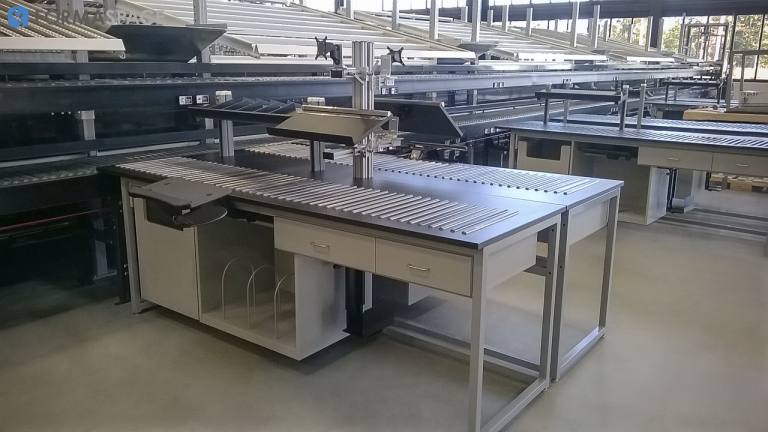
Shipping and Packing Station
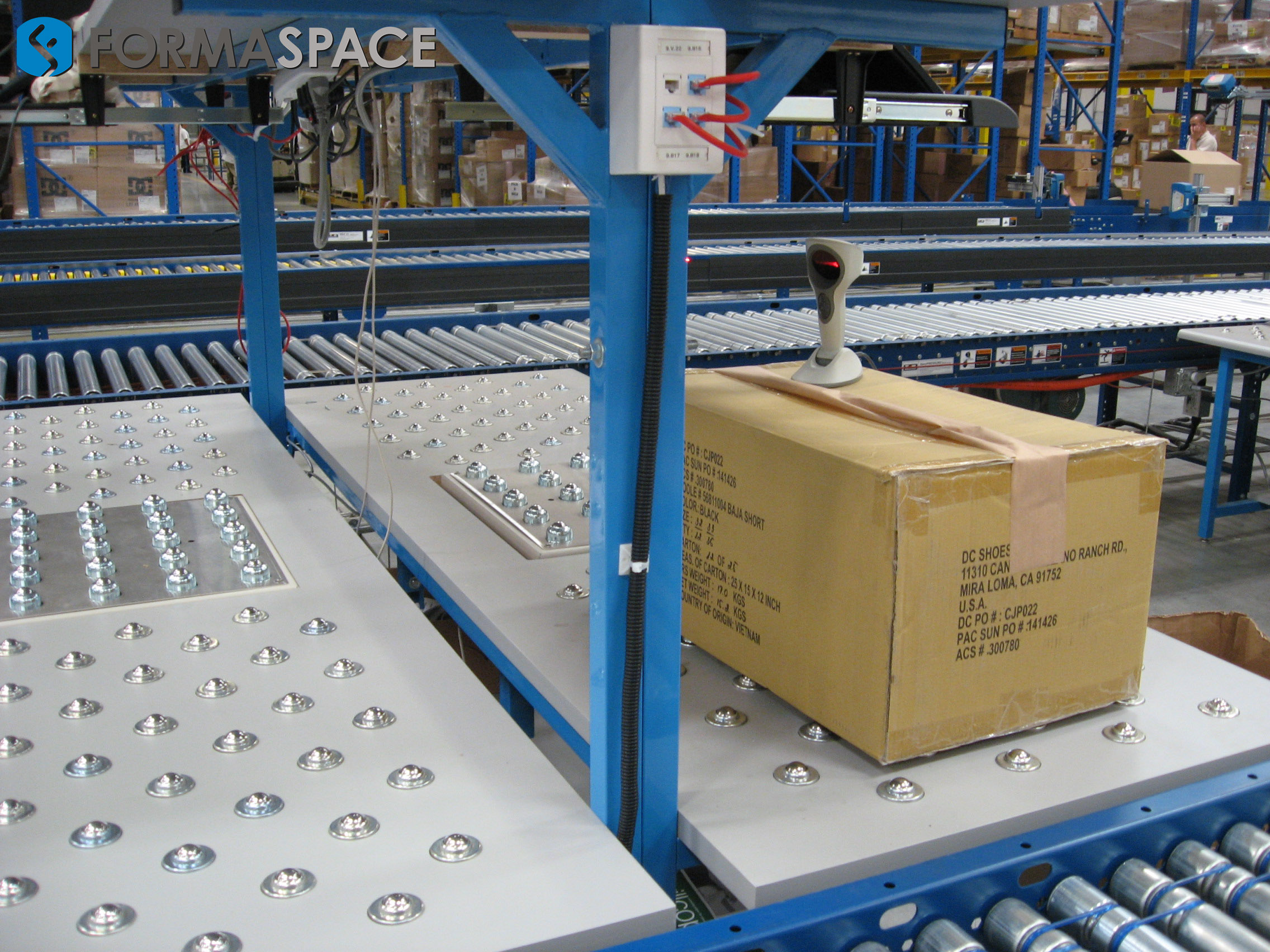
Receiving Station Conveyors
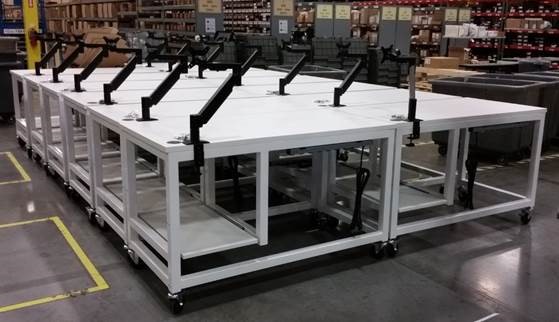
Kuehne Nagel Custom Benches
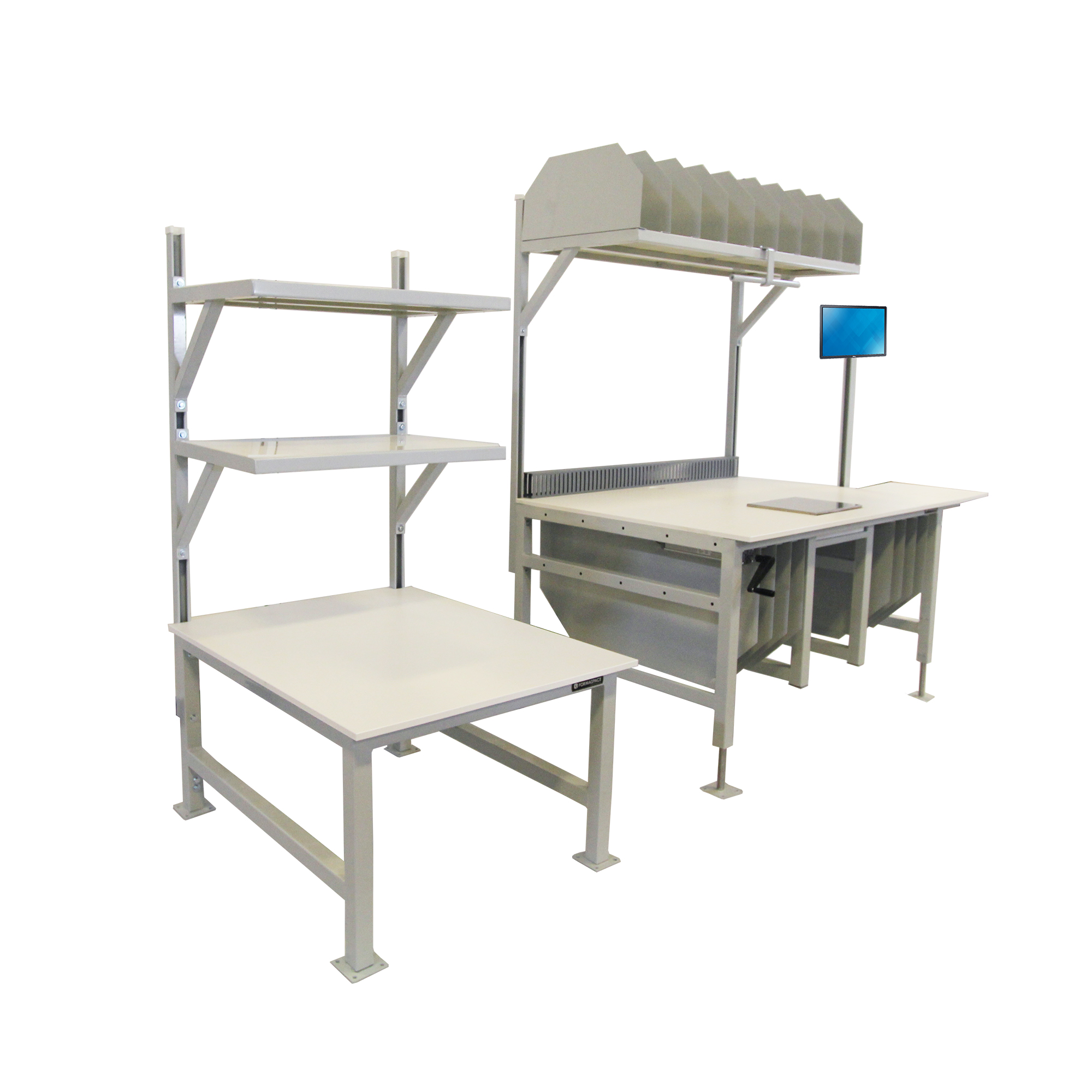
Fomaspace Packing and Shipping Stations
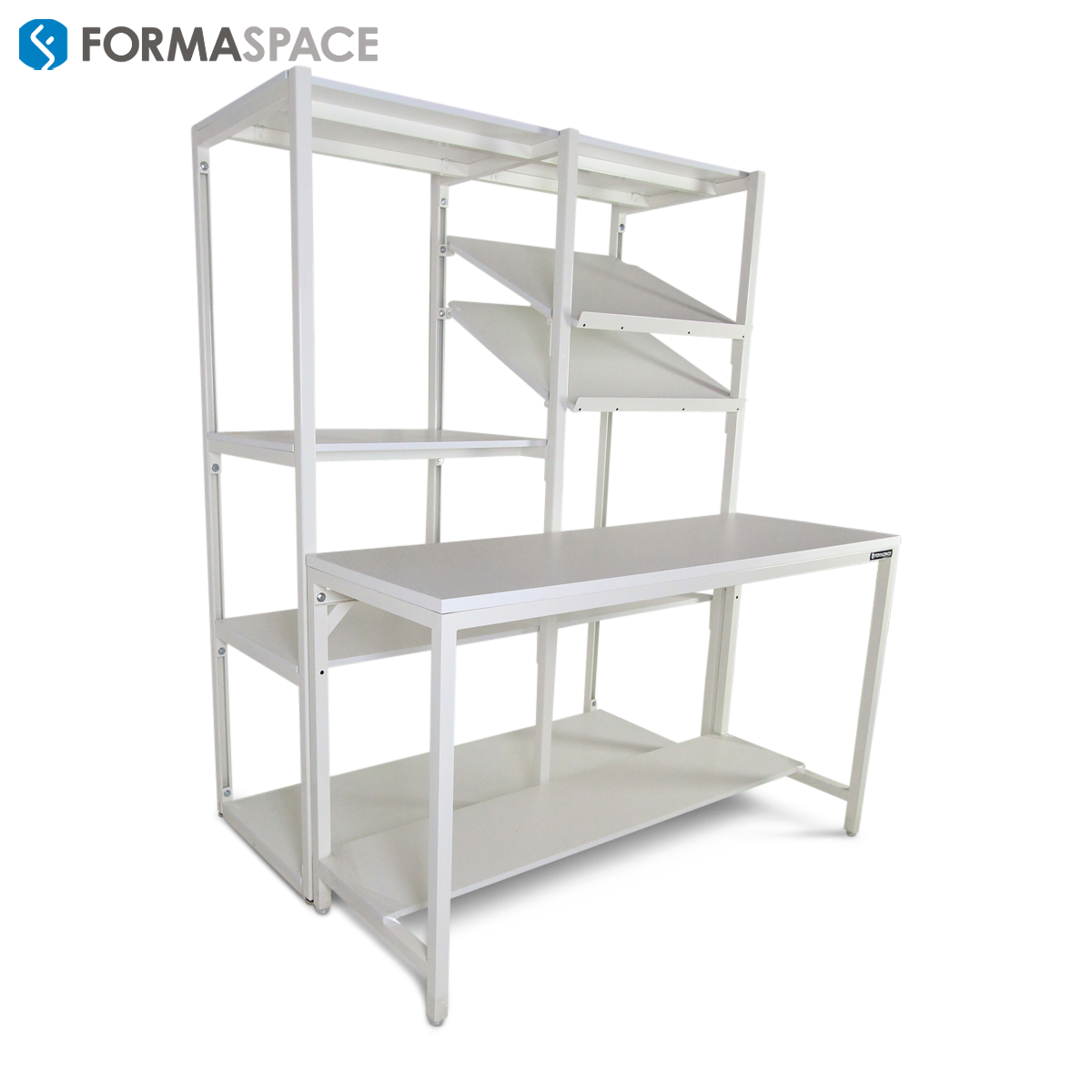
Adjustable Angled Shelves Packing Station
Is your shipping facility hampered by inefficient space utilization or irregular inventory workflow? If so, read 7 steps to a more efficient packing station!
1. Assess Whether Your Facility is Lean
If you want to improve the efficiency of your packing stations, your first move is to step back and take a look at the big picture. After all, your packing station is only going to be as efficient as the operations supporting it.
As a first step, we recommend undertaking a “Rapid Plant Assessment” of your facility. This approach, which comes from the world of lean manufacturing, allows you to quickly establish a performance baseline and uncover issues by asking a series of critical questions, such as:
- Is your shipping facility hampered by things like inefficient space utilization or irregular inventory workflow?
- Is your workforce committed to productivity, safety and problem-solving?
- What is the overall commitment to quality? Are there failsafe methods in place to stop the propagation of errors?
- Would you personally buy products shipped through this facility?
Formaspace recently performed an on-site Rapid Plant Assessment for the McMaster-Carr Supply Company, the privately-owned industrial and commercial facilities supplier that specializes in next day delivery for maintenance/repair operations (MRO). Through their trademark yellow print catalog and no-nonsense online website, McMaster-Carr prides itself in offering over 550,000 products for industrial, mechanical, electrical, plumbing and other hard to source products. The Formaspace Rapid Plant Assessment at McMaster-Carr was invaluable in preparing for the design of the packing stations that would help McMaster Carr shipping facility in Douglasville, Georgia, streamline their operations.
2. Undertake a 5S Program to make your Packing Workflow More Efficient
Information gleaned from the Rapid Plant Assessment will help inform clients what steps are needed to improve the flow of goods to the packing workstation.
For example, if the assessment uncovered excessive buildup of unused items stored in the warehouse, your next step should be to conduct a 5S program to recover additional floor space.
If you’re not familiar with 5S program, it stems from Japanese manufacturing efficiency expert Hiroyuki Hirano and his work as an efficiency expert for Toyota. Closely related to this is the work of Robert B. Pojasek, who wrote the paper “Asking ‘Why?’ Five Times”, to uncover inefficient procedures that are hiding in plain sight.
Formaspace has helped its customers launch 5S programs at their own facilities. In many cases, a 5S program results in startling improvements; in one case we help a client recover thousands of square feet of floor space that had been used for non-essential inventory storage. In turn, freeing up this space allowed the client to cancel plans to add on to their facility – quite an impressive return on investment!
3. Customized Packing Stations Designs to Make Them Job Throughput Friendly
Once you’ve taken a look at how to improve the overall efficiency and workflow of the facility, it’s time to create detailed plans for the packing station flow.
Document all the steps from start to finish.
Identify and segregate packing workflows that are different from one another.
One size does not fit all.
For example, it’s quite common to have high-volume quantities that need to be packed in smaller shippers (e.g. shipping containers such cartons) and low volume quantities that need special attention because they are oversized, heavy or especially prone to damage in packing and/or shipping.
High-volume packing stations handling small packages can be more compact in design, allowing the worker to pack faster by taking fewer steps. On the other hand, packing stations that process large, bulky items will likely need bigger tables with built-in lifting capability to assist workers handling heavy items.
Be generous with the space allocation. Think about your busiest times of the year and plan accordingly. Too much activity in too little space will cause problems down the line. It’s also a good idea to add a little extra margin to make room for automation equipment you might acquire in the future.
4. Create Prototype Packing Station Designs to Evaluate in Real World Conditions
After you have completed the analysis, documenting all the steps required to process as quickly and efficiently as possible at the packing station, it’s time to assess a prototype design.
Formaspace can help you by building a prototype packing table station to evaluate and utilize under real-world conditions.
Take the time to develop a quality assurance plan to assess the prototype design.
Review these questions to check that everything is working as expected:
- Does the Packer have sufficient table space to consolidate orders?
- Have you provided the Packer with an easily accessible method to confirm their packing list items?
- Are the “protect and pack” steps operating smoothly?
- Is it easy for the Packer to include any printed materials like special offers or documentation into the shipper?
- Can the Packer affix the label and address to the shipper without error?
- Are shipping manifests managed efficiently?
- What is the workflow for staging packed orders? How are they transported away from the packing station?
- And most importantly: what checks are in place to help prevent errors and what is the procedure to handle an error once it has been detected?
5. Incorporate Ergonomic Design Features that are Worker Friendly
As we have covered in previous articles, preventing workplace injuries is critical to the success of your operation.
You can reduce the potential for on-the-job injury at packing stations by focusing on three key areas:
Read more ... https://formaspace.com/articles/material-handling/7-critical-steps-configuring-efficient-packing-station/?utm_source=einpresswire&utm_medium=content&utm_campaign=091916
Kelsea Marshall
Formaspace
8002511505
email us here
Legal Disclaimer:
EIN Presswire provides this news content "as is" without warranty of any kind. We do not accept any responsibility or liability for the accuracy, content, images, videos, licenses, completeness, legality, or reliability of the information contained in this article. If you have any complaints or copyright issues related to this article, kindly contact the author above.
