
Rethinking How Freight Measures Reliability
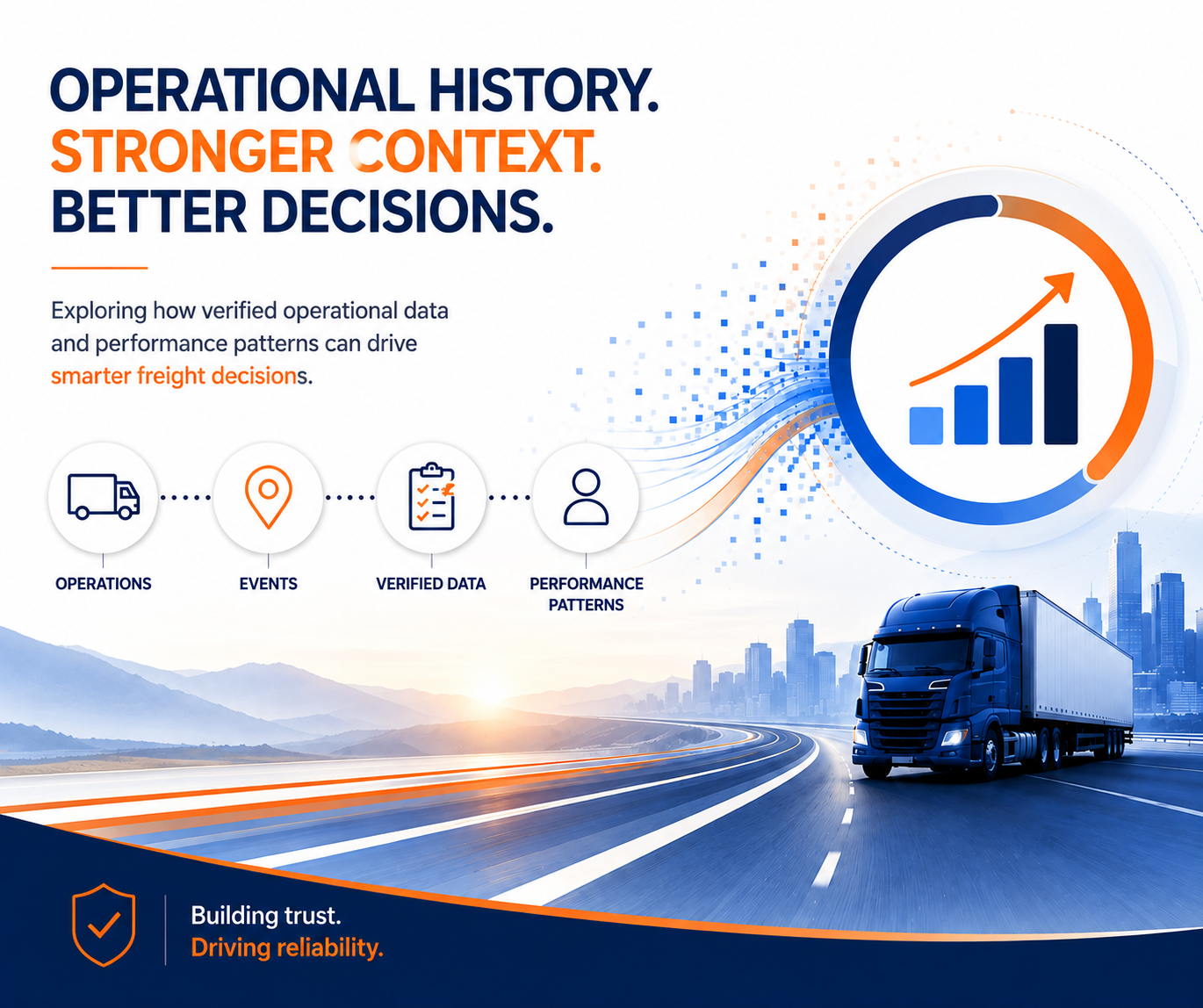
A developing Cargoos technology initiative explores how operational data could complement traditional freight risk indicators
Operational reliability is another part of the relationship. We're interested in understanding how that information can be evaluated responsibly and whether it can help support better decisions.”
CHICAGO, IL, UNITED STATES, September 3, 2026 /EINPresswire.com/ -- Following recent work examining verification across freight transactions, Cargoos Logistics is exploring another question: how can operational history provide additional context when evaluating transportation reliability?— Artur Gronus, CEO of Cargoos
The question has emerged from the company's broader review of how freight businesses establish trust — from verifying customers and authorized contacts to evaluating carriers, drivers, documents and changes that occur during a transaction.
Cargoos is now applying that thinking to an internal technology initiative currently in development. The project is examining how verified operational information and historical performance patterns could complement traditional transportation records when businesses evaluate freight relationships.
Existing tools already provide important information involving credit, operating authority, insurance, safety and compliance. Cargoos says its work is focused on a different question: whether operational history can provide another useful layer of context.
"Freight generates a tremendous amount of information, but different systems are often designed to answer different questions," said Artur Gronus, CEO of Cargoos Logistics. "We're exploring whether verified operational history can help businesses understand reliability from another perspective."
Looking Beyond a Point-in-Time View
The initiative builds naturally on lessons Cargoos has shared through its recent freight verification reviews.
Those reviews reinforced the value of looking at multiple independent signals rather than relying on a single document or one point-in-time verification.
Cargoos believes a similar principle may apply when evaluating operational performance.
A single successful shipment does not necessarily establish a long-term pattern of reliability. Likewise, one service exception may not accurately represent a transportation partner's overall performance.
Historical information can provide context around individual events.
Cargoos is therefore examining how factors such as shipment execution, communication consistency, documented outcomes and other verified operational information could be organized to provide additional context over time.
The methodology remains under development, and the company says it is continuing to evaluate which information is useful, verifiable and appropriate to include.
"Credit information answers an important financial question, while safety and compliance records answer other important questions," Gronus said. "Operational reliability is another part of the relationship. We're interested in understanding how that information can be evaluated responsibly and whether it can help support better decisions."
Built Around Freight Operations
Cargoos says the initiative is being informed by practical freight operations rather than technology development in isolation.
The company's recent work around customer verification demonstrated how individual pieces of legitimate information may tell only part of a larger story. Examining information collectively can provide additional context when something changes or does not align.
The same principle is helping guide the technology initiative.
Rather than replacing established credit, safety, compliance, underwriting or carrier-vetting systems, Cargoos is exploring whether verified operational information could complement them.
This distinction is important to the company's development approach.
The objective is not to reduce a transportation relationship to a single data point, but to determine whether historical operational information can help businesses better understand patterns of consistency and reliability.
Industry Input as Development Continues
Cargoos is also seeking perspectives from participants across the transportation ecosystem as the initiative develops.
The company believes feedback from people involved in freight operations, risk management and transportation finance can help identify which types of operational information are most meaningful in real-world decision-making.
"We don't want to develop technology in isolation and assume we already know every answer," said Gronus. "The people making transportation decisions every day can provide valuable perspective on what information is actually useful."
The initiative remains in development, and Cargoos has not announced a commercial launch timeline.
The company expects to continue evaluating the concept and gathering industry feedback as part of its broader work around freight verification, operational transparency and informed decision-making.
For Cargoos, the underlying question remains simple: if trust in freight is built over time, should the information used to evaluate reliability reflect that history as well?
Jaymie Freeman
Cargoos Logistics
+1 312-772-4422
email us here
Visit us on social media:
LinkedIn
Facebook
X
Other
Legal Disclaimer:
EIN Presswire provides this news content "as is" without warranty of any kind. We do not accept any responsibility or liability for the accuracy, content, images, videos, licenses, completeness, legality, or reliability of the information contained in this article. If you have any complaints or copyright issues related to this article, kindly contact the author above.
