
New Article Shows Why Hotel Concepts Should Start With Data, Not Instinct
Human Centric Group’s new article by Matteo Rinaldi explains why successful hotel concepts should be built through data, psychographic insight and market immersion, not instinct alone.
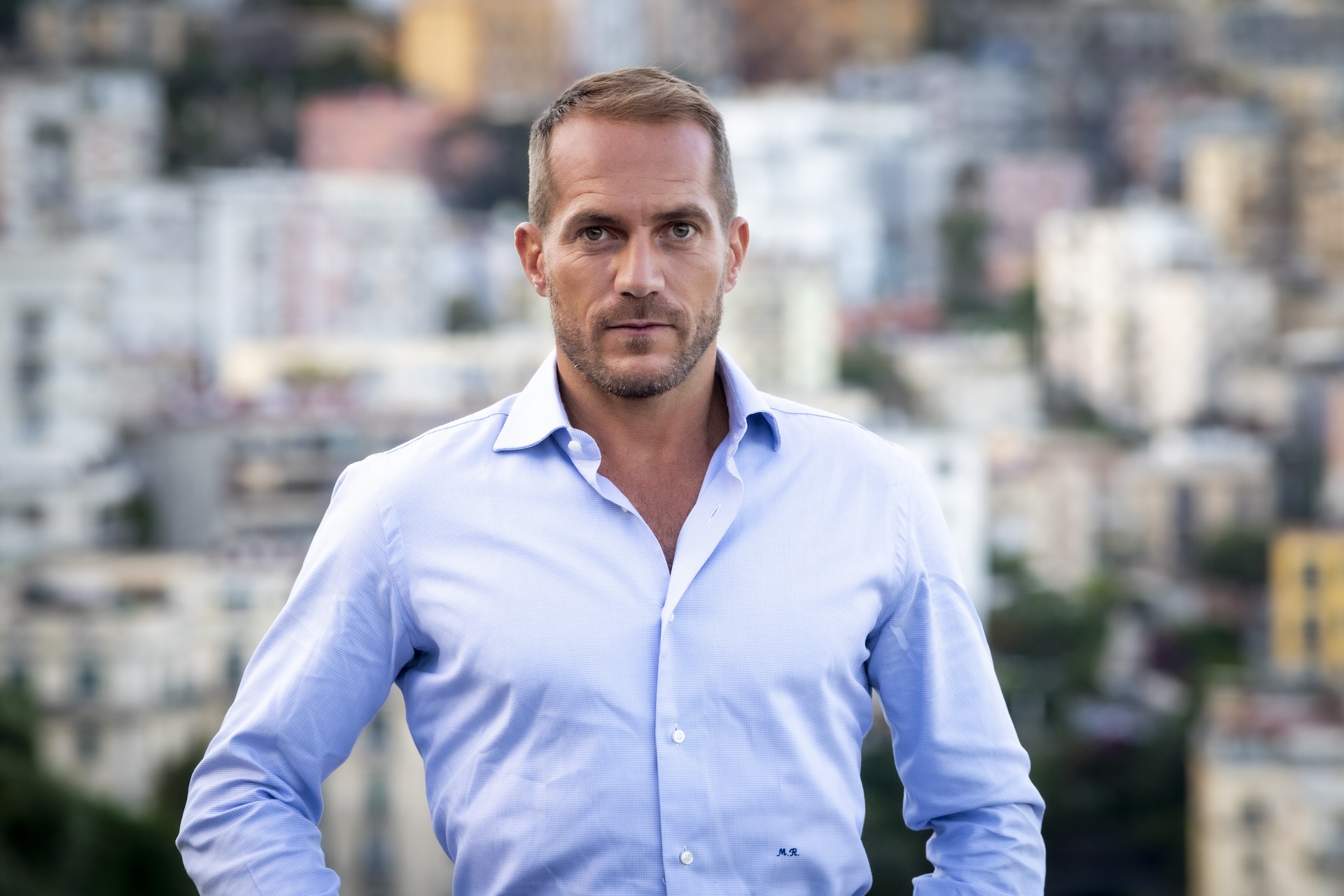
Matteo Rinaldi, co-founder of Human Centric Group, adjunct professor at Luiss Business School, and author of two bestselling books on marketing.
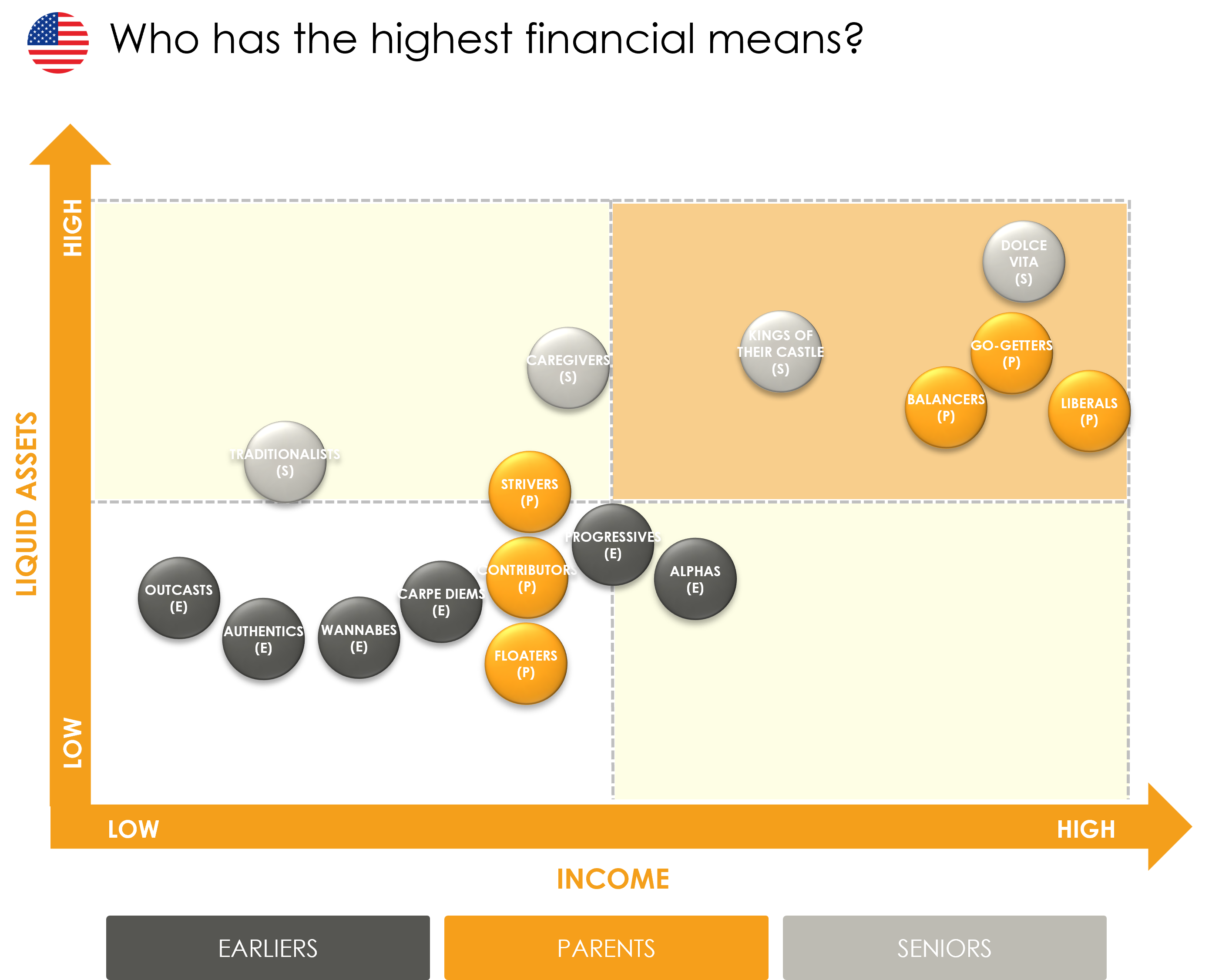
Mapping US traveller segments by income and liquid assets helps identify which audiences offer the strongest commercial potential for a new hotel concept.
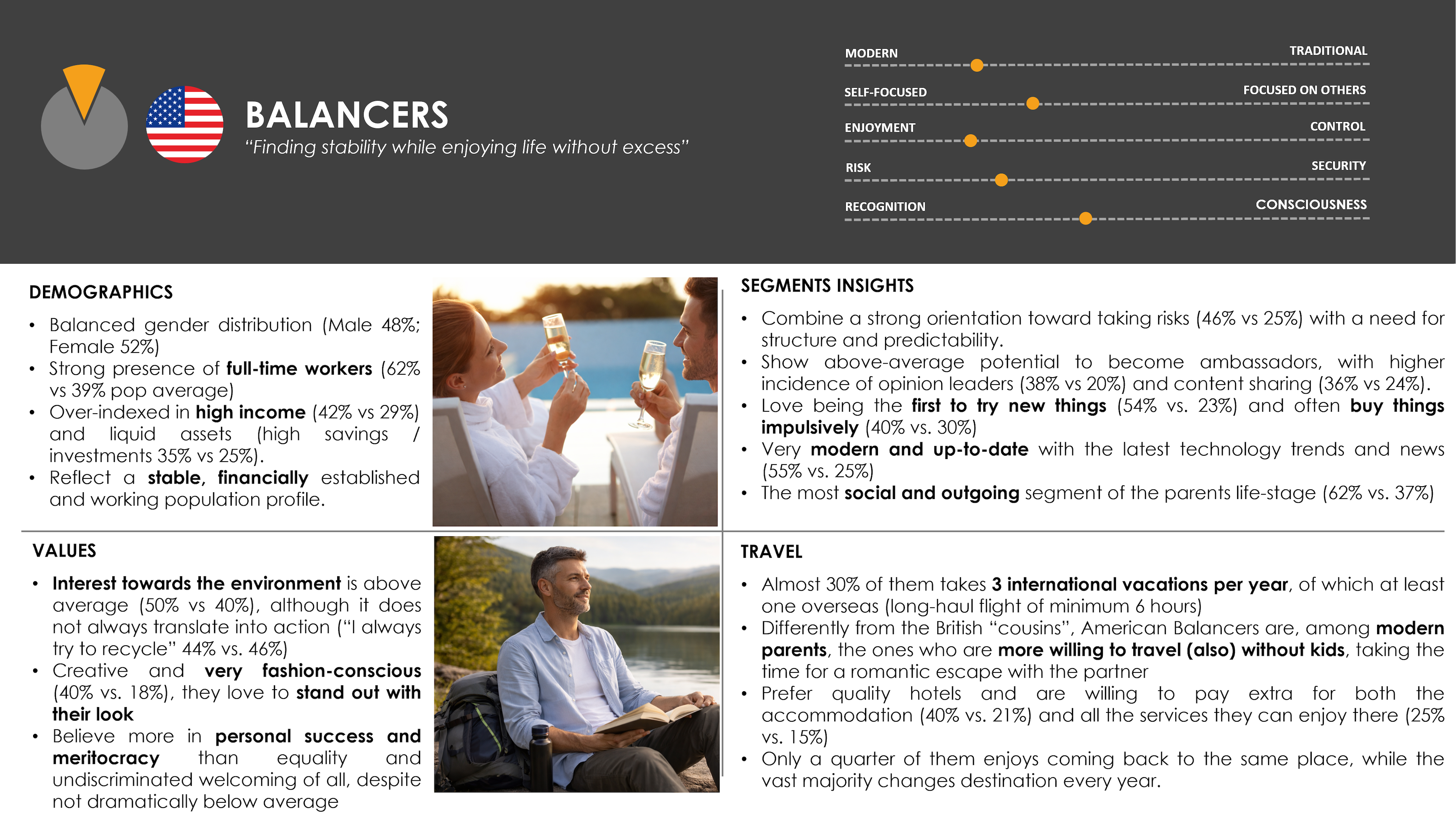
The Balancers segment profile shows how psychographic segmentation can reveal the motivations, values and travel expectations behind a high-potential hospitality audience.
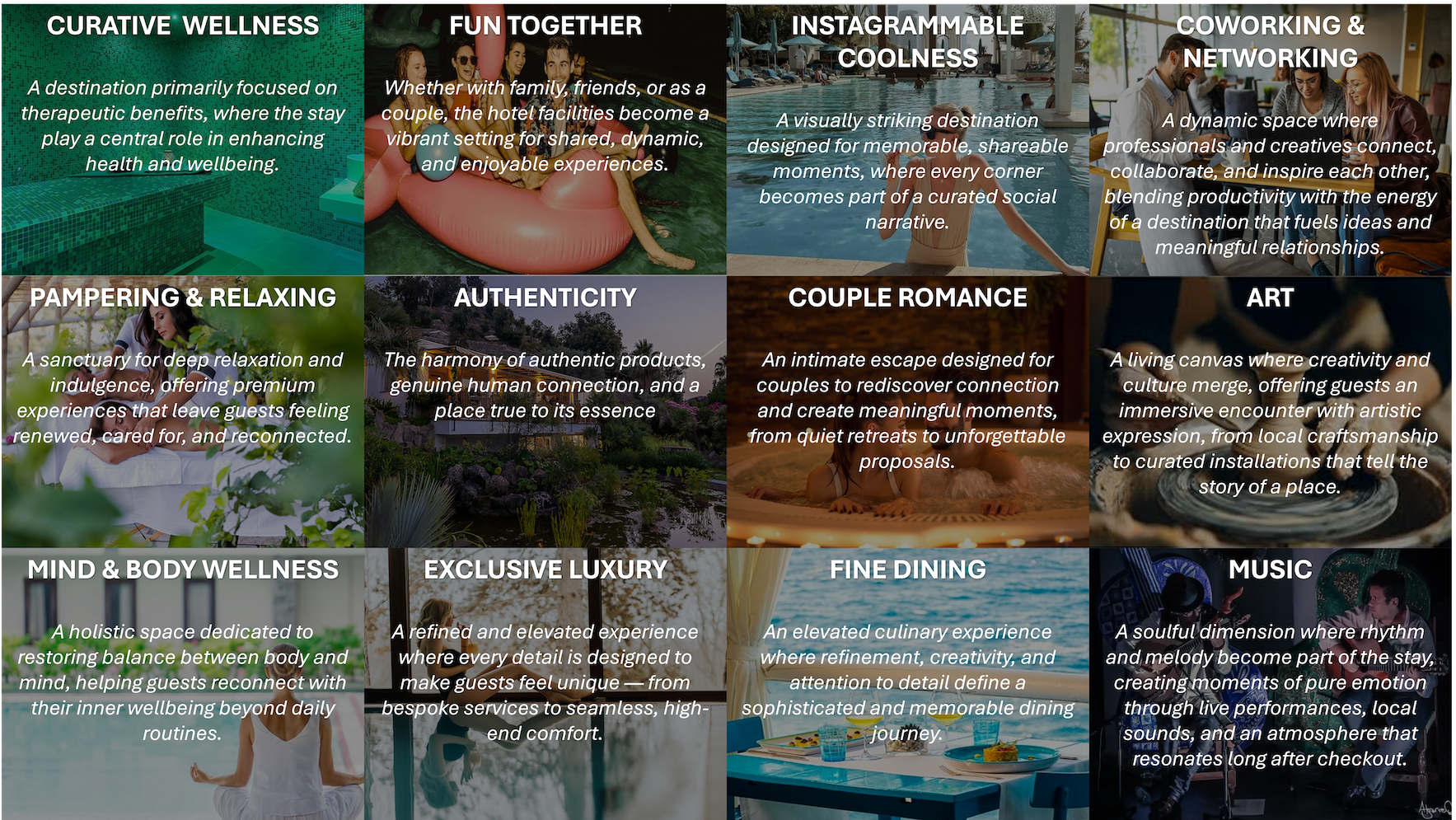
Experience territories translate traveller insights into clear hospitality directions, from wellness and authenticity to fine dining, romance, music and social connection.
Human Centric Group explains how hotels can build sharper concepts by combining data, psychographics, fieldwork and execution.
The article, titled “How to Create a New Hotel Concept,” argues that the hospitality industry is moving beyond rooms, rates, and amenities. Travellers are increasingly looking for experiences that feel meaningful, memorable, and emotionally precise. For hotels, this means that concept development can no longer rely only on location, design taste, or founder intuition.
According to Rinaldi, the starting point should be a more practical business question: where is the money? In other words, which types of guests offer the strongest commercial potential for a specific destination, property, and positioning?
The article shows how large-scale data sources, such as GlobalWebIndex, can help developers and operators understand who travels to a destination, who could be persuaded to travel there, what they value, how they spend, and how they can be reached. This allows hotel brands to move from generic audience assumptions to sharper, evidence-based choices.
However, the article also warns against reducing travellers to demographics. Age, income, and nationality may describe people, but they do not explain why they travel or what they want to feel. This is why Human Centric Group’s methodology places strong emphasis on psychographic segmentation: grouping people by motivations, values, emotional needs, and behavioural patterns.
The result is not abstract data. It is a clearer understanding of human demand. One guest may seek status and visibility. Another may seek restoration and privacy. Another may want social energy, local discovery, or creative inspiration. Hotels that treat these needs as interchangeable often create concepts that look attractive but fail to feel distinctive.
The article also stresses the importance of combining data with field immersion. Competitive visits, guest observation, staff conversations, and destination experience help identify not only what is already available, but where the real opportunity for differentiation lies. In Rinaldi’s view, the strongest concepts emerge when quantitative evidence and lived insight are brought together.
From there, the article outlines a practical framework for translating insight into a hotel concept. This includes defining what the hotel stands for, what it does not stand for, which experience territories it should own, and how these territories can shape everything from spaces and services to rituals, communication, and staff behaviour.
For journalists and industry readers, the key takeaway is clear: a hotel concept is not a moodboard or a marketing slogan. It is a decision-making system. When built properly, it helps investors, developers, and operators decide who to attract, what to design, how to communicate, how to train staff, and why guests should return.
The article identifies three critical areas where a concept must come to life:
First, the digital presence, where the story must be coherent before the guest arrives.
Second, the on-property experience, where every detail should reinforce the same narrative.
Third, the people, because the staff is not simply delivering service. They are the most powerful expression of the brand.
Rinaldi’s perspective is especially relevant at a time when many hospitality projects compete through visual style, luxury cues, or “Instagrammable” features. The article suggests that these elements can be valuable, but only when they are rooted in a clear understanding of the people the property is designed to attract.
A successful hotel concept, the article concludes, is not created by chasing trends. It is created by identifying demand, understanding people deeply, finding a distinctive market space, and translating that insight into consistent execution.
The full article is available on the Human Centric Group website.
About The Author
Matteo Rinaldi is a Senior Marketing Strategy Consultant and Co-Founder of Human Centric Group, with global experience driving double-digit growth for brands like Danone, Carlsberg, Revlon, PepsiCo, and Visa. Having worked across multiple continents, he specializes in leveraging cultural insights for impactful brand strategies. A passionate educator, Matteo teaches marketing worldwide, shaping future industry leaders. Previously, he worked with L’Oréal and Coca-Cola HBC. He is also a best-selling author in marketing.
Media Enquiries
HUMAN CENTRIC GROUP LTD
+ +442036934480
email us here
Visit us on social media:
LinkedIn
Instagram
TikTok
Legal Disclaimer:
EIN Presswire provides this news content "as is" without warranty of any kind. We do not accept any responsibility or liability for the accuracy, content, images, videos, licenses, completeness, legality, or reliability of the information contained in this article. If you have any complaints or copyright issues related to this article, kindly contact the author above.
