
Why Global Brands Change Meaning Across Markets
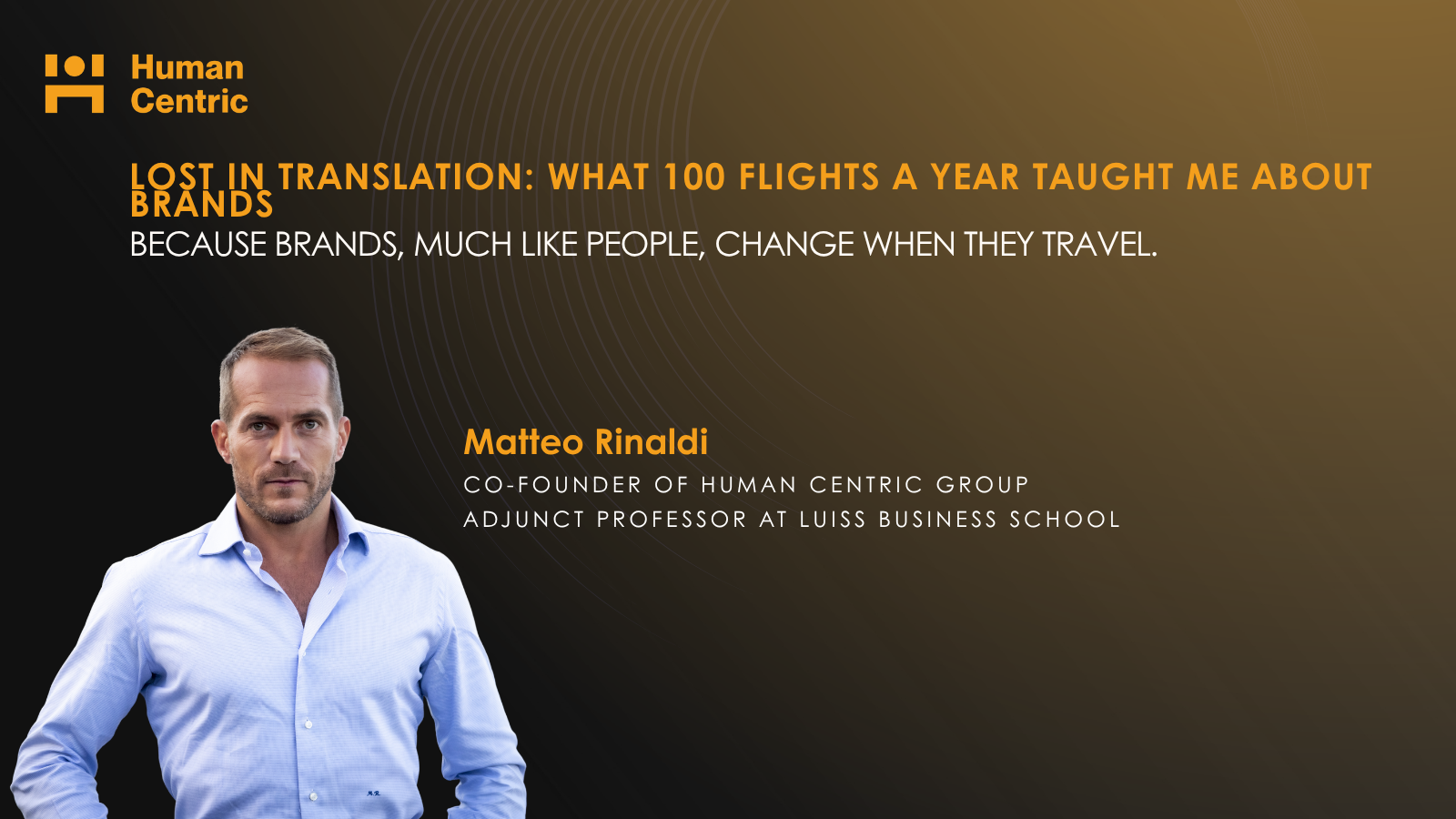
Cover image of Human Centric Group’s article on how global brands change meaning across markets, written by Matteo Rinaldi.
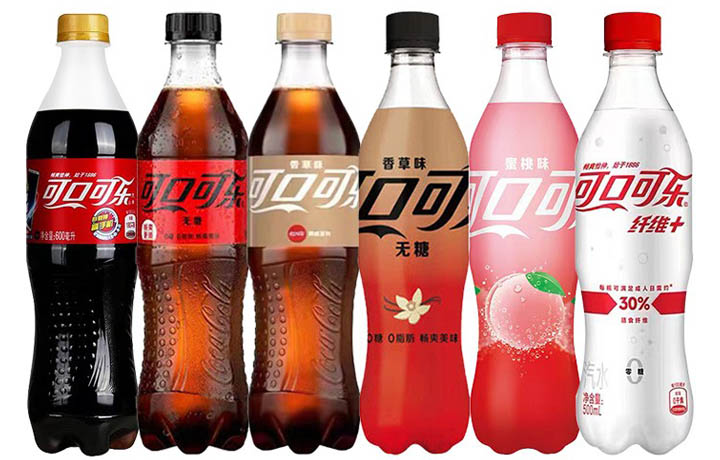
A selection of Coca-Cola products in China, illustrating how one of the world’s most recognizable brands adapts naming, flavours, and formats to local market preferences.

Inside Fila’s flagship store in Taipei, where the brand is presented with a more premium, fashion-forward feel than in many European markets.
A new article from Human Centric Group explores how brands must adapt locally without losing identity.
Titled “Lost in Translation: What 100 Flights a Year Taught Me About Brands”, the piece explores how global brands are often forced to adapt far beyond language when entering new countries. In many cases, they change their name, emotional positioning, retail role, or even the social meaning they carry for consumers.
The article draws on real examples from different markets to show how brand adaptation works in practice. Among them is Burger King operating as Hungry Jack’s in Australia due to a naming conflict, Fila appearing as a more premium brand in Taipei than in Europe, and Müller positioning yogurt in Italy through indulgence and sensuality rather than health.
The article also highlights how product lines from the same company can vary significantly across countries. A high-protein dairy range, for instance, may appear under different names depending on the market, while the same product can be sold as functional nutrition in one country and as part of a broader lifestyle in another. Coca-Cola’s Chinese name is presented as one of the clearest examples of adaptation done well: not a direct translation, but a version that creates local meaning while preserving brand recognizability.
Beyond packaged goods, the article points out that the same principle applies to digital platforms, retail brands, and lifestyle products. What signals routine and practicality in one country may become aspirational or status-driven in another. The implication for marketers is clear: international growth is not simply about replicating a successful formula, but about understanding how culture, regulation, language, purchasing power, and social context reshape perception.
At the core of the article is a broader strategic message for business leaders and marketers. Brands do not succeed globally by being identical everywhere. They succeed by maintaining a recognizable identity while becoming locally relevant. Over-adapt, and the brand loses coherence. Under-adapt, and it risks becoming irrelevant.
The article argues that this tension is especially important in markets where consumers balance local values with global aspirations. In those environments, surface-level localization is rarely enough. What matters is understanding the motivations that drive behaviour in each context.
For companies expanding internationally, the piece offers a timely reminder that consumers do not simply buy products. They interpret symbols, rituals, status cues, and meanings through the lens of their own culture.
The full article is available on the Human Centric Group website.
Human Centric Group is a London-based boutique branding agency focused on human-centric strategy. The company works with international brands to uncover the cultural and emotional drivers behind consumer behaviour, helping translate insight into brand growth across markets.
About the Author
Matteo Rinaldi is a Senior Marketing Strategy Consultant and Co-Founder of Human Centric Group, with global experience driving double-digit growth for brands like Danone, Carlsberg, Revlon, PepsiCo, and Visa. Having worked across multiple continents, he specializes in leveraging cultural insights for impactful brand strategies. A passionate educator, Matteo teaches marketing worldwide, shaping future industry leaders. Previously, he worked with L’Oréal and Coca-Cola HBC. He is also a best-selling author in marketing.
Media Enquiries
HUMAN CENTRIC GROUP LTD
+ +442036934480
email us here
Visit us on social media:
LinkedIn
Instagram
TikTok
Legal Disclaimer:
EIN Presswire provides this news content "as is" without warranty of any kind. We do not accept any responsibility or liability for the accuracy, content, images, videos, licenses, completeness, legality, or reliability of the information contained in this article. If you have any complaints or copyright issues related to this article, kindly contact the author above.
