
digna 2026.04 Expands Time-Series Analytics and Data Validation for Modern Data Platforms
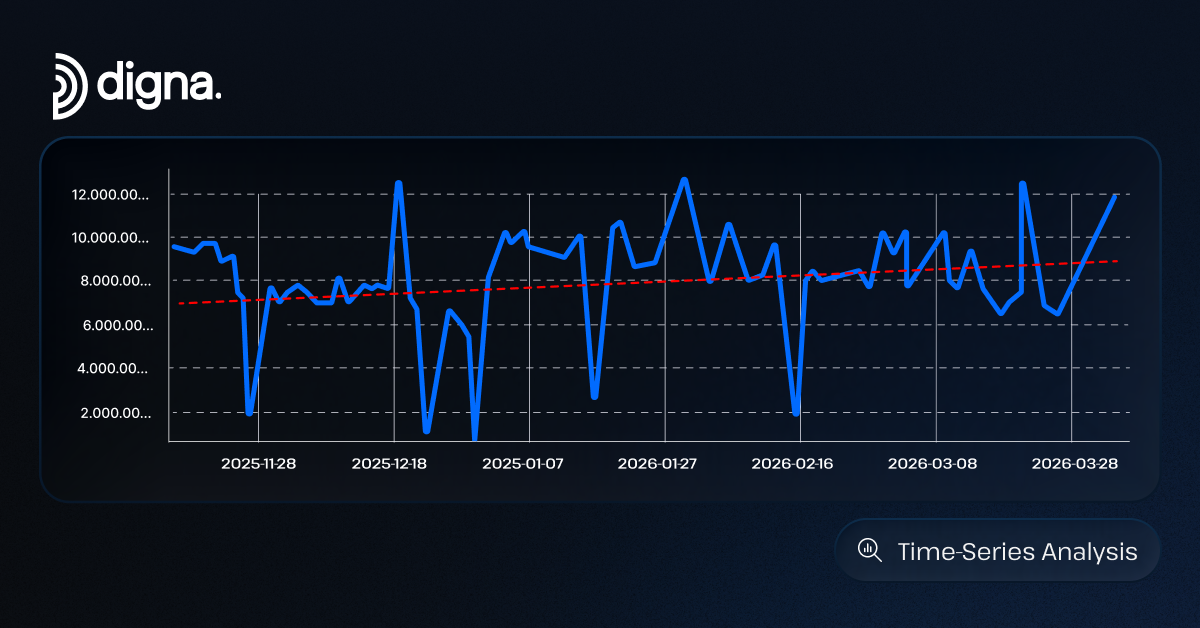
digna introduces advanced time-series analysis, reusable validation components, and centralized value standardization.
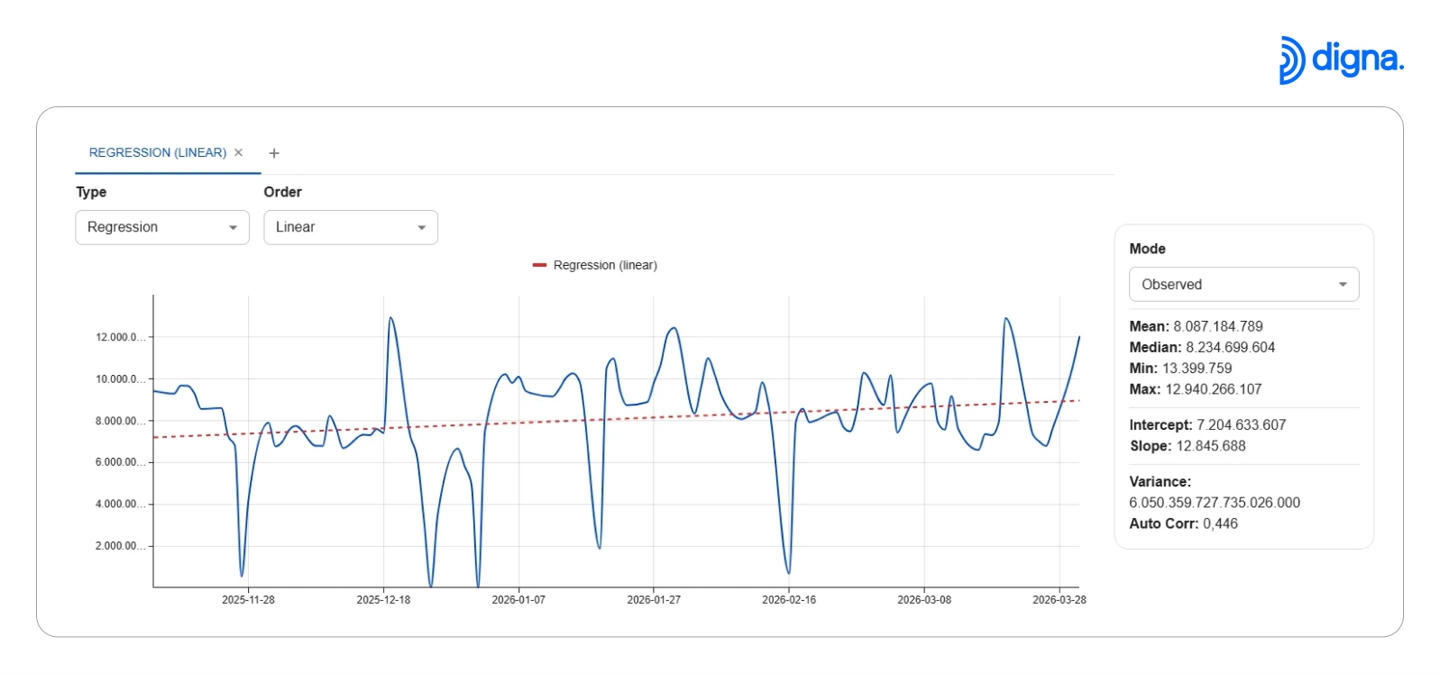
Visualizing trends using regression models to understand long-term data behavior.
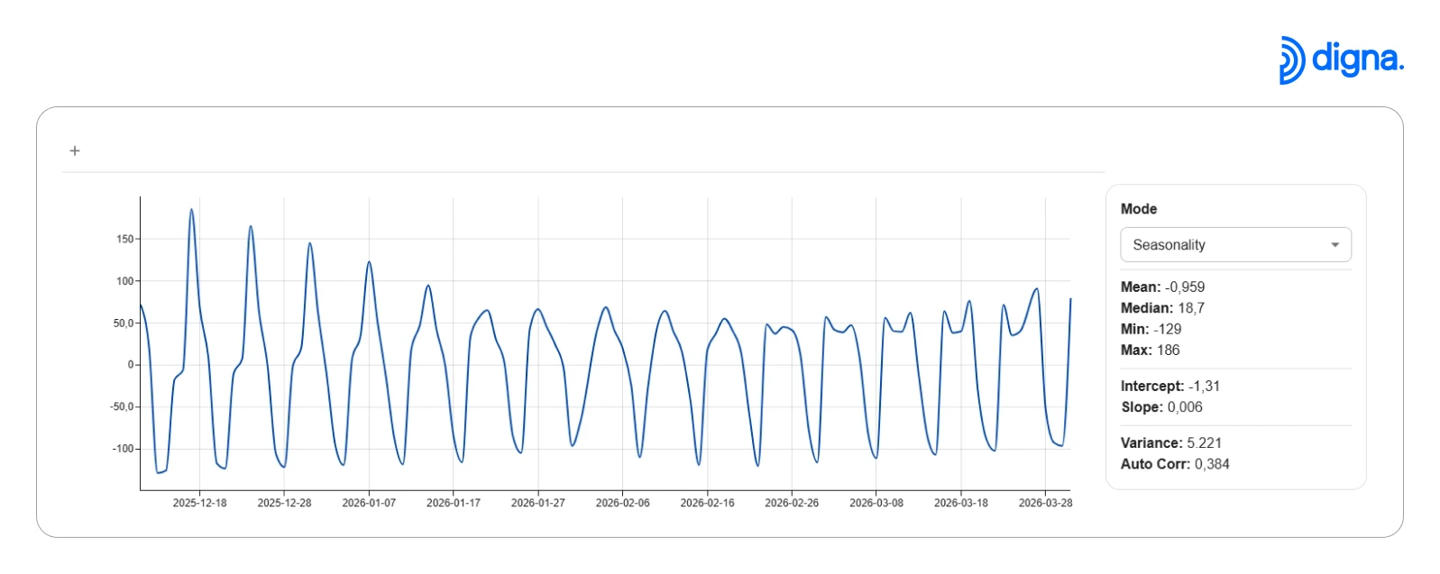
Detecting recurring patterns and seasonal trends in data.
New release enables in-database time-series analysis, reusable validation, and anomaly detection without requiring data science teams or external tools
The release reflects a broader shift in how organizations analyze and manage data, moving from static monitoring approaches toward behavioral analysis that helps teams understand how data evolves over time.
With the introduction of a new Analytics Chart, digna enables users to perform time-series analysis directly within the platform. Built-in methods include linear, quadratic, and cubic regression, piecewise regression with configurable breakpoints, smoothing techniques, quantile analysis, and residual analysis. The platform also automatically identifies trends, seasonal patterns, and structural changes in data behavior.
Unlike traditional approaches that require external tools or data science expertise, these capabilities are designed to be accessible to a wider range of users, including business and operational teams. By integrating analytics directly into the data environment, organizations can analyze trends and detect anomalies without exporting data or building custom workflows.
In addition to analytics enhancements, the release introduces new capabilities in data validation aimed at improving standardization and scalability across complex data landscapes. These include reusable validation rule templates and centralized enumerations for defining allowed values. The approach allows organizations to apply consistent validation logic across multiple datasets and projects.
All validation checks are executed directly within the source database, eliminating the need for data movement and supporting performance and security requirements in distributed environments.
The release also introduces statistic-level relevance conditions, enabling teams to define when specific metrics should be considered relevant for anomaly evaluation. This helps reduce noise and ensures monitoring systems focus on meaningful deviations.
According to digna, the combination of built-in analytics and reusable validation reflects increasing demand for tools that allow organizations to both detect and understand changes in data behavior without relying on large specialized teams.
As data environments continue to grow in complexity, the company states that making advanced analytical capabilities accessible across the organization is becoming increasingly important for maintaining data reliability and supporting decision-making.
More information about the release is available at:
https://docs.digna.ai/changelog/Release_202604/
About digna
digna develops enterprise software focused on data quality monitoring, observability, and governance automation. The platform applies AI-driven anomaly detection and in-database validation to help organizations monitor, understand, and control data behavior at scale.
Mayowa Ajakaiye
digna GmbH
+43 1 2260056398
email us here
Visit us on social media:
LinkedIn
Facebook
YouTube
X
Legal Disclaimer:
EIN Presswire provides this news content "as is" without warranty of any kind. We do not accept any responsibility or liability for the accuracy, content, images, videos, licenses, completeness, legality, or reliability of the information contained in this article. If you have any complaints or copyright issues related to this article, kindly contact the author above.
