
Membrane-Free Marvel for Generating Cleaner and Safer Hydrogen Energy
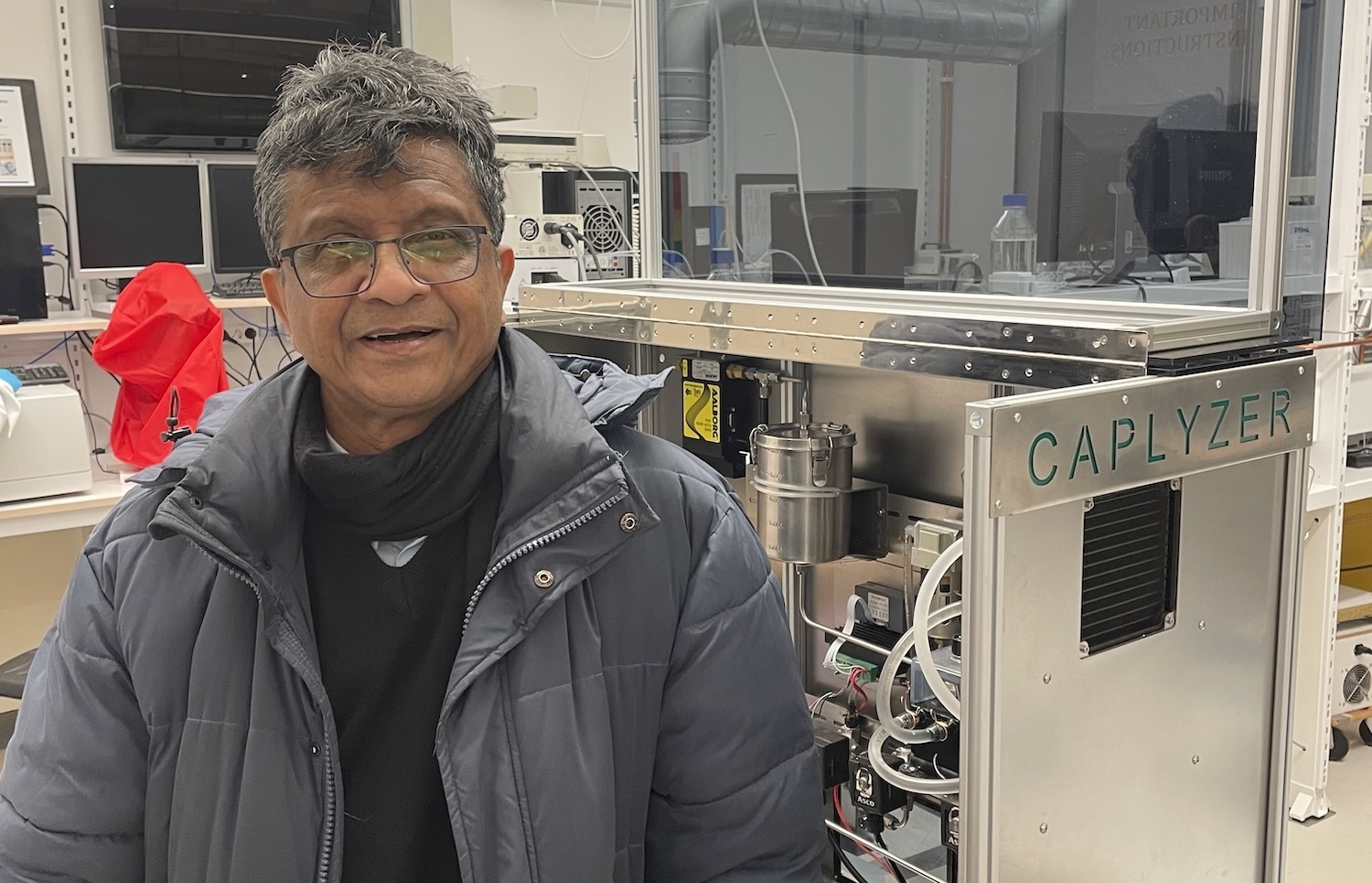
Professor Joydeep Dutta at Caplyzer
Swedish researchers introduce a membrane-free method for safer, efficient hydrogen production by splitting water, reducing chances of dangerous gas mixing
STOCKHOLM, SWEDEN, March 7, 2024 /EINPresswire.com/ -- Researchers in Sweden have unveiled a new approach to producing hydrogen gas, potentially reshaping the future of sustainable energy. Unlike traditional methods, this innovative technique does not require separators such as membranes, marking a significant technological breakthrough. This technique ensures a safer and more efficient separation of hydrogen and oxygen gasses obtained by splitting water, thereby significantly reducing the risk of dangerous gas mixing.
Led by Professor Joydeep Dutta of the KTH Royal Institute of Technology in Sweden, the team is spearheading the development of a system that utilizes unique electrodes that do not require rare-earth materials to produce hydrogen and oxygen separately, thus lowering the risk of gas mixing.
"Producing hydrogen by splitting water has traditionally been risky due to the explosive nature of hydrogen and oxygen when mixed. Scientists typically use a membrane to keep them separate, as both gasses are produced simultaneously during water breakdown. Our groundbreaking design eliminates the need for a membrane by producing hydrogen and oxygen at different times, significantly enhancing safety. This patented technology represents a major leap forward towards cleaner, more sustainable energy," explains Dr. Dutta.
"The same electrodes are effective for producing either hydrogen or oxygen. Furthermore, our method is versatile, functioning with both acidic and alkaline water," Prof. Dutta adds. As the author of an award-winning nanotechnology textbook singled out for praise by the American Library Association in 2010, he has developed a method that is not only efficient and simple but also scalable. This process can operate continuously for extended periods without significant wear on the materials. The design's flexibility and robustness make it an excellent candidate for clean and safe hydrogen fuel production. “By integrating traditional water-splitting with an electricity storage method like a capacitor, we envision sustainable green hydrogen production directly coupled with solar cells or windmills,” adds Dr. Dutta.
This breakthrough, which marries a novel design with the rational application of materials science, is detailed in a peer-reviewed research paper authored by Professor Dutta and his students. The paper, entitled “Decoupled Supercapacitive Electrolyzer for Membrane-Free Water Splitting,” has been published in the prestigious journal Science Advances published by the American Association for the Advancement of Science (AAAS). Dr. Dutta’s co-authors include Esteban A. Toledo-Carrillo, Mario García-Rodríguez, and Lorena M. Sánchez-Moreno. While Toledo-Carillo and Professor Dutta are associated with KTH Royal Institute of Technology, García-Rogríguez and Sánchez-Moreno are affiliated with Universidad de Alicante in Spain.
Traditionally, water electrolysis has faced challenges with efficiency, safety, cost, and durability. The new method developed by Dr. Dutta and his colleagues addresses these issues and is currently being industrialized by Caplyzer AB, a Stockholm-based company. Drawn to its simple construction and lower costs, Caplyzer AB recognizes its compatibility with intermittent renewable energy sources such as solar and wind. Notably, the method operates effectively even under partial-load conditions and eliminates the risk of hydrogen crossover. This innovation could pave the way for pressurized hydrogen production, offering a more straightforward and cost-effective alternative to existing techniques. With its patent for this supercapacitive electrolyzer, Caplyzer AB is poised to revolutionize renewable energy through a system that is efficient, low-cost, and robust.
This development has far-reaching implications, offering a more sustainable and secure approach to hydrogen production. It paves the way for cleaner energy and marks a substantial stride towards decarbonization and the transition to renewable energy sources. With the capacity to fundamentally alter the renewable energy landscape, this advance in hydrogen production technology could revolutionize the accessibility and reliability of global clean energy.
About Caplyzer: Caplyzer AB is a forefront provider of clean energy solutions, driven by our groundbreaking electrolyzer technology. Our team, which comprises experts with extensive experience in energy production, is dedicated to delivering innovative and sustainable solutions. Our commitment focuses on fostering environmental protection. For more information, visit our website: https://www.caplyzer.com
Prof Joydeep Dutta
https://www.kth.se/profile/joydeep
email us here
Legal Disclaimer:
EIN Presswire provides this news content "as is" without warranty of any kind. We do not accept any responsibility or liability for the accuracy, content, images, videos, licenses, completeness, legality, or reliability of the information contained in this article. If you have any complaints or copyright issues related to this article, kindly contact the author above.
