
Three Mistakes to Avoid When Measuring for Radon in Homes

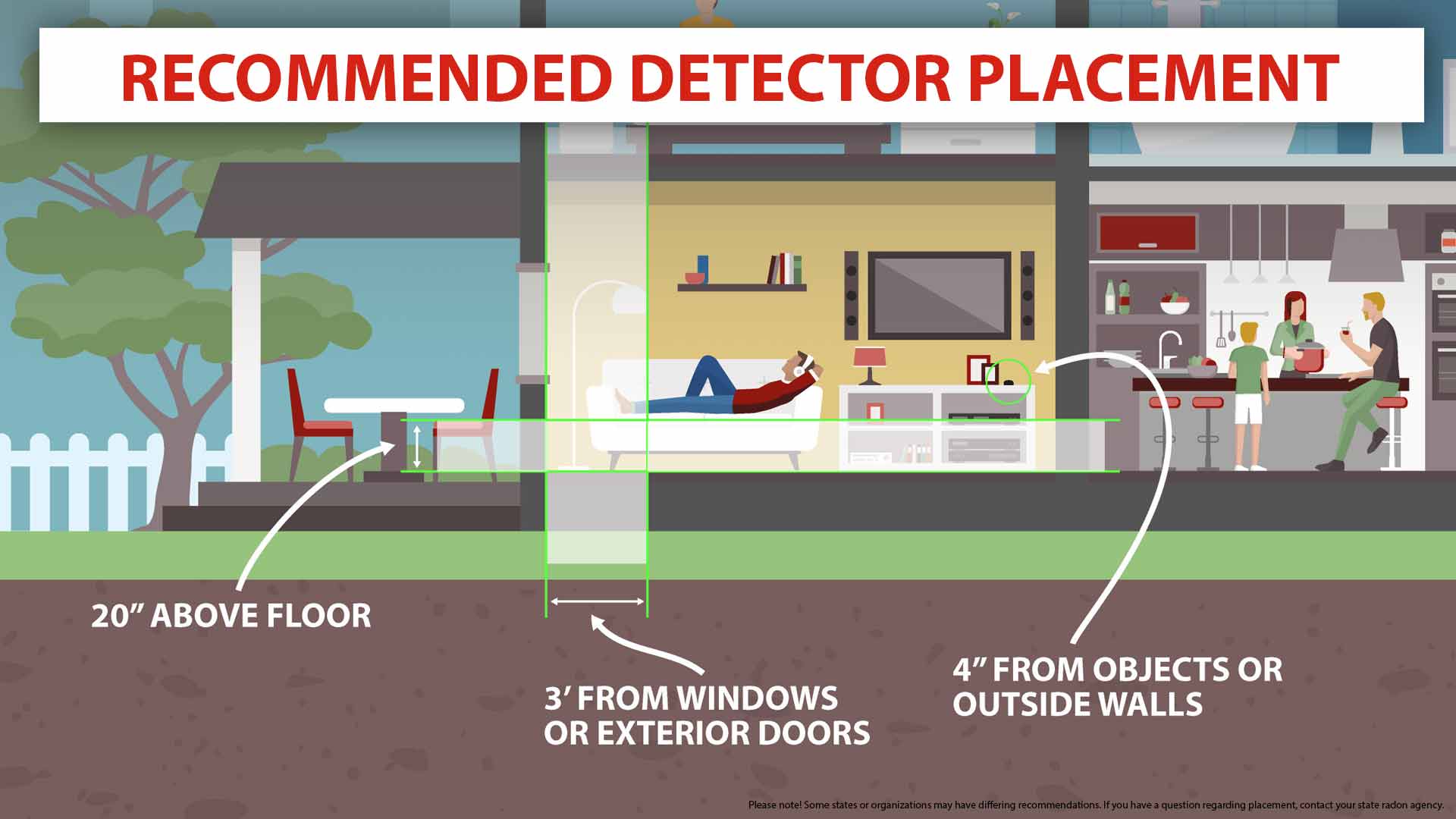
Where to Place Radon Detectors
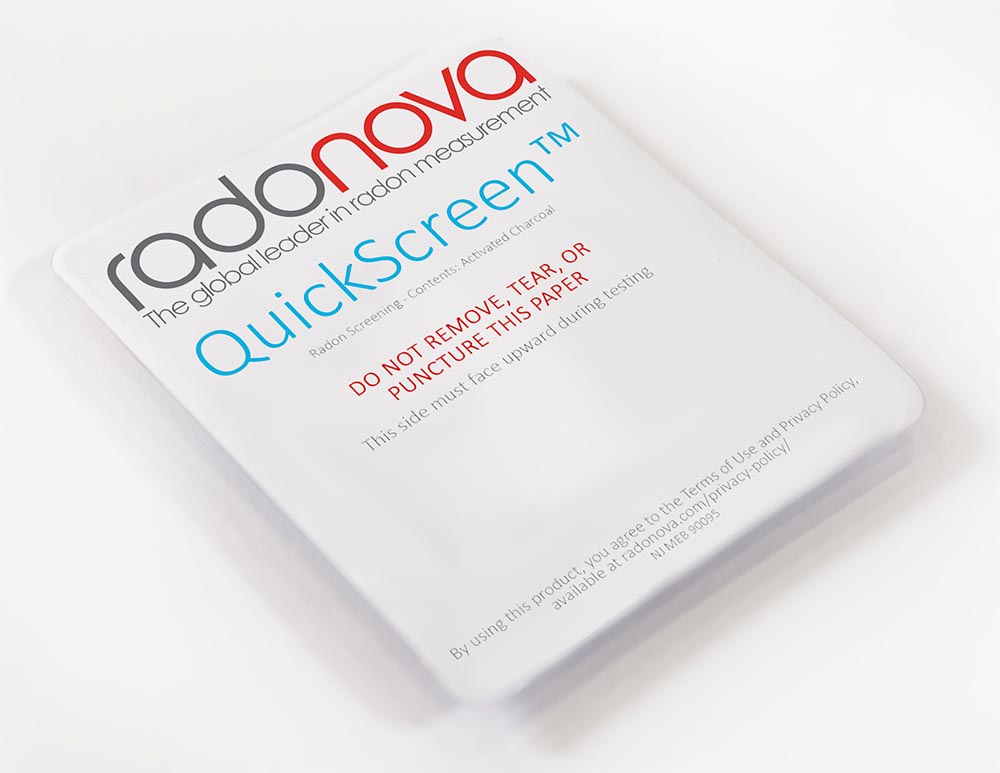
QuickScreen Radon Test
Avoiding these three common mistakes can prevent false positive or false negative radon test results
LOMBARD, ILLINOIS, UNITED STATES, March 16, 2023 /EINPresswire.com/ -- With experience and data from tens of thousands of radon measurements around the world, Radonova has identified the most common mistakes that occur during residential radon measurements. Avoid these three common mistakes to prevent false positive or false radon negative readings and unnecessary re-measurements.1. Too few radon detectors are used when measuring for radon.
Frequently, homeowners will choose to only place detectors in basements because it is suspected that there are high radon levels there (which is often the case). Radon is an invisible radioactive gas that is transported in the air, therefore it is best to also measure rooms where residents spend most of their time.
When determining the number of detectors needed, use the following guide:
- Place at least one radon detector in the largest central lived in area on the lowest occupied level of the home.
- Measure rooms where people spend four or more hours per day – such as bedrooms, family rooms, living rooms, and home offices.
- In multi-story homes be sure to test upper floors as well. Radon can be higher on upper floors. The only way to know is to test all floors.
For those who live in a home with an outside building or guest house, measurement is recommended there as well. Radon levels can vary greatly between different buildings, even if they are close together.
2. Radon detectors are not placed in the correct location(s) when measuring for radon.
Detectors from an accredited radon laboratory, such as Radonova, will provide clear instructions on where the detectors should be placed. Instructions will state the following:
- Place the detector on a shelf or table against an interior wall that is free from ventilation sources like vents or air returns.
- Keep the radon test away from all windows, doorways, and exterior walls. If the test is in an air draft area or near a window it introduces too much fresh air to accurately measure your indoor radon levels.
- Place a radon detector on a shelf or table at least 20 inches above the floor.
- Do not place the detector on a fireplace mantel, in a kitchen, in a bathroom, laundry room, or on a window sill.
- Make sure pets, children, and family members cannot move or play with the radon detector. It should be left unmoved during the measurement period.
Placement mistakes rarely create false positive readings. But, false positive readings could occur if the test is placed in too small of an area such as an unoccupied basement or too close to a known radon source like an unsealed sump well.
3. Measuring for radon is only done one time – and never tested again if levels are low.
Just as radon levels can vary between homes on the same street or in the same neighborhood, radon levels can vary within a single home over time. The EPA recommends that all homeowners test for radon every two years. It is also recommended to test for radon:
- Every year after installing a radon mitigation system.
- When buying a new home.
- When moving to a lower floor of a home, such as a basement or partially buried underground floors.
- During alternate seasons – such as taking a measurement in the summer months and also in the winter months.
- After major home renovations.
Because many homeowners may only test once for radon, it’s even more critical that radon detectors are accurate and the measurement is analyzed by an accredited laboratory.
"Radonova’s home radon tests are easy to use, accurate, and analyzed in our highly accredited laboratory," says Zan Jones, Vice President of Sales and Marketing for Radonova, Inc. "Use the radon detector that fits your timeframe for testing - whether it be 2-4 days, one month or a year," Jones continues. "The longer you can test, the more accurate your results will be."
Zan Jones
Radonova, Inc.
+1 214-536-6666
email us here
Visit us on social media:
Facebook
Twitter
LinkedIn
YouTube
TikTok
Mistakes When Measuring for Radon
Legal Disclaimer:
EIN Presswire provides this news content "as is" without warranty of any kind. We do not accept any responsibility or liability for the accuracy, content, images, videos, licenses, completeness, legality, or reliability of the information contained in this article. If you have any complaints or copyright issues related to this article, kindly contact the author above.
