Test Scheduled News
Pacific Northwest National Laboratory (PNNL) is managed and operated by Battelle for the Department of Energy


In science, researchers often focus their entire careers on the pursuit of one primary field. Some, however, find that bridging fields opens new realms of possibility. Henry Kvinge, who trained as a mathematician but now works primarily as an AI …
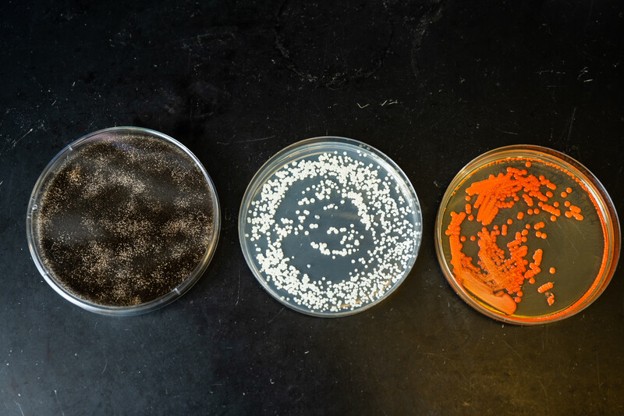
Mining usually brings to mind mountains, heavy machinery, and piles of gravel. However, during World War II, scientists harnessed a new mining frontier in the ocean—not its rocky floor, but the water itself. The United States mined magnesium directly from …
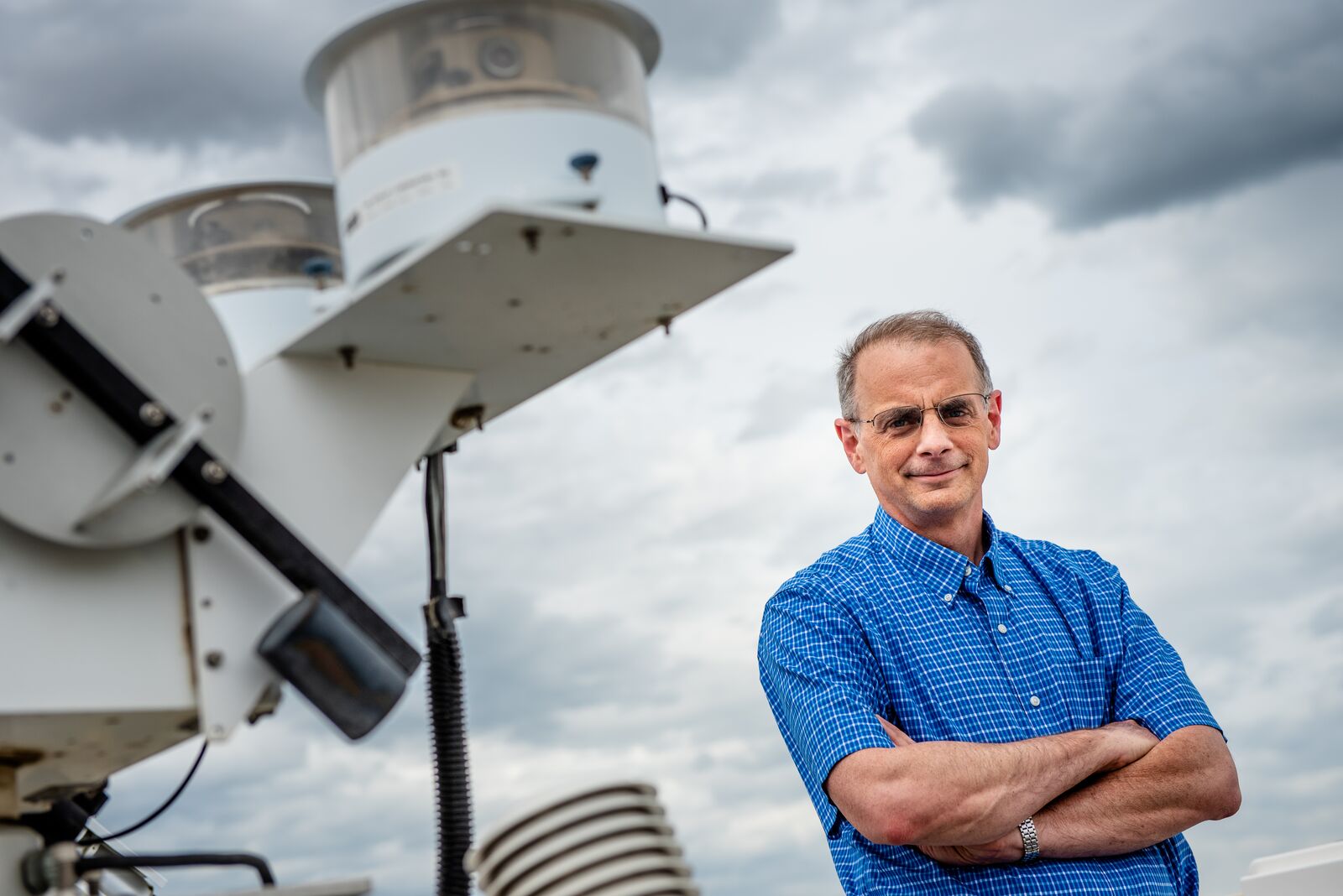
RICHLAND, Wash. — Pacific Northwest National Laboratory has selected atmospheric scientist Larry Berg as the next director of the Department of Energy’s Atmospheric Radiation Measurement User Facility. Nine DOE national laboratories manage and operate ARM …
Researchers at Pacific Northwest National Laboratory (PNNL) authored an invited perspective paper that was published in Batteries & Supercaps in March 2026. The paper showcases the Lab’s ongoing research into electrochemical energy storage and what it …
When Aaron Nicholas served in the U.S. Army, he became familiar with “Hail Mary” scenarios where unanticipated, high-pressure conditions push a team to succeed in ways that normal circumstances would not. Nicholas and his team at Pacific Northwest National …
Three Pacific Northwest National Laboratory (PNNL) researchers—Glenn Grant, Matthew O’Hara, and Scott Whalen—were named Distinguished Inventors of Battelle, an honor recognizing full-time researchers who have received 14 or more U.S. patents. Though each …
The seeds of mentorship are often sown early, and for these two scientists at Pacific Northwest National Laboratory (PNNL or the Lab), the guidance they once received has taken root in their own approach to mentoring others. Cybersecurity engineer Penny …
The Science Plants and algae use light to make energy through photosynthesis, but when darkness falls, they must switch to other metabolic processes to survive. Cyanobacteria, tiny microbes also known as blue-green algae, experience this transition every …
The Science Simulating quantum chemical systems using quantum approaches will be fundamental to efficiently leveraging emerging quantum computing technologies but will require developing effective theoretical frameworks suited to the specific nuances of …
The Science Zeolites are highly stable materials used across industries as catalysts for chemical reactions ranging from olefin dimerization to the conversion of methane into methanol. Leveraging zeolites to their full potential requires understanding and …
The Science Path-integral molecular dynamics is a method for exploring nuclear quantum effects (NQEs) in a wide range of chemical systems. While important for modeling reactions, this approach is limited by its computational cost. A research team developed …
The Science Across nature, iron-sulfur clusters move electrons within enzymes to facilitate chemical reactions. Despite the persistence of a common [4Fe–4S] core, the individual enzymes operate across a wide range of redox potentials. Researchers studied …
When you go to the doctor for a routine medical exam or a prenatal check-up, they often use an ultrasound or an X-ray to see what’s happening inside your body without needing surgery. At Pacific Northwest National Laboratory (PNNL), researchers are doing …
RICHLAND, Wash.—An innovative public-private partnership has yielded powerful new tools to help federal agencies rapidly synthesize complex data, historical documents and more into draft environmental impact statements. The benchmark project, called …
The Science Isopentane disproportionation catalyzed by a chloroaluminate ionic liquid is a known route to the low temperature and pressure forming and breaking of C–C and C–H bonds. However, a detailed understanding of the underlying mechanism and kinetics …
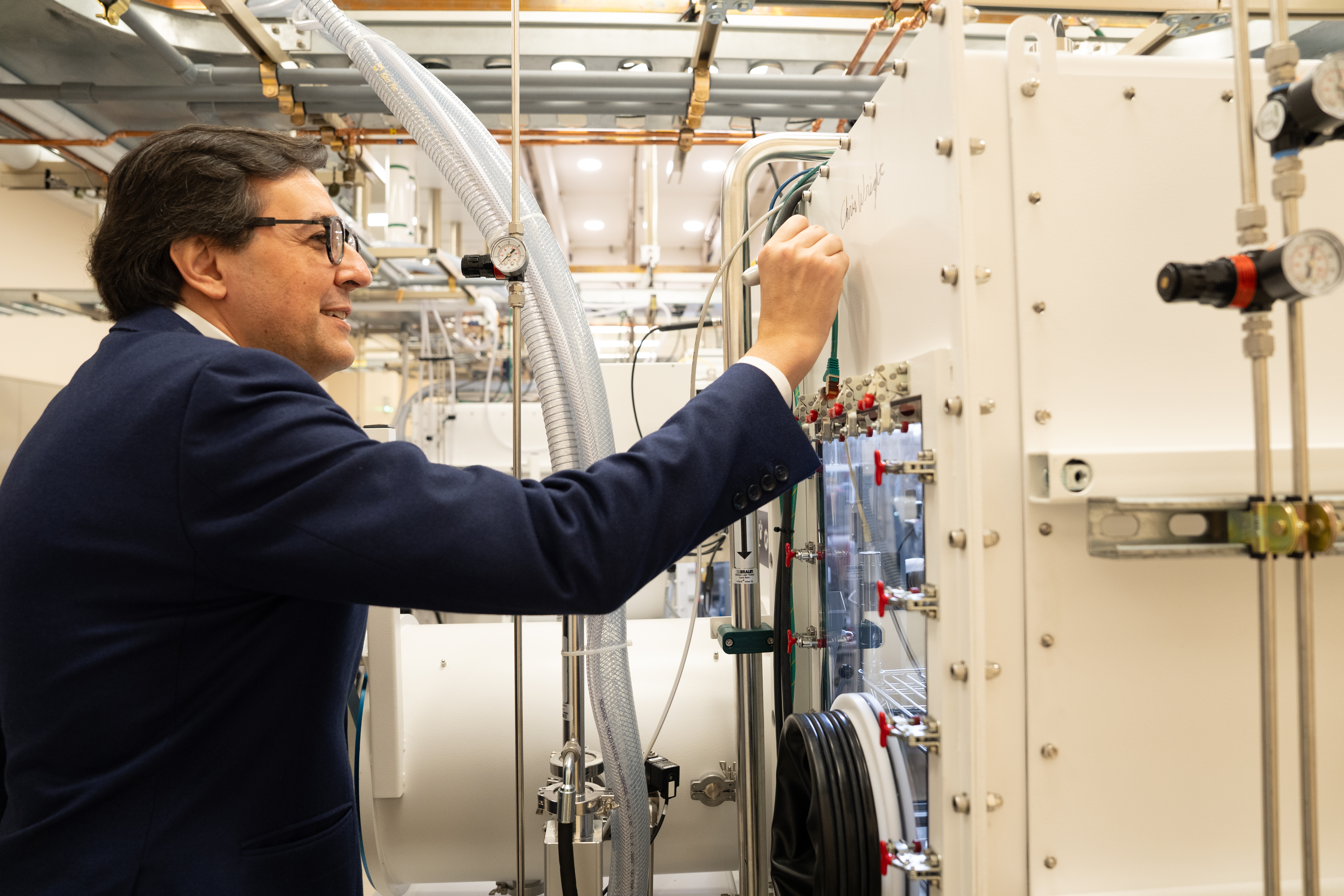
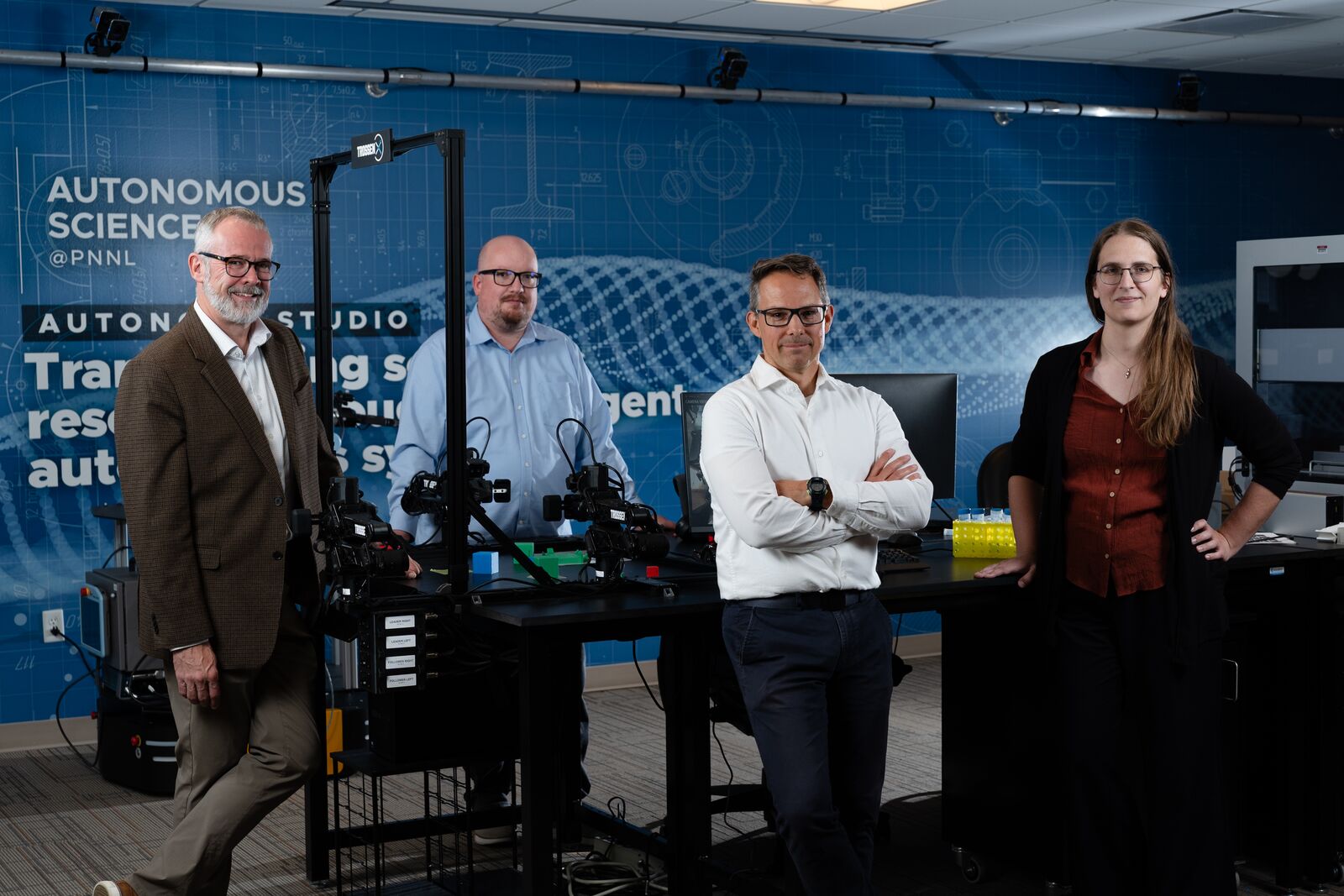
RICHLAND, Wash.—Researchers at the Department of Energy’s Pacific Northwest National Laboratory use a slew of autonomous robots for designing and implementing experiments. However, setting up an experiment on an autonomous lab robot is surprisingly slow …
A new invention from the Department of Energy’s Pacific Northwest National Laboratory (PNNL) could soon help manufacturers more easily adopt the Lab’s patented Shear Assisted Processing and Extrusion (ShAPE™) technology, enabling faster manufacturing of …
The Department of Energy’s Pacific Northwest National Laboratory (PNNL) has formed a partnership with the Orlando-based firm Refinity, which has licensed a key process from PNNL that will help the company convert mixed plastic waste into valuable …
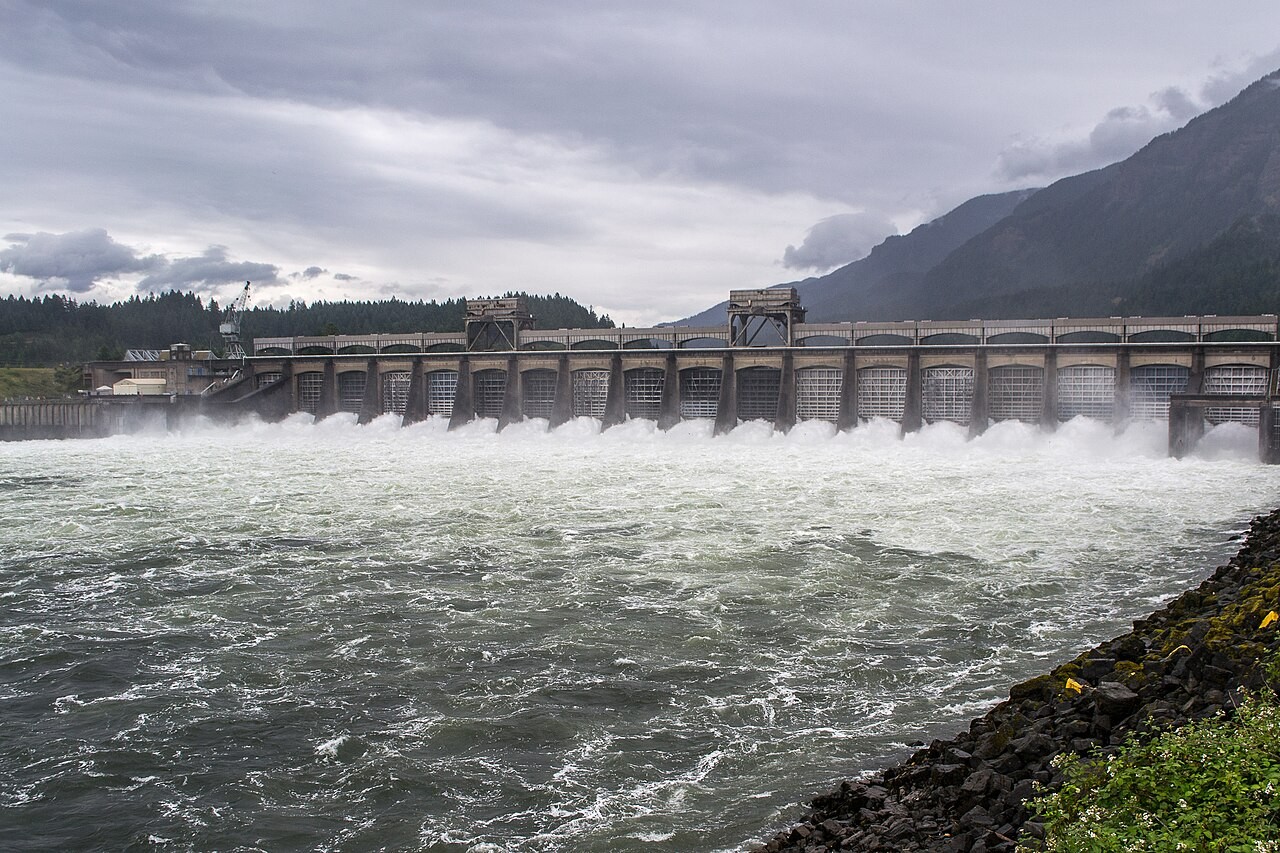
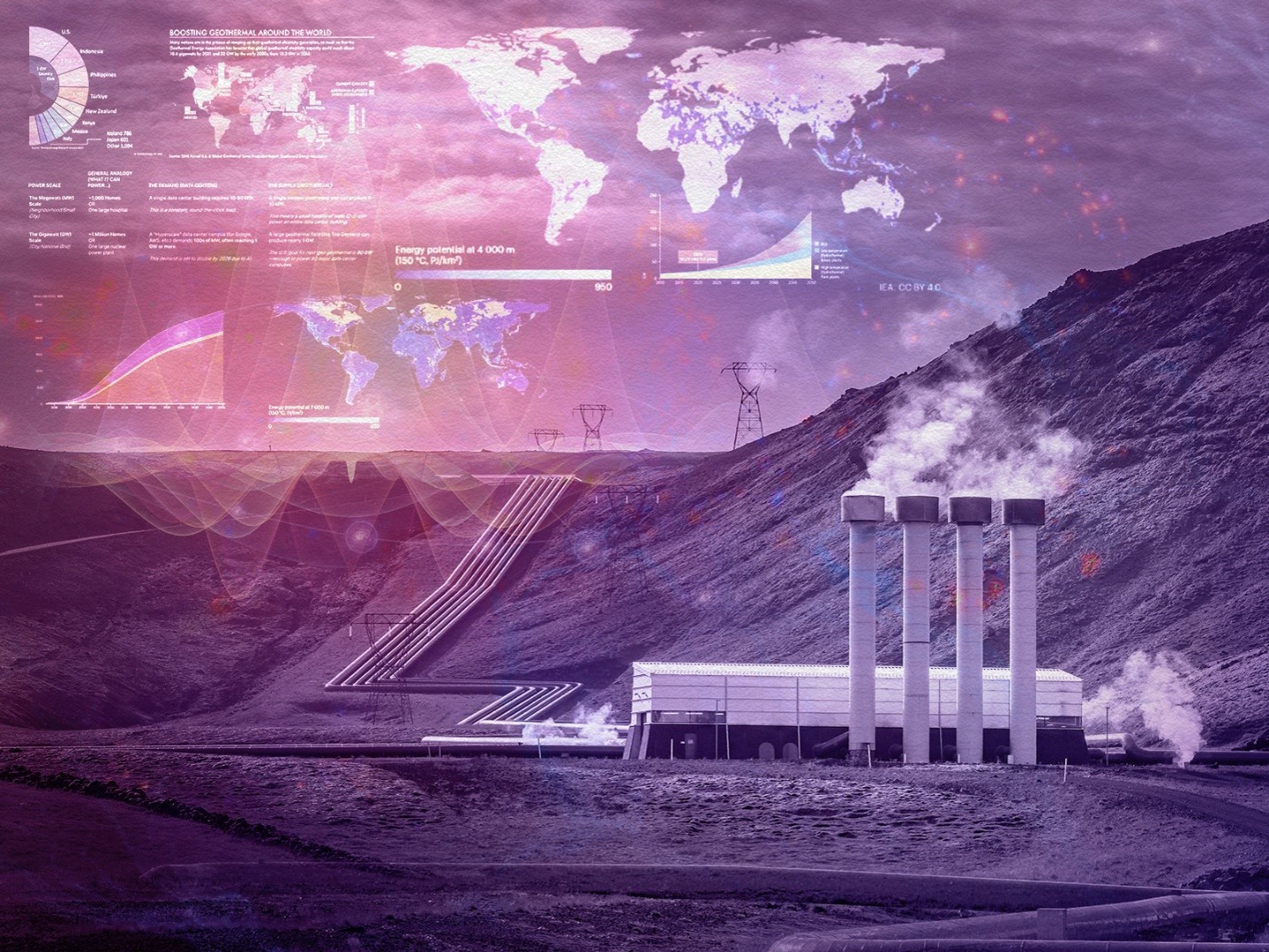
RICHLAND, Wash. — All around the world, heat is key to generating electricity. By burning hydrocarbons, splitting atoms or tapping into Earth’s hot subsurface, humans generate much of the world’s electricity by heating water to create steam that turns …