
A Technical Guide from Homay on Professional Depth Filtration Solutions for Liquid Process
In industrial liquid processing, operators frequently encounter operational bottlenecks such as rapid clogging, unexpected pressure drop spikes, and premature cartridge replacement cycles. These recurring issues often stem from a fundamental misconception in filter selection: the belief that a tighter, finer filter rating automatically guarantees better system performance. When process engineers install overly dense surface filters to handle fluids with variable particle sizes, the media surface blinds almost instantly, triggering sudden differential pressure rises and forcing costly line shutdowns. Achieving reliable liquid clarity requires shifting focus from surface straining to volume retention. By incorporating professional depth filtration solutions into liquid process lines, facilities can capture diverse particle distributions throughout the matrix depth while maintaining stable flow rates and extending downstream protection.
Hangzhou Homay Filter Material Co.,Ltd, design engineered media matrices that balance retention efficiency, dirt-holding capacity, and long-term chemical compatibility across demanding industrial environments.
Fundamentals of Depth Filtration: Gradient Matrix and Mass Retention
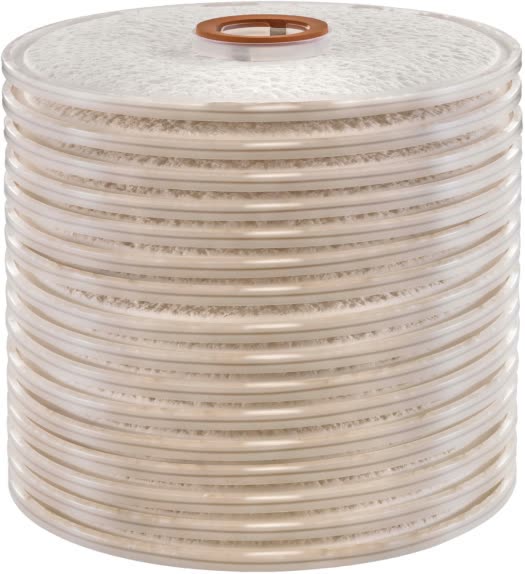
Unlike surface filtration membranes that trap particulates strictly on a two-dimensional boundary, depth filtration relies on a three-dimensional tortuous path to capture contaminants throughout the entire thickness of the filter media. Melt blown, string wound, glass fiber, and lenticular depth media utilize a graded density structure characterized by an outer loose zone transitioning to an inner tight core. This outer-to-inner gradient allows larger suspended solids to settle within the outer layers, while finer particles penetrate deeper before being trapped in the inner micropores.
This progressive entrapment mechanism yields exceptional dirt-holding capacity and high resistance to hydraulic surge shocks. Melt blown cartridges manufactured by Homay leverage continuous thermal fiber bonding to construct self-supporting fiber networks without binders or adhesives, minimizing extractables in sensitive liquids. Similarly, gradient-density string wound elements utilize precision winding patterns over perforated support cores, creating thousands of micro-funnels that distribute contaminant loading evenly. By distributing particle deposition across a thick volume rather than forcing accumulation onto a single surface plane, depth filtration maintains low initial differential pressures and extends service lifespan significantly.
Application-Specific Selection Criteria Across Key Industries
Selecting appropriate depth filtration media requires matching specific fluid properties with engineered polymer or inorganic materials. Hangzhou Homay Filter Material Co.,Ltd provides specialized cartridge configurations engineered for distinct industrial operating conditions across global process markets.
Brewing and Beverage Clarification
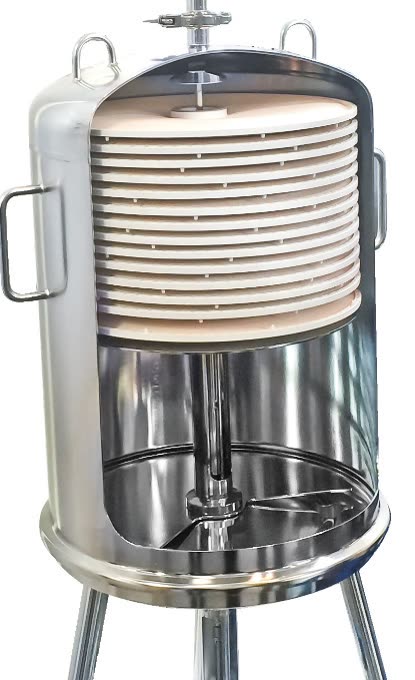
Fermented beverages such as beer and wine contain complex suspensions of yeast cells, proteins, and colloidal haze particles that quickly blind conventional surface media. For these operations, Homay supplies gradient-density melt blown cartridges and lenticular stacked depth sheet assemblies. The multi-layer polypropylene matrix selectively removes yeast and fine hazes while preserving aromatic compounds and color stability. Food-contact compliant materials ensure zero flavor alteration during final polishing.
Chemical Processing and Corrosive Fluids
Industrial chemical manufacturing involves aggressive acids, alkalis, solvents, and high-purity reagents. In these environments, Homay recommends all-polypropylene or glass fiber depth media housed in corrosion-resistant filter vessels. Polypropylene media offers broad chemical compatibility across pH ranges from 1 to 14, while thermal-bonded micro-glass fiber media handles challenging organic solvents without structural degradation or fiber migration into downstream chemical lines.
Pharmaceutical Water and Process Fluids
Purified water systems, buffer preparation, and pharmaceutical intermediate processing require rigorous purity control and low extractable profiles. Homay delivers depth cartridges manufactured from FDA-compliant polypropylene materials that conform to USP Class VI biological safety testing. These specialized depth filtration solutions undergo strict flushing protocols to minimize total organic carbon leaching, providing effective pre-filtration for downstream sterilizing-grade membrane filters.
Essential Engineering Parameters for Filter Sizing
Proper filter sizing begins with a clear evaluation of fluid rheology, thermal conditions, and chemical behavior. Higher fluid viscosity directly increases flow resistance across filter media, meaning that processing viscous liquids like polymers or concentrated syrups requires selecting slightly coarser micron ratings or expanding total filtration surface area to avoid high initial pressure drops. Meanwhile, elevated operating temperatures can alter polymer structural integrity, prompting engineers at Hangzhou Homay Filter Material Co.,Ltd to carefully verify thermal thresholds for polypropylene, nylon, or glass fiber media. Furthermore, fluid pH dictates the chemical compatibility requirements for internal core supports and outer cages to avoid material degradation.
Beyond physical fluid properties, particulate characteristics and systemic hydraulic constraints determine the overall media layout. High suspended solids concentrations often overload single-stage filters, making stepped filtration trains—where coarse depth pre-filters precede fine depth cartridges—an ideal approach to distribute contaminant loading smoothly. Establishing clear operational parameters around terminal differential pressure, typically set between 2.0 and 2.5 bar, prevents internal structural bypass or particulate unloading under continuous pump pressure.
Finally, integrating planned cartridge replacement intervals into routine plant operational schedules helps minimize unexpected line halts. By sizing filter vessels and media volume to match batch production cycles or scheduled turnaround windows, facilities maintain stable production throughput. Factoring these physical, hydraulic, and maintenance parameters into upfront system sizing transforms depth filtration into a dependable, long-term asset for industrial fluid streams.
Technical Support and Process Integration
Achieving long-term process stability extends beyond selecting standard off-the-shelf filter components. Hangzhou Homay Filter Material Co.,Ltd supports industrial clients by evaluating crude fluid samples to analyze particle size distributions and solid loads before finalizing filtration specifications. Homay technicians assist in matching exact cartridge geometries with appropriate stainless steel filter housings, ensuring leak-free sealing and optimized internal flow distribution.
By incorporating pre-set differential pressure monitoring protocols and establishing automated alarm nodes, plant operators can monitor filter fouling trends in real time. This structured approach transforms routine element replacement from an unexpected maintenance expense into a predictable investment in process reliability. Through field-tested depth filtration solutions, Homay helps global facilities achieve clear fluid quality, protect sensitive equipment downstream, and maintain seamless batch continuity.
For additional product technical datasheets, chemical compatibility guides, and application support, please visit the official company website: https://www.homayfiltration.com/
Hangzhou Homay Filter Material Co., Ltd.
Hangzhou Homay Filter Material Co., Ltd.
Legal Disclaimer:
EIN Presswire provides this news content "as is" without warranty of any kind. We do not accept any responsibility or liability for the accuracy, content, images, videos, licenses, completeness, legality, or reliability of the information contained in this article. If you have any complaints or copyright issues related to this article, kindly contact the author above.
