
Top Putty Knife Manufacturer Expands Professional Hand Tool Solutions for Global Markets
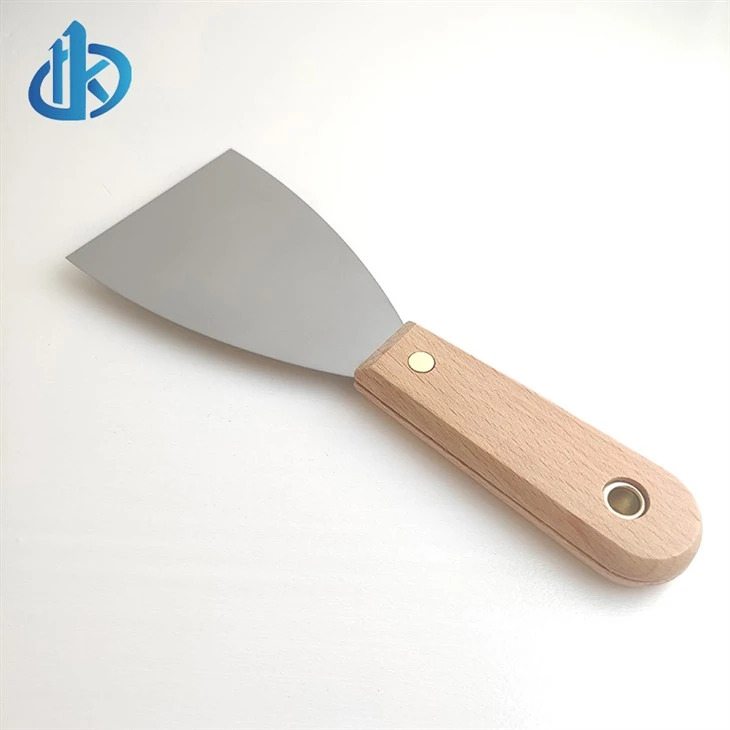
Carbon Steel Putty Knife
LINYI, SHANDONG, CHINA, October 10, 2026 /EINPresswire.com/ -- As construction, renovation, and interior finishing projects continue to create demand for dependable hand tools, manufacturers are placing greater emphasis on product consistency, ergonomic design, and flexible supply capabilities. Linyi Hanke Tools Co., Ltd. is a specialist in building and decoration hand tools, with a product portfolio serving professional contractors, distributors, hardware retailers, and private-label brands. Based in Linyi, Shandong Province, China, the company focuses on the development and production of tools used in surface preparation, plastering, drywall finishing, and related construction applications. Its range includes putty knives, plastering tools, drywall knives, and floor scrapers, positioning the manufacturer within a competitive international market for professional finishing equipment.
The quality of finishing work depends not only on the materials used but also on the tools selected for each task. From filling small cracks and smoothing repair compounds to applying plaster across large wall surfaces, construction professionals require tools that provide appropriate flexibility, strength, control, and durability. For importers and distributors, these practical requirements are accompanied by purchasing considerations such as product variety, manufacturing consistency, customization options, and reliable delivery schedules.
Against this background, Linyi Hanke Tools Co., Ltd. offers a range of hand tools intended to support different stages of construction and decoration work. Its manufacturing and export focus allows the company to serve customers looking for both standard products and customized solutions for their own brands.
Putty Knives Remain Essential for Surface Preparation
Putty knives are widely used in painting, renovation, drywall repair, and general maintenance. Their primary functions include applying filler, spreading putty, scraping away loose material, filling surface imperfections, and smoothing compounds before further finishing. Although the tool has a relatively simple structure, its performance depends on several design characteristics, including blade material, thickness, flexibility, edge finish, handle construction, and overall balance.
A flexible blade can help workers spread filler smoothly across shallow imperfections and curved surfaces, while a stiffer blade may provide better leverage for scraping or working with more resistant materials. The choice between carbon steel and stainless steel also depends on the intended application, desired maintenance requirements, and purchasing budget.
Linyi Hanke Tools Co., Ltd. manufactures putty knives in a variety of styles and configurations. Its product range includes carbon steel putty knives, stainless steel models, wooden-handle designs, and versions with rubber or plastic handles. The company also offers different blade widths to accommodate detailed repair work and broader surface preparation tasks.
For contractors, choosing the correct blade width can improve working efficiency. Narrow putty knives are useful for filling small holes, repairing cracks, and working in confined spaces. Wider models can help distribute filler across larger areas and reduce the number of passes needed to cover a surface. In practice, professionals often use several blade sizes throughout a project rather than relying on one tool for every operation.
Handle design is equally important. A secure grip can improve control when applying pressure and help reduce discomfort during repeated movements. Wooden handles may appeal to users who prefer a traditional tool design, while molded plastic and rubberized handles can provide alternative grip characteristics. The connection between the handle and blade also deserves attention because it influences stability during scraping and spreading.
For distributors, a product range covering different materials, widths, and handle types can make it easier to serve customers with different preferences. A well-organized assortment may include entry-level tools for general household repairs, mid-range options for routine construction work, and more specialized products for demanding finishing applications.
Linyi Hanke Tools Co., Ltd. supports this type of purchasing strategy through its selection of putty knives and related finishing tools. Buyers can review the available specifications and identify models that align with the requirements of their target markets.
Plaster Trowel Designs Support Consistent Surface Finishing
Plastering is a fundamental stage in many construction and renovation projects. Whether workers are applying gypsum-based materials, cement mortar, or other suitable coatings, they need tools that help spread material evenly and create the desired surface texture. A plastering trowel provides a broad working blade that enables the operator to distribute, level, and smooth material across walls, ceilings, and other surfaces.
The performance of a plastering tool depends on its blade geometry, flatness, rigidity, edge condition, and handle design. Blade materials such as carbon steel and stainless steel are commonly selected according to the application and product specification. Surface finishing may also influence how smoothly the tool moves across the applied material.
Linyi Hanke Tools Co., Ltd. includes Plaster Trowel products in its building and decoration tool portfolio. Its range includes carbon steel and stainless steel designs, wooden-handle models, rubber or plastic handle configurations, and specialized options such as notched trowels and plastering floats.
Different designs serve different purposes. Flat finishing trowels are generally used to spread and smooth plaster or similar compounds. Notched trowels create patterned ridges in suitable materials, helping support applications where an even distribution of adhesive or mortar is required. The correct design depends on the material being applied and the finish or coverage specified for the project.
Blade size is another purchasing consideration. Smaller trowels may offer better control in restricted areas and around edges, while larger blades can help cover broad surfaces more efficiently. However, a larger blade also changes the amount of material a worker can move in one pass and may require greater handling control.
For professional users, tool balance and grip comfort can influence productivity over a long workday. A secure handle and a stable blade connection support controlled movement, particularly during repeated spreading and finishing operations. For procurement teams, consistency in these construction details is important when supplying tools to contractors who expect similar handling characteristics across replacement purchases.
Linyi Hanke Tools Co., Ltd. provides multiple plastering tool configurations, allowing buyers to compare options for professional construction, renovation, and retail applications. For orders involving specific materials or finishing methods, purchasers should confirm the relevant blade dimensions, material, handle type, and intended use before finalizing a selection.
Drywall Knife Solutions Address Modern Interior Construction
Drywall systems are widely used in residential, commercial, and industrial interiors because they can support relatively efficient installation and finishing. Once drywall panels have been installed, joints, fastener points, corners, and surface imperfections often require filling and smoothing before painting or applying decorative finishes. Drywall knives help workers distribute joint compound and create a more uniform surface.
The requirements for drywall tools vary according to the task. Narrow knives are useful for filling small joints and working around fasteners, while wider knives are often used to feather joint compound over a larger area. The blade needs to balance flexibility and stiffness so that the user can spread material without leaving excessive ridges or uneven patches.
Linyi Hanke Tools Co., Ltd. offers Drywall Knife products in several configurations, including carbon steel and stainless steel blades, wooden handles, rubber or plastic handles, and notched designs for specialized uses. This range allows distributors and construction supply businesses to select products suited to different user groups and finishing requirements.
In drywall finishing, blade width and flexibility can affect the number of application passes required to achieve a smooth surface. Wider knives can help feather compound over a larger area, while narrower tools may provide greater control for initial filling or detailed work. Skilled workers often use a sequence of blade sizes as the joint progresses from filling to smoothing.
Material selection also matters. Carbon steel blades are commonly used in hand tools because of their working characteristics and cost considerations. Stainless steel models may be preferred where corrosion resistance and ease of maintenance are important. Regardless of the material, proper cleaning and storage can help preserve blade condition and extend the useful life of the tool.
Handle construction, blade attachment, and edge finishing should also be assessed when comparing products. A tool that feels stable in the hand and moves predictably across joint compound can help workers maintain consistent application pressure. For wholesale buyers, product uniformity across batches is important because contractors and retailers may reorder the same models repeatedly.
By offering Drywall Knife products alongside putty knives and plastering tools, Linyi Hanke Tools Co., Ltd. provides buyers with access to complementary tools for multiple stages of interior finishing. This breadth can be useful for hardware distributors, building-material retailers, and brands seeking to assemble a coordinated range of professional hand tools.
Manufacturing Capacity and Customization for International Buyers
For professional hand tool procurement, the quality of the individual product is only one part of the decision. Importers and distributors must also evaluate manufacturing capacity, production planning, quality control, customization capabilities, and communication throughout the order process.
Linyi Hanke Tools Co., Ltd. describes itself as a manufacturer with nearly three decades of experience in building and decoration hand tools. According to the company's published information, its production facilities include standardized production lines and automated equipment for operations such as cutting, punching, polishing, grinding, and other processing stages. The company reports an annual production capacity of approximately six million pieces.
Such capabilities can be relevant to buyers managing recurring wholesale orders or coordinating products across multiple retail channels. Standardized production processes can help manufacturers maintain consistency in dimensions and assembly, while production planning supports order fulfillment across different product categories.
Customization is another important consideration for private-label brands. Tool buyers may require specific blade dimensions, materials, handle designs, logos, packaging formats, or combinations of products tailored to a particular market. Linyi Hanke Tools Co., Ltd. states that it provides OEM and ODM services covering product specifications, materials, branding, and packaging.
For a buyer developing a private-label tool line, the process typically begins with defining the target application and price position. Product samples can then be reviewed for blade behavior, grip comfort, fit and finish, and packaging suitability. Once specifications are confirmed, production requirements and quality acceptance criteria can be agreed upon before larger orders are placed.
Clear communication at the sampling stage can help prevent mismatches between the requested product and the final delivered goods. Buyers should confirm the exact steel type, blade dimensions, handle material, logo placement, packaging artwork, and any required labeling. They should also establish expected lead times, minimum order quantities, inspection procedures, and arrangements for handling manufacturing defects.
The company's website lists BSCI, ISO 14001, and FSC-related credentials. Prospective customers should review current certificates and confirm their validity, scope, and relevance to the particular products or sourcing requirements under consideration. Product-specific quality checks remain important regardless of a supplier's broader certification status.
Serving Global Construction and Hardware Markets
Demand for finishing tools comes from a broad range of customers, including construction contractors, painting professionals, renovation companies, hardware retailers, wholesalers, and online tool sellers. Each customer group may prioritize different factors. Contractors often focus on handling, durability, and consistent performance, while distributors may place greater emphasis on product range, pricing structure, packaging, and the ability to replenish stock.
Linyi Hanke Tools Co., Ltd. states that its products are supplied to overseas markets, including North America, South America, Europe, Japan, and South Korea. The company also describes its business as serving international tool brands and building-material retailers through bulk supply and customization programs.
For export buyers, product presentation and packaging can be as important as technical specifications. Retail-ready packaging can help a product fit into a store's merchandising system, while bulk packaging may be more suitable for trade distributors or construction supply channels. Clear product labeling and consistent item identification can also simplify inventory management and reordering.
A broad tool portfolio offers additional purchasing flexibility. Putty knives, plastering trowels, and drywall knives are often used within the same construction or renovation project, even though each serves a different function. Buyers sourcing several categories from one manufacturer may be able to coordinate product specifications, branding, packaging, and purchasing schedules more efficiently.
At the same time, the suitability of each product should be assessed individually. Buyers should review samples, confirm material specifications, and test tools under representative working conditions where appropriate. Product performance depends on both construction quality and how the tool is used, maintained, and matched to the task.
As building and renovation markets continue to evolve, demand for practical, application-specific hand tools is likely to remain an important part of the construction supply chain. Manufacturers that combine product variety with consistent production, responsive communication, and flexible customization can help distributors and brands meet different market requirements.
About Linyi Hanke Tools Co., Ltd.
Linyi Hanke Tools Co., Ltd. is a hand tool manufacturer based in Linyi, Shandong Province, China. The company focuses on research, development, production, and export of tools for construction, decoration, and surface finishing. Its product portfolio includes putty knives, Plaster Trowel products, Drywall Knife products, floor scrapers, bricklaying trowels, wooden hammers, and other building-related hand tools. The company describes its manufacturing capabilities as including standardized production processes, quality control, and OEM/ODM customization for product materials, dimensions, branding, and packaging. It serves international distributors, wholesalers, construction supply businesses, and private-label brands seeking tools for professional and general-purpose applications. For more information about its products, manufacturing services, and customization options, visit www.hanketool.com.
Address: No.69, Gaozhuang Third Village, Fangqian Town, Junan County, Linyi City, Shandong Province, China
Official Website: https://www.hanketool.com/
Sun Shengwen
Linyi Hanke Tools Co., Ltd.
canny@hanketool.com
Legal Disclaimer:
EIN Presswire provides this news content "as is" without warranty of any kind. We do not accept any responsibility or liability for the accuracy, content, images, videos, licenses, completeness, legality, or reliability of the information contained in this article. If you have any complaints or copyright issues related to this article, kindly contact the author above.
