
Ancient, Nutrient-Poor Soils Harbor More Stable Microbial Communities
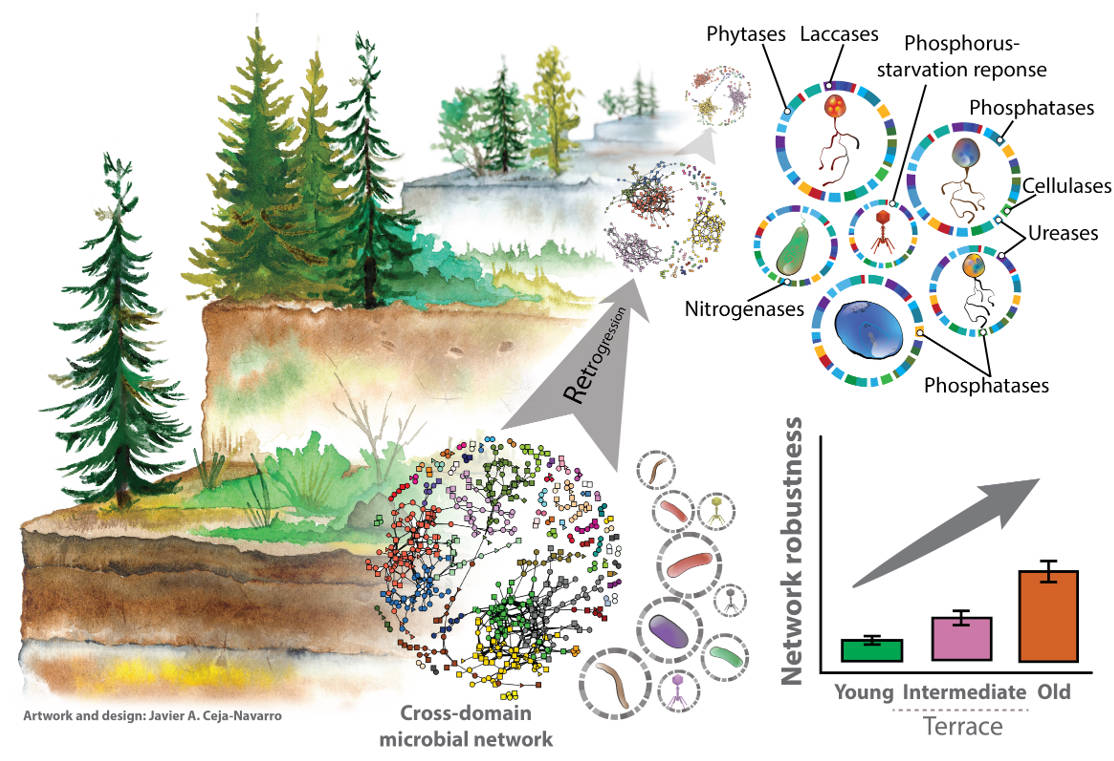
Ecosystem retrogression enhances cross-domain microbial stability and increases the genetic potential for nutrient cycling
GA, UNITED STATES, July 21, 2026 /EINPresswire.com/ -- Ancient ecosystems often experience long-term nutrient depletion, a process known as ecosystem retrogression. However, the consequences of retrogression for soil microbiomes across multiple domains of life remain poorly understood. Using a marine terrace chronosequence spanning hundreds of thousands of years of ecosystem development, researchers investigated changes in bacteria, fungi, protists, viruses, and soil food-web structure. Although microbial diversity declined with ecosystem age, cross-domain microbial networks became more stable and resilient. Functional analyses further revealed increased genetic potential for nitrogen fixation, phosphorus acquisition, and decomposition processes in older, nutrient-limited soils. These findings demonstrate that microbial communities can reorganize to maintain ecosystem functioning despite long-term resource limitation and biodiversity loss.
This study, led by Dr. Javier A. Ceja-Navarro at Northern Arizona University, examined how soil microbial communities respond to ecosystem retrogression, a stage of ecosystem development characterized by declining productivity and increasing nutrient limitation.
The research was conducted along the Mendocino Ecological Staircase in northern California, a natural laboratory spanning nearly 400,000 years of ecosystem development. By studying soils from terraces of different ages, the researchers explored how microbial communities respond to long-term ecosystem aging and increasing nutrient limitation.
The team combined amplicon sequencing, quantitative PCR, metagenomics, and ecological network analyses to characterize bacteria, fungi, protists, nematodes, and viruses. Across the chronosequence, microbial diversity generally declined with increasing ecosystem age. Bacterial, fungal, and protist communities all exhibited reductions in diversity and abundance as nutrient availability decreased.
Despite these declines, ecological network analyses revealed a surprising pattern. Cross-domain microbial communities became increasingly stable and resistant to disturbance in older soils. Network connectivity and robustness increased along the retrogressive gradient, suggesting that microbial communities reorganize into more resilient structures under nutrient-poor conditions.
Metagenomic analyses further demonstrated enhanced genetic potential for nutrient acquisition and cycling. Genes involved in nitrogen fixation became more prevalent in older soils, while fungal communities exhibited increased genetic potential for organic phosphorus acquisition and decomposition of complex organic matter.
The findings challenge the traditional view that ecosystem retrogression represents a simple decline in ecological functioning. Instead, the study demonstrates that soil microbial communities can undergo substantial reorganization that enhances stability while maintaining critical ecosystem processes. These adaptations may help explain how ancient, nutrient-poor ecosystems continue to function over long timescales.
By linking microbial diversity, ecological network structure, and nutrient cycling potential across multiple domains of life, this work provides new insights into the mechanisms that support ecosystem resilience under chronic nutrient limitation.
References
DOI
10.1002/mlf2.70087
Original Source URL
https://doi.org/10.1002/mlf2.70087
Funding information
This research was funded by the Lawrence Berkeley NationalLaboratory (LBNL) under the Laboratory Directed Research and Development Program and NAU's Office of the Vice Presidentof Research.
Lucy Wang
BioDesign Research
email us here
Legal Disclaimer:
EIN Presswire provides this news content "as is" without warranty of any kind. We do not accept any responsibility or liability for the accuracy, content, images, videos, licenses, completeness, legality, or reliability of the information contained in this article. If you have any complaints or copyright issues related to this article, kindly contact the author above.
