
Sprouting too soon
Under certain environmental conditions, both wheat and quinoa are vulnerable to a physiological problem that directly threatens grain soundness: preharvest sprouting (PHS). PHS occurs when mature seeds begin to germinate before harvest, typically following rainfall or prolonged humidity. This can happen in seeds that lack strong dormancy, as in quinoa, or after dormancy has naturally declined, as in wheat.
For growers in the Pacific Northwest, the difference between premium export grain and substantial economic loss can depend on a narrow window at the end of the growing season when grain must remain sound until harvest.
During germination, seeds activate metabolic pathways that mobilize stored reserves for seedling growth. A key enzyme in this process is alpha-amylase, which breaks down starch stored in the seed’s endosperm into sugars that fuel early seedling development.
While essential for plant growth, premature activation of this process degrades starch reserves in harvested grain and significantly reduces grain quality and end-use performance.
Managing PHS remains challenging because once dormancy is lost and favorable moisture conditions occur, sprouting cannot be fully prevented. The problem is further complicated by incipient sprouting — early biochemical changes that degrade grain quality before visible sprouts appear. At this stage, grain quality may already be compromised even though sprouting is not yet visible. Global economic losses associated with PHS are estimated to approach $1 billion annually.
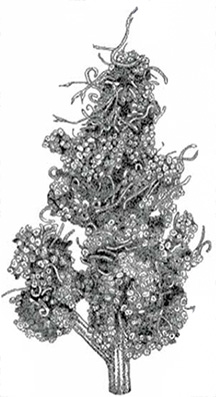
Quinoa is particularly vulnerable to PHS. Unlike wheat, quinoa seeds lack protective structures such as glumes that shield grain from environmental moisture. Quinoa also exhibits weaker seed dormancy than most modern wheat varieties, allowing sprouting to occur more readily under wet conditions. As a result, PHS damage in quinoa can develop quickly and become severe (Figure 1).
The consequences can be substantial. Sprouted quinoa seeds become brittle, lose weight, and often detach during mechanical harvest, leading to potential yield losses. Sprouted grain may also exhibit higher respiration rates and moisture content, increasing the risk of mold growth and heating during storage.
Because complete prevention is difficult, current management strategies focus primarily on reducing risk. For wheat, growers are encouraged to plant varieties with improved tolerance to PHS. Comparable varieties remain limited for quinoa. All growers can also reduce risk by closely monitoring crop maturity and harvesting grain before forecast precipitation events when possible.
In wheat, grain elevators and export facilities often evaluate starch damage using tests such as the falling numbers test. In some cases, blending strategies may be used to maintain acceptable quality thresholds. Similar approaches may eventually prove useful for quinoa if varieties with more moderate responses to sprouting can be developed.
However, improving PHS tolerance through breeding presents a fundamental biological challenge. The same mechanisms that regulate seed dormancy and sprouting in the field also control germination after planting. Breeding programs must therefore balance improved tolerance to preharvest sprouting with the need for rapid and uniform crop establishment, a difficult but essential goal.
Legal Disclaimer:
EIN Presswire provides this news content "as is" without warranty of any kind. We do not accept any responsibility or liability for the accuracy, content, images, videos, licenses, completeness, legality, or reliability of the information contained in this article. If you have any complaints or copyright issues related to this article, kindly contact the author above.
