
Plant-Based Butter Alternatives Market to Reach US$4.2 Billion on Vegan Demand
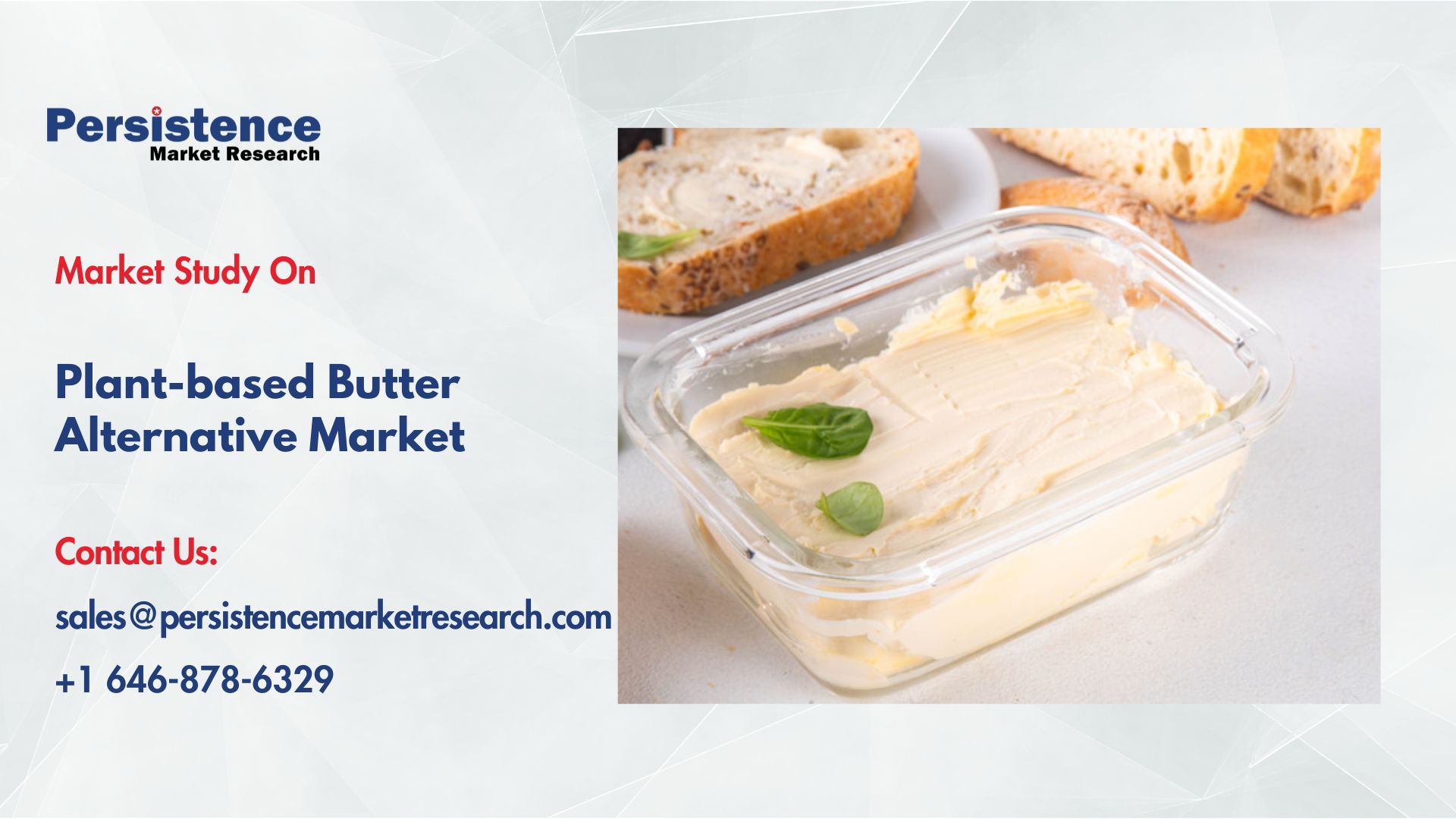
The global Plant-based butter alternative market to grow from US$2.7 Bn in 2026 to US$4.2 Bn by 2033, registering a CAGR of 6.2% during 2026–2033
LONDON, LONDON, UNITED KINGDOM, June 24, 2026 /EINPresswire.com/ -- The global plant-based butter alternative market is expected to demonstrate steady expansion as consumers increasingly shift toward dairy-free, vegan, clean-label, and environmentally responsible food products. The market is likely to be valued at US$ 2.7 billion in 2026 and is anticipated to reach US$ 4.2 billion by 2033, registering a CAGR of 6.2% during the forecast period from 2026 to 2033. This growth trajectory reflects the expanding adoption of plant-based diets, rising prevalence of lactose intolerance, increasing awareness of animal welfare concerns, and heightened interest in food products with lower environmental impact. Plant-based butter alternatives are gaining acceptance among consumers seeking products that replicate the taste, texture, spreadability, and cooking performance of conventional dairy butter while aligning with evolving dietary and sustainability preferences.
The market is further supported by the increasing availability of plant-based butter alternatives across supermarkets, hypermarkets, specialty food stores, foodservice outlets, and online retail platforms. Manufacturers are introducing products made from oils, nuts, seeds, legumes, and other plant-derived ingredients to address diverse consumer expectations. Growing demand for cholesterol-free, lactose-free, and allergen-conscious food products is encouraging companies to develop improved formulations with enhanced nutritional profiles. In addition, premiumization, clean-label positioning, sustainable sourcing, and innovative packaging are expected to strengthen the long-term outlook for the global plant-based butter alternative market.
Get Your FREE Sample Report Instantly – Click Now: https://www.persistencemarketresearch.com/samples/32875
Segmentation Analysis
By Product Form
• Flavored
• Salted
• Unsalted
By Source Type
• Almond
• Cashew
• Coconut
• Olive
• Soy
By Distribution Channel
• Convenience Store
• Food Service
• Online Retail
• Specialty Store
• Supermarket Hypermarket
Need Tailored Insights? Request Customization Now: https://www.persistencemarketresearch.com/request-customization/32875
Regional Insights
North America is expected to maintain a leading position in the global plant-based butter alternative market due to the strong presence of vegan, flexitarian, and health-conscious consumers. The region benefits from a highly developed retail ecosystem, significant product innovation, and widespread awareness of dairy-free dietary options. Consumers in the United States and Canada are increasingly choosing plant-based butter alternatives for reasons related to lactose intolerance, cholesterol reduction, animal welfare, and environmental sustainability. The availability of premium and specialty products across supermarkets, natural food stores, and e-commerce platforms is further strengthening market growth.
Europe represents another significant market, supported by increasing demand for vegan food products, stringent food labeling requirements, and strong consumer interest in sustainable consumption. Countries across Western Europe are witnessing rising adoption of dairy-free alternatives as consumers seek products with transparent ingredient lists, reduced environmental footprints, and ethical sourcing credentials. The region’s established bakery, confectionery, and foodservice industries are also contributing to the growing use of plant-based butter alternatives in commercial applications.
Asia-Pacific is expected to emerge as the fastest-growing regional market during the forecast period. Rising urbanization, changing dietary preferences, expanding middle-class populations, and increasing awareness of lactose intolerance are driving demand for plant-based dairy alternatives across the region. Consumers in markets such as India, China, Japan, South Korea, and Australia are showing growing interest in vegan, lactose-free, and health-focused food products. The expansion of modern retail networks, online grocery platforms, and international food brands is improving access to plant-based butter alternatives across major cities.
Unique Features and Innovations in the Market
Modern plant-based butter alternatives are increasingly differentiated by their ability to closely replicate the sensory and functional characteristics of conventional dairy butter. Product developers are focusing on improving flavor, texture, aroma, spreadability, melting behavior, and baking performance. Advances in food science are enabling manufacturers to create formulations that deliver a creamy mouthfeel while using plant-derived oils, proteins, natural emulsifiers, and fermentation-based ingredients.
The use of precision fermentation, natural flavor systems, and advanced emulsification technologies is expected to support the development of higher-quality plant-based butter alternatives. These technologies can help improve product stability, reduce reliance on artificial additives, and enhance the ability of plant-based products to mimic dairy-derived characteristics. Companies are also exploring the use of cultured plant-based ingredients to create more complex flavor profiles that appeal to consumers accustomed to traditional butter.
Market Highlights
The adoption of plant-based butter alternatives is being driven by growing consumer awareness of the potential health and environmental implications associated with conventional dairy production. Many consumers are seeking products that are lactose-free, cholesterol-free, and suitable for vegan or flexitarian diets. Plant-based butter alternatives can provide an accessible entry point for consumers who wish to reduce dairy consumption without significantly changing familiar eating habits.
Sustainability is another major factor influencing market growth. Plant-based butter alternatives are increasingly marketed as products with lower environmental impact compared with conventional dairy butter. Manufacturers are investing in responsibly sourced ingredients, renewable energy use, recyclable packaging, and reduced water consumption to strengthen sustainability credentials. These initiatives are becoming increasingly important as consumers and retailers place greater emphasis on environmentally responsible food production.
Secure Your Full Report – Proceed to Checkout: https://www.persistencemarketresearch.com/checkout/32875
Key Players and Competitive Landscape
• Upfield B.V.
• Unilever PLC
• Conagra Brands, Inc.
• The Kraft Heinz Company
• Oatly AB
• Miyoko's Creamery, Inc.
• Follow Your Heart, Inc.
• Daiya Foods Inc.
• Valsoia S.p.A.
• Naturli Foods A/S
Future Opportunities and Growth Prospects
The global plant-based butter alternative market is expected to create substantial opportunities for manufacturers that can combine strong sensory performance with nutritional value, affordability, and sustainability. Future growth will be supported by increasing consumer acceptance of plant-based diets, rising demand for allergen-conscious products, and expanding use of dairy-free ingredients in commercial food manufacturing.
The continued development of advanced plant oils, proteins, fermentation-derived ingredients, and natural emulsifiers is expected to improve product quality and broaden the range of applications for plant-based butter alternatives. Products that perform effectively in baking, frying, sautéing, and foodservice operations are likely to gain stronger commercial adoption. The growing demand for vegan bakery products, dairy-free desserts, ready meals, and packaged foods will further support ingredient demand across the value chain.
Explore the Latest Trending Research Reports:
Tahini Market Growth
Cheese Snacks Market Growth
Aishwarya Doiphode
Persistence Market Research
+1 646-878-6329
email us here
Visit us on social media:
LinkedIn
Instagram
X
Legal Disclaimer:
EIN Presswire provides this news content "as is" without warranty of any kind. We do not accept any responsibility or liability for the accuracy, content, images, videos, licenses, completeness, legality, or reliability of the information contained in this article. If you have any complaints or copyright issues related to this article, kindly contact the author above.
