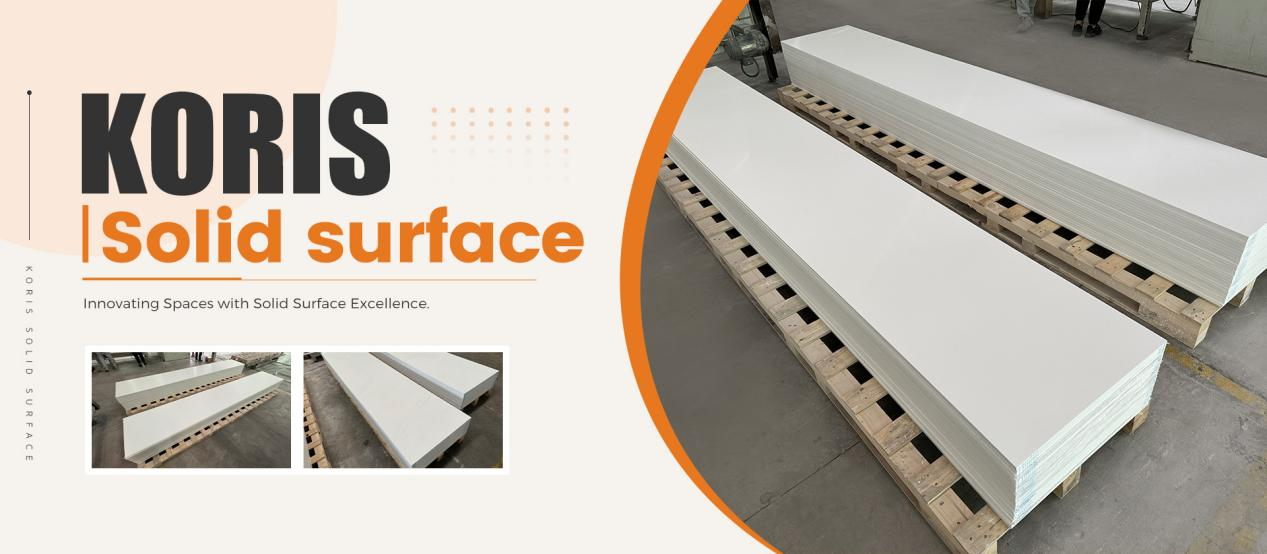
How Koris Became a Premium Solid Surface Material Solution Provider with CE Certification
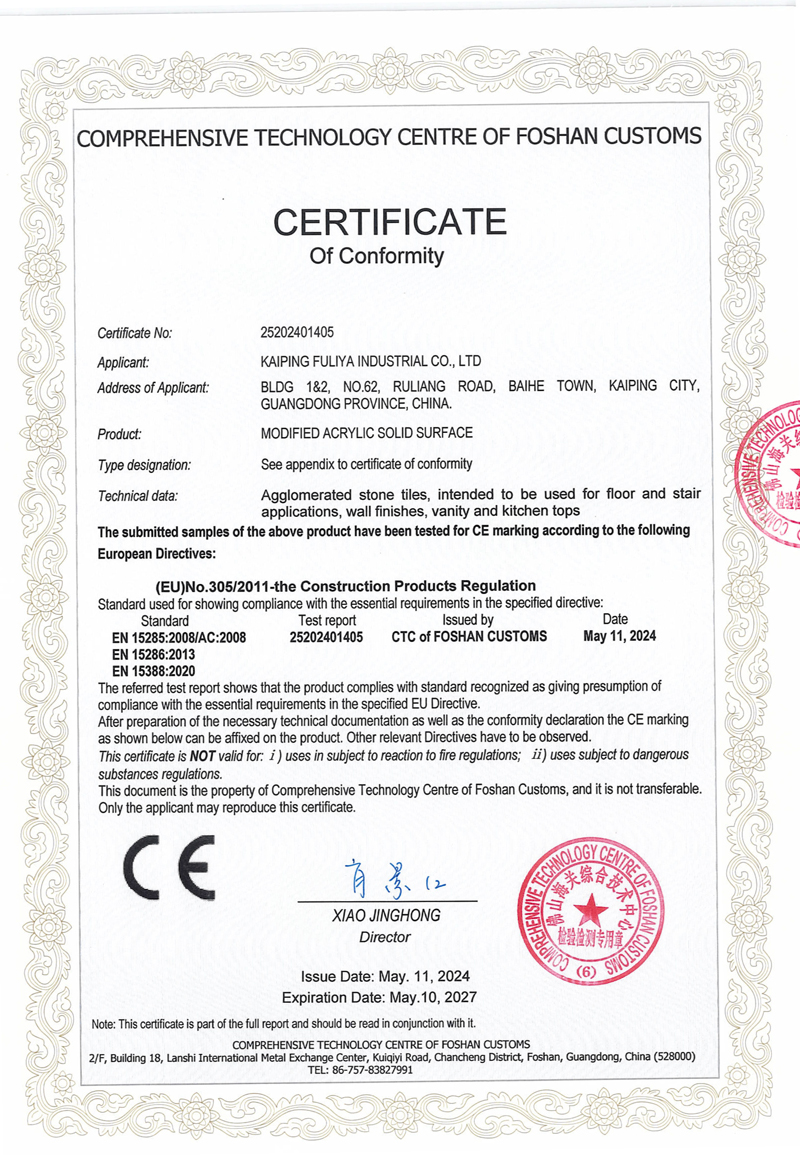
KAIPING, GUANGDONG, CHINA, June 9, 2026 /EINPresswire.com/ -- In the competitive landscape of international construction materials, compliance serves as the ultimate benchmark for quality and market access. For manufacturers targeting the European Union, the CE marking represents more than a mere regulatory requirement. It functions as a definitive gatekeeper under the Construction Products Regulation (CPR). Koris (Kaiping Fuliya Industrial Co., Ltd.) has strategically leveraged this certification to transition from a traditional manufacturer into a Premium Solid Surface Material Solution Provider. This evolution reflects a broader shift in the industry where standardized safety and performance metrics define brand value.
The Strategic Importance of CE Compliance in Global Trade
The attainment of CE certification marks a definitive shift in a manufacturer's global trajectory. It functions as a critical instrument for market integration and brand elevation through several key mechanisms:
1.Standardized Market Access: CE marking serves as a mandatory passport for the European Economic Area. By aligning with CPR standards, Koris dismantled technical trade barriers. This ensures that architectural materials circulate freely across borders without repetitive local testing.
2.Transition to Premium Positioning: This compliance framework moved the company beyond the production of generic acrylic sheets. It established a foundation where every product is recognized as a high-tier industrial asset. This transition shifted the brand from a commodity supplier to a high-value strategic partner.
3.Risk Mitigation for Stakeholders: For international distributors and project developers, a CE-certified material provides immediate assurance of structural integrity. This reduces the legal and financial risks associated with non-compliant building materials. Such reliability is a prerequisite for high-stakes commercial tenders.
4.Alignment with Global Expectations: Since its establishment in 1998, the company has evolved its manufacturing philosophy to prioritize systemic certification. This ensures that the technical specifications meet the sophisticated safety and environmental demands of modern global architecture.
Technical Foundations of the CE "Moat"
The competitive advantage created by CE compliance is built upon rigorous performance consistency and documented verification. This "technical moat" protects the integrity of every installation:
A.Regulatory Framework and Traceability: Under the CPR, solid surface materials must undergo stringent Factory Production Control (FPC). A formal Declaration of Performance (DoP) accompanies these materials. This process ensures that every slab maintains a traceable history of quality from the raw material stage to final delivery.
B.Superior Hygiene and Non-Porous Structures: Modern health standards require materials to be non-porous. By utilizing high-performance resins, these surfaces achieve a molecular density that prevents the absorption of moisture. This prevents the growth of bacteria, making them ideal for healthcare facilities and professional kitchens.
C.Fire Safety and Chemical Limits: A core component of the CE technical assessment involves fire reaction testing and monitoring Volatile Organic Compound (VOC) emissions. Compliance ensures that materials contribute to a safe indoor environment. It also meets strict European fire safety codes for public buildings.
D.Mechanical Stability and Durability: Performance is measured against EN standards for impact resistance and thermal stability. These tests ensure the material can withstand thermal shock from boiling water or hot cookware without cracking. This data-driven durability serves as a guarantee for long-term performance in high-traffic commercial zones.
Integrating Quality Control Through the Supply Chain
Compliance at this level is rarely the result of a single certificate. It stems from a "Triple Guarantee" involving multiple international standards. The synergy between CE marking, ISO quality management, and NSF/ANSI 51 food contact certification creates a robust oversight mechanism. This ecosystem ensures full transparency throughout the production cycle.
The HW series of modified solid surfaces exemplifies this technical integration. Engineering specifications for these products include a water absorption rate of less than or equal to 0.03%. This specific parameter directly corresponds to the stain resistance requirements outlined in CE protocols. High hardness levels further ensure that the material resists abrasion over time. These technical achievements result from a quality control system designed to meet global benchmarks.
Enhancing Project Efficiency Through Verified Standards
For global project managers, the use of certified materials translates into significant cost and time savings. In regions like Scandinavia or Western Europe, building codes are exceptionally strict. Utilizing CE-marked surfaces allows contractors to bypass complex local testing phases. This streamlined approach reduces the risk of customs delays and ensures that installations meet local building safety inspections.
The commercial value of such certification extends beyond logistics. Certified materials offer a distinct premium over non-verified alternatives. They reduce legal liability for developers and architects. By minimizing the risk of material failure, these solutions provide long-term financial security for large-scale commercial developments. Whether in residential kitchen upgrades or airport installations, verified standards simplify the procurement process.
Sustaining Strategic Partnerships in a Regulated Future
The role of a solution provider extends beyond the initial sale of materials. Global service networks across Europe, Asia, and North America facilitate ongoing technical support. As European regulations evolve, maintaining a reliable supply chain requires constant adaptation. Continuous investment in research and development ensures that product lines remain compliant with updated environmental and safety directives.
In conclusion, the path to becoming a premium leader involves a deep commitment to international standards. By centering its operations on rigorous certification and technical excellence, Koris provides the reliability that modern architecture demands. This focus on verified performance ensures a stable foundation for visionary projects worldwide.
For more information regarding high-performance solid surface solutions, please visit: https://www.koris-solidsurface.com/
The Strategic Importance of CE Compliance in Global Trade
The attainment of CE certification marks a definitive shift in a manufacturer's global trajectory. It functions as a critical instrument for market integration and brand elevation through several key mechanisms:
1.Standardized Market Access: CE marking serves as a mandatory passport for the European Economic Area. By aligning with CPR standards, Koris dismantled technical trade barriers. This ensures that architectural materials circulate freely across borders without repetitive local testing.
2.Transition to Premium Positioning: This compliance framework moved the company beyond the production of generic acrylic sheets. It established a foundation where every product is recognized as a high-tier industrial asset. This transition shifted the brand from a commodity supplier to a high-value strategic partner.
3.Risk Mitigation for Stakeholders: For international distributors and project developers, a CE-certified material provides immediate assurance of structural integrity. This reduces the legal and financial risks associated with non-compliant building materials. Such reliability is a prerequisite for high-stakes commercial tenders.
4.Alignment with Global Expectations: Since its establishment in 1998, the company has evolved its manufacturing philosophy to prioritize systemic certification. This ensures that the technical specifications meet the sophisticated safety and environmental demands of modern global architecture.
Technical Foundations of the CE "Moat"
The competitive advantage created by CE compliance is built upon rigorous performance consistency and documented verification. This "technical moat" protects the integrity of every installation:
A.Regulatory Framework and Traceability: Under the CPR, solid surface materials must undergo stringent Factory Production Control (FPC). A formal Declaration of Performance (DoP) accompanies these materials. This process ensures that every slab maintains a traceable history of quality from the raw material stage to final delivery.
B.Superior Hygiene and Non-Porous Structures: Modern health standards require materials to be non-porous. By utilizing high-performance resins, these surfaces achieve a molecular density that prevents the absorption of moisture. This prevents the growth of bacteria, making them ideal for healthcare facilities and professional kitchens.
C.Fire Safety and Chemical Limits: A core component of the CE technical assessment involves fire reaction testing and monitoring Volatile Organic Compound (VOC) emissions. Compliance ensures that materials contribute to a safe indoor environment. It also meets strict European fire safety codes for public buildings.
D.Mechanical Stability and Durability: Performance is measured against EN standards for impact resistance and thermal stability. These tests ensure the material can withstand thermal shock from boiling water or hot cookware without cracking. This data-driven durability serves as a guarantee for long-term performance in high-traffic commercial zones.
Integrating Quality Control Through the Supply Chain
Compliance at this level is rarely the result of a single certificate. It stems from a "Triple Guarantee" involving multiple international standards. The synergy between CE marking, ISO quality management, and NSF/ANSI 51 food contact certification creates a robust oversight mechanism. This ecosystem ensures full transparency throughout the production cycle.
The HW series of modified solid surfaces exemplifies this technical integration. Engineering specifications for these products include a water absorption rate of less than or equal to 0.03%. This specific parameter directly corresponds to the stain resistance requirements outlined in CE protocols. High hardness levels further ensure that the material resists abrasion over time. These technical achievements result from a quality control system designed to meet global benchmarks.
Enhancing Project Efficiency Through Verified Standards
For global project managers, the use of certified materials translates into significant cost and time savings. In regions like Scandinavia or Western Europe, building codes are exceptionally strict. Utilizing CE-marked surfaces allows contractors to bypass complex local testing phases. This streamlined approach reduces the risk of customs delays and ensures that installations meet local building safety inspections.
The commercial value of such certification extends beyond logistics. Certified materials offer a distinct premium over non-verified alternatives. They reduce legal liability for developers and architects. By minimizing the risk of material failure, these solutions provide long-term financial security for large-scale commercial developments. Whether in residential kitchen upgrades or airport installations, verified standards simplify the procurement process.
Sustaining Strategic Partnerships in a Regulated Future
The role of a solution provider extends beyond the initial sale of materials. Global service networks across Europe, Asia, and North America facilitate ongoing technical support. As European regulations evolve, maintaining a reliable supply chain requires constant adaptation. Continuous investment in research and development ensures that product lines remain compliant with updated environmental and safety directives.
In conclusion, the path to becoming a premium leader involves a deep commitment to international standards. By centering its operations on rigorous certification and technical excellence, Koris provides the reliability that modern architecture demands. This focus on verified performance ensures a stable foundation for visionary projects worldwide.
For more information regarding high-performance solid surface solutions, please visit: https://www.koris-solidsurface.com/
Kaiping Fuliya Industrial Co., Ltd.
+86 139 2908 1223
sales@fuliya.com.cn
Visit us on social media:
LinkedIn
Instagram
Facebook
YouTube
Legal Disclaimer:
EIN Presswire provides this news content "as is" without warranty of any kind. We do not accept any responsibility or liability for the accuracy, content, images, videos, licenses, completeness, legality, or reliability of the information contained in this article. If you have any complaints or copyright issues related to this article, kindly contact the author above.