
Professor Jingming Guo: Reimagining how mathematics is taught
If you only sat in on one of Professor Jingming Guo’s mathematics classes, you might not immediately realise that behind it lies something of the early teaching spirit of a young university.
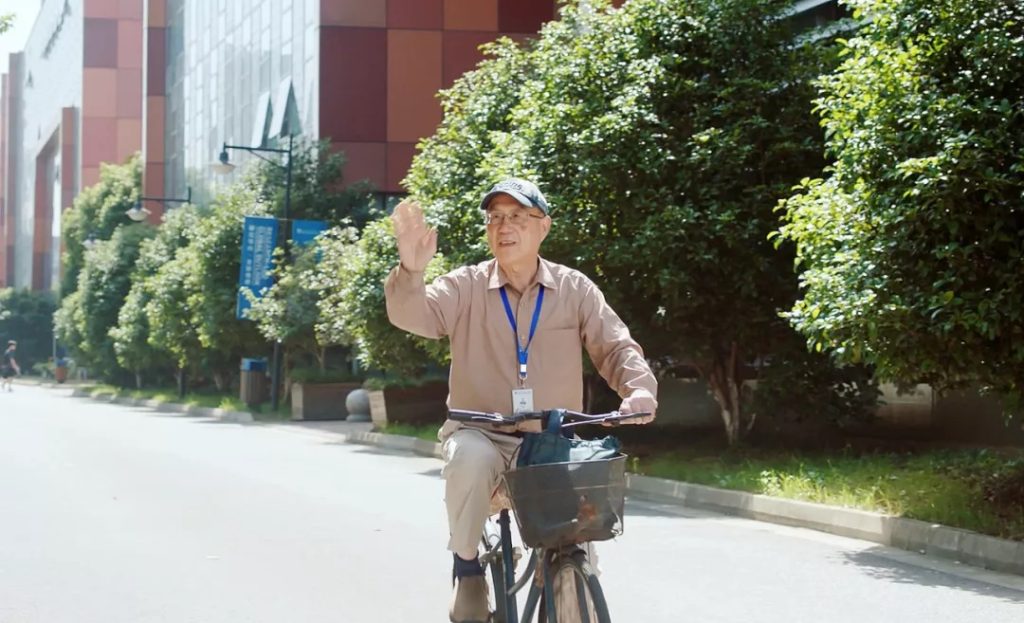
Professor Jingming Guo on campus
When explaining an abstract idea such as differentiability, he does not begin with formulas. Instead, he asks the students a question: standing on the surface of the Earth, do you feel you are standing on a plane or on a curved surface? Because the Earth is so large, it can be treated locally as flat. For a single-variable function, differentiability works in much the same way: locally, a curve can be approximated by a straight line.
For Professor Guo, students understand mathematics properly only when they first grasp the underlying idea. “Expressing the idea is far more valuable than memorising formulas by rote,” he says. It is an approach he followed consistently throughout his years at Xi’an Jiaotong-Liverpool University.
Starting with a single building
Professor Guo arrived in Suzhou in 2007 at the invitation of Professor Zhien Ma of Xi’an Jiaotong University. He came partly out of respect for Professor Ma, and partly because, as a native of nearby Wuxi, he had a longstanding affection for Suzhou.
But there was another reason too. This newly established Sino-foreign university represented a different kind of possibility. Looking back Professor Guo recalls a simple thought: he wanted to see whether, outside the traditional system, it might be possible to explore new ways of teaching mathematics.
What he found was a university that was young in the fullest sense. There was only one main building, not the multiple campuses and developed spaces of today. A handful of senior academics were based in Suzhou, devoting almost all of their energy to teaching.
Rethinking how mathematics should be taught
In Professor Guo’s view, the question in those early years was not simply what mathematics should be taught, but how it should be taught.
XJTLU’s first intake had just over 160 students. Compared with students at China’s top traditional universities, their academic foundations were uneven. At the same time, the teaching hours expected by the University of Liverpool were fewer than in the domestic system, while XJTLU’s mathematics curriculum still needed to retain the rigour and theoretical demands associated with foundational mathematics in China.
Together with Professor Ma, Professor Guo revisited the structure of the curriculum. The aim was to create a course that combined Chinese and Western strengths: one that remained challenging, but did not become so dry that students lost interest.
He is especially drawn to Professor Yunrui Han’s view that “knowledge should be turned into wisdom”. For that reason, he has always stressed ability rather than the simple accumulation of knowledge.
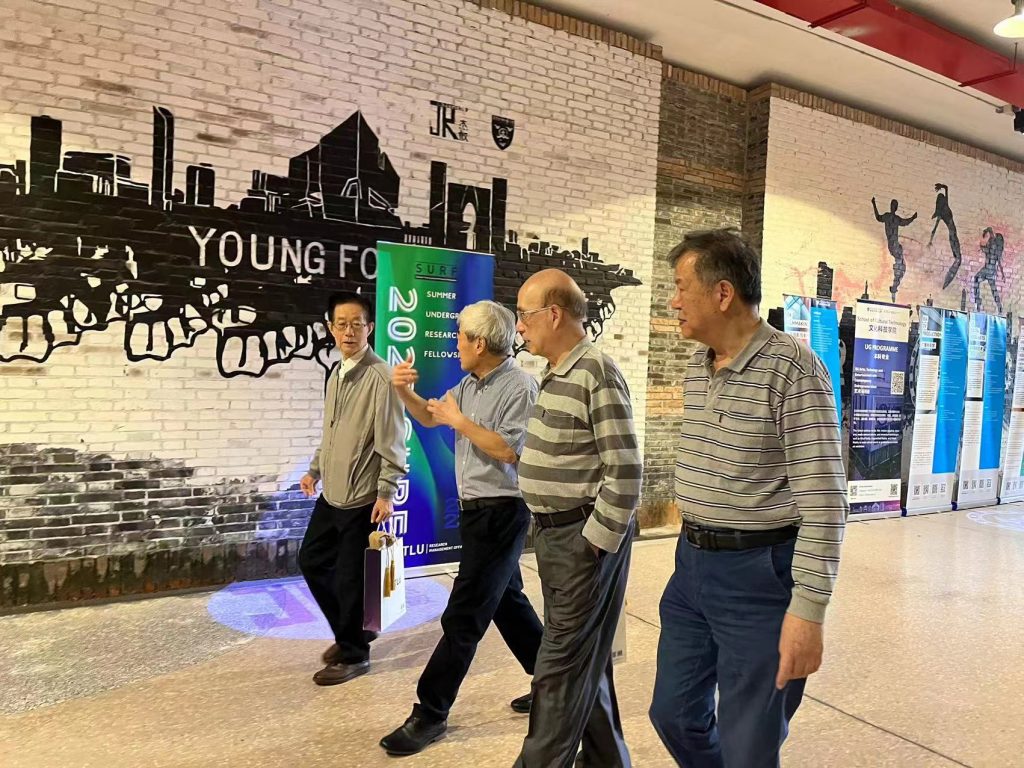
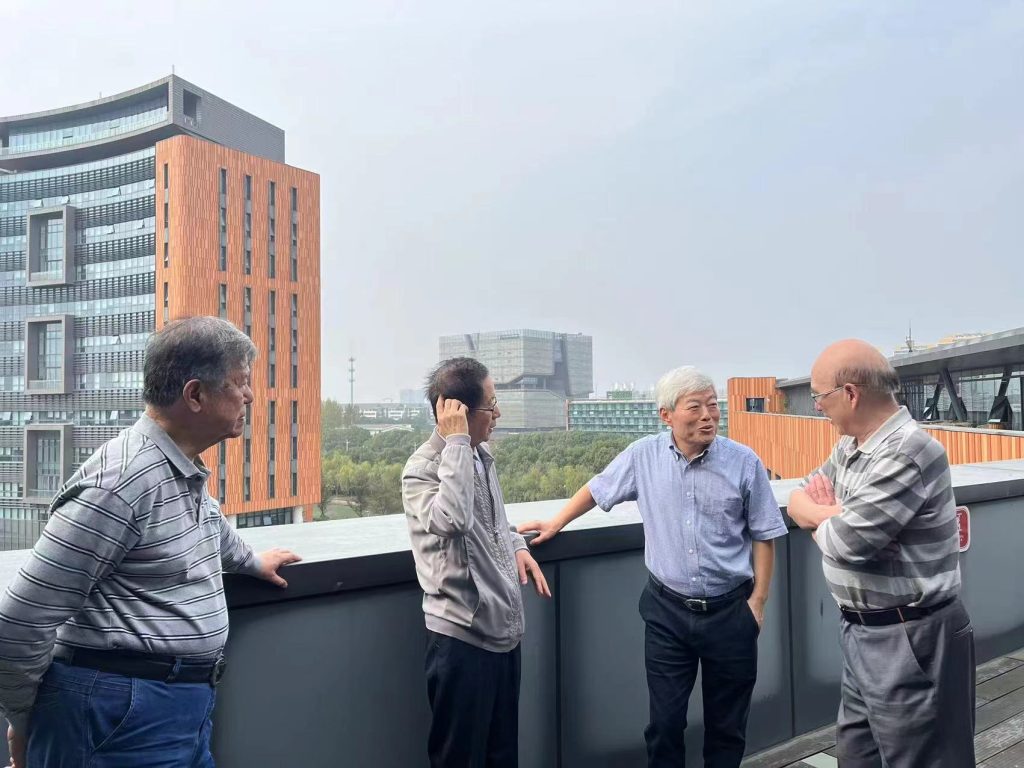
Professor Youmin Xi, Executive President of XJTLU, in conversation with Professors Yunrui Han, Jingming Guo, and Hongyun Xiong during the 2023 Imaginary Mathematics Culture Exhibition and Mathematics Education Innovation Forum.
In the classroom, that philosophy took very concrete form.
Professor Guo recalls that one of his greatest challenges was helping students with very different foundations feel less intimidated by mathematics, and explaining abstract concepts in ways they could truly grasp.
“Students often told me that mathematics did not feel as difficult in my class as they had expected,” he says. “Turning rigid knowledge points into flexible ability development – in an environment like XJTLU, which encourages independent growth – was both a challenge and one of the most rewarding parts of teaching.”
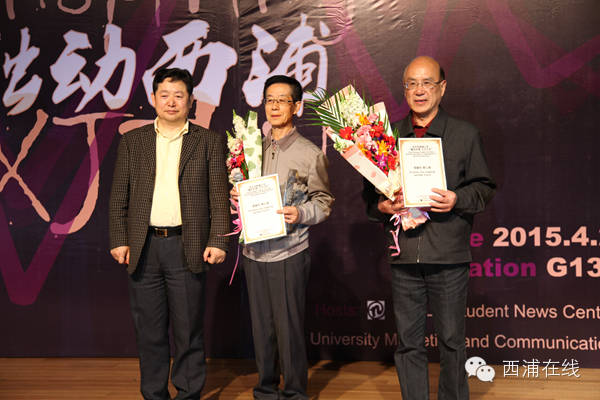
Professor Jingming Guo (right) receiving the 'Inspiring XJTLU: Five-Year Commitment' Campus Personality of the Year award at XJTLU in 2015.
What one class can change
That way of teaching did more than change the atmosphere of a classroom. It also altered the paths some students went on to take.
In one class, Professor Guo explained that the page-ranking algorithm behind Google’s search engine ultimately traced back to an eigenvector problem in linear algebra.
Three students from the English programme found the lecture deeply inspiring. Later, when they entered the Mathematical Contest in Modeling in the United States, they applied the logic of page ranking to the problem of mapping crime patterns and went on to win first prize.
None of the three had been especially drawn to mathematics. But through that experience, they grew to love it. One later transferred into Financial Mathematics, went on to study for a master’s degree at the London School of Economics and Political Science, and built a strong career afterwards.
That story still moves Professor Guo. “XJTLU gives teachers the freedom to make full use of their strengths,” he says. “Teachers help students discover more possibilities in themselves, and students’ growth, in turn, strengthens the University’s development.”
The most fulfilling years of his teaching career
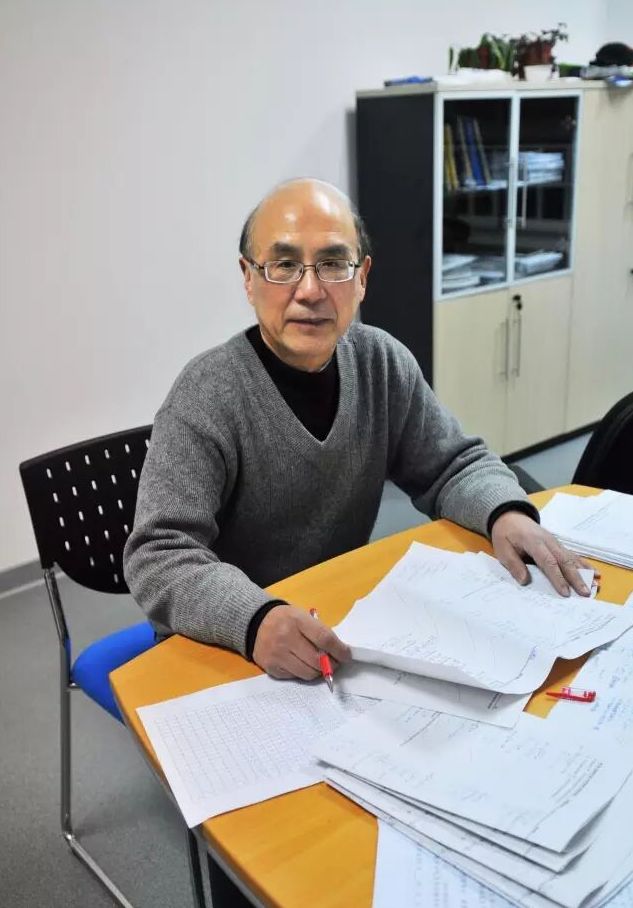
He spent 15 and a half years at XJTLU and taught thousands of students.
He recalls that the earliest cohorts came into the classroom with an almost fierce seriousness. Many had not achieved the gaokao results they had hoped for, and carried a strong determination to prove themselves. The tuition fees were also substantial, which made them even more unwilling to let down either their parents or themselves. They studied intensely. Students queued for office hours, rushed to secure seats in class, and sometimes sat in his office listening to other people’s questions even when they had none of their own, simply because they were afraid of missing something.
Later, the times changed and so did the students. Especially with the rise of artificial intelligence, access to knowledge became easier and more varied, and the classroom was no longer the only gateway to learning. Professor Guo does not judge today’s students by the standards of an earlier generation. But he remains convinced that the accumulation of foundational knowledge cannot be separated from the development of real ability.
What felt especially idealistic to him at XJTLU was not only the freedom of the teaching environment, but also the educational ecosystem that seemed to grow naturally around it. He speaks in particular about the Mathematics Society, where students organised a rich range of extracurricular learning activities, studied independently, and supported and pushed one another forward. It became widely popular and drew in large numbers of students, gradually developing into one of the distinctive features of mathematics education at XJTLU.
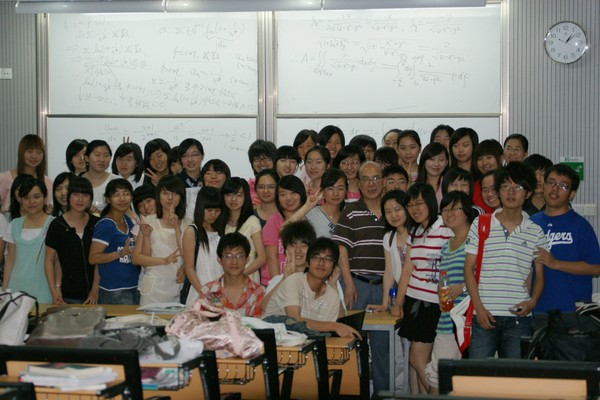
Professor Jingming Guo with a group of students from the graduating classes of 2008 and 2009.
“Although I was teaching students, in many ways it was XJTLU that taught me,” he says. “It changed how I think about university teaching.”
In recent years, students would often nominate their favourite teachers on social media around Teachers’ Day, and Professor Guo’s name regularly appeared near the top, drawing large numbers of endorsements. At the age of 80, he decided to retire. “I believe each generation should do its own work – the future of XJTLU depends on its young academics.”
Now, he says, his greatest wish is simple: to stay healthy, and to see with his own eyes this great tree of XJTLU grow deeper roots, fuller branches, and even greater vitality.
By Qinru Liu
Edited by Bo Kou and Patricia Pieterse
Some photos courtesy of Jingming Guo
Legal Disclaimer:
EIN Presswire provides this news content "as is" without warranty of any kind. We do not accept any responsibility or liability for the accuracy, content, images, videos, licenses, completeness, legality, or reliability of the information contained in this article. If you have any complaints or copyright issues related to this article, kindly contact the author above.
