
Inductive Proximity Sensors Market In 2029
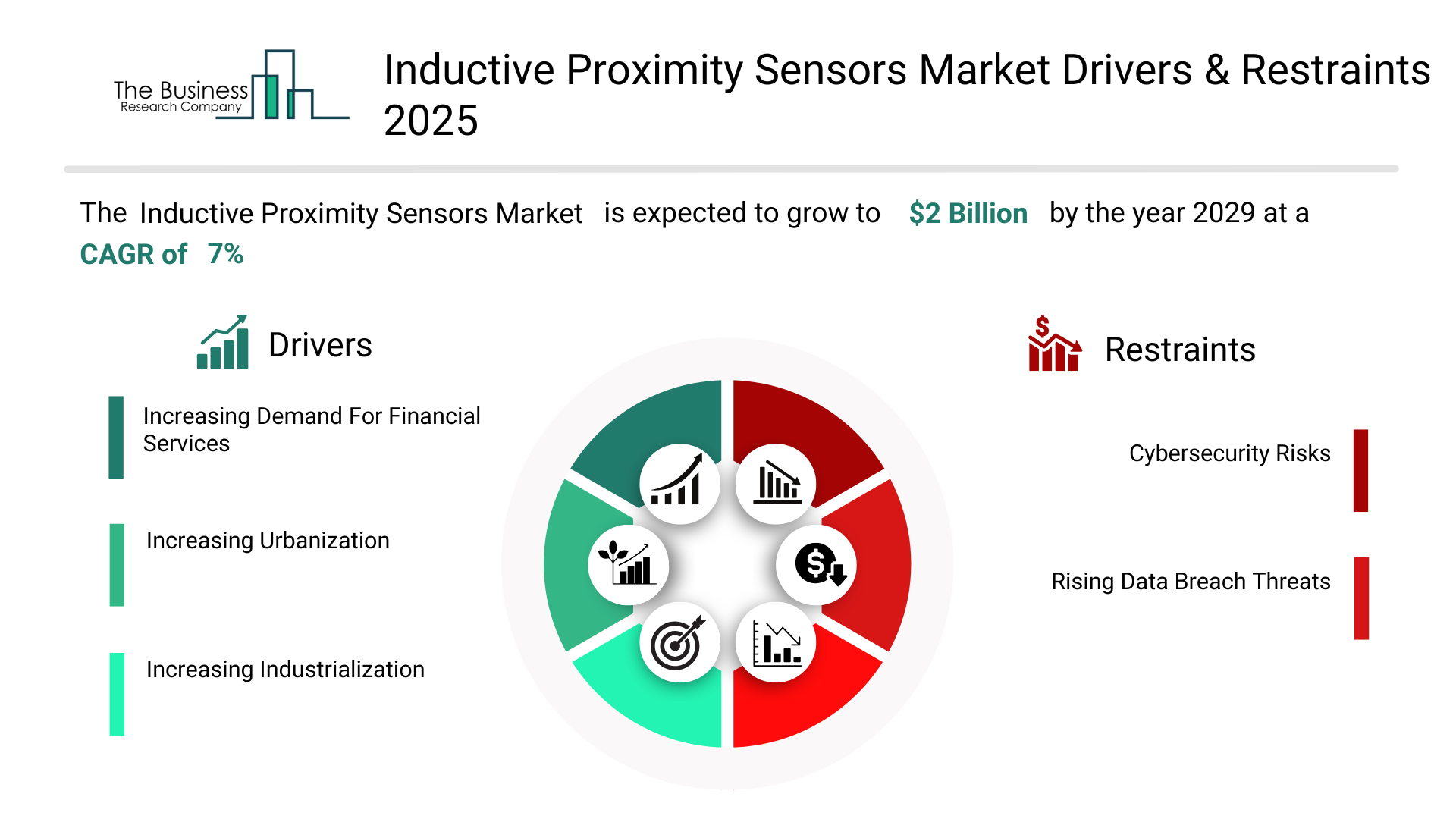
Inductive Proximity Sensors Market Report 2025 – Market Size, Trends, And Forecast 2025-2034
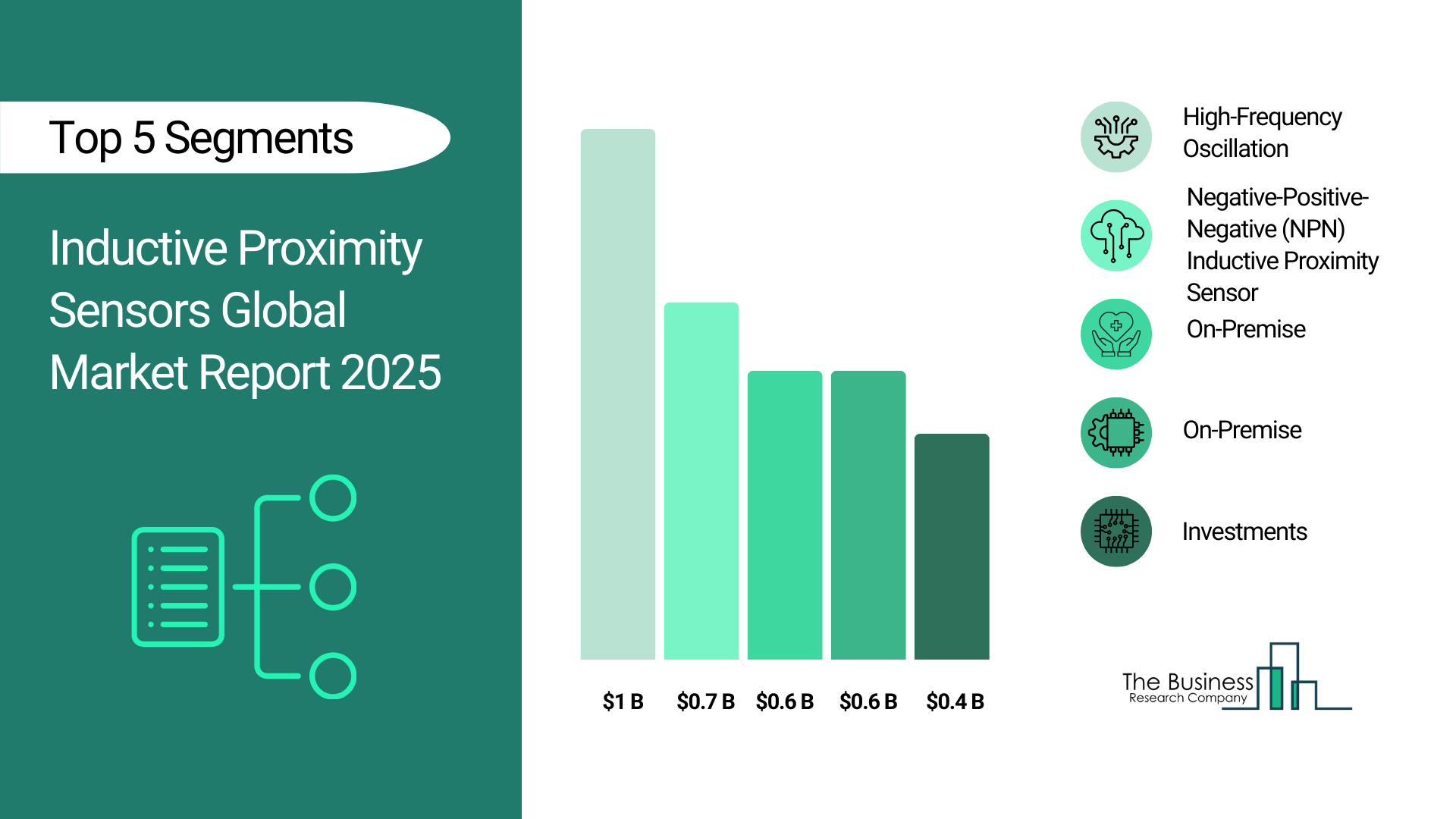
Inductive Proximity Sensors Global Market Report 2025 – Market Size, Trends, And Forecast 2025-2034
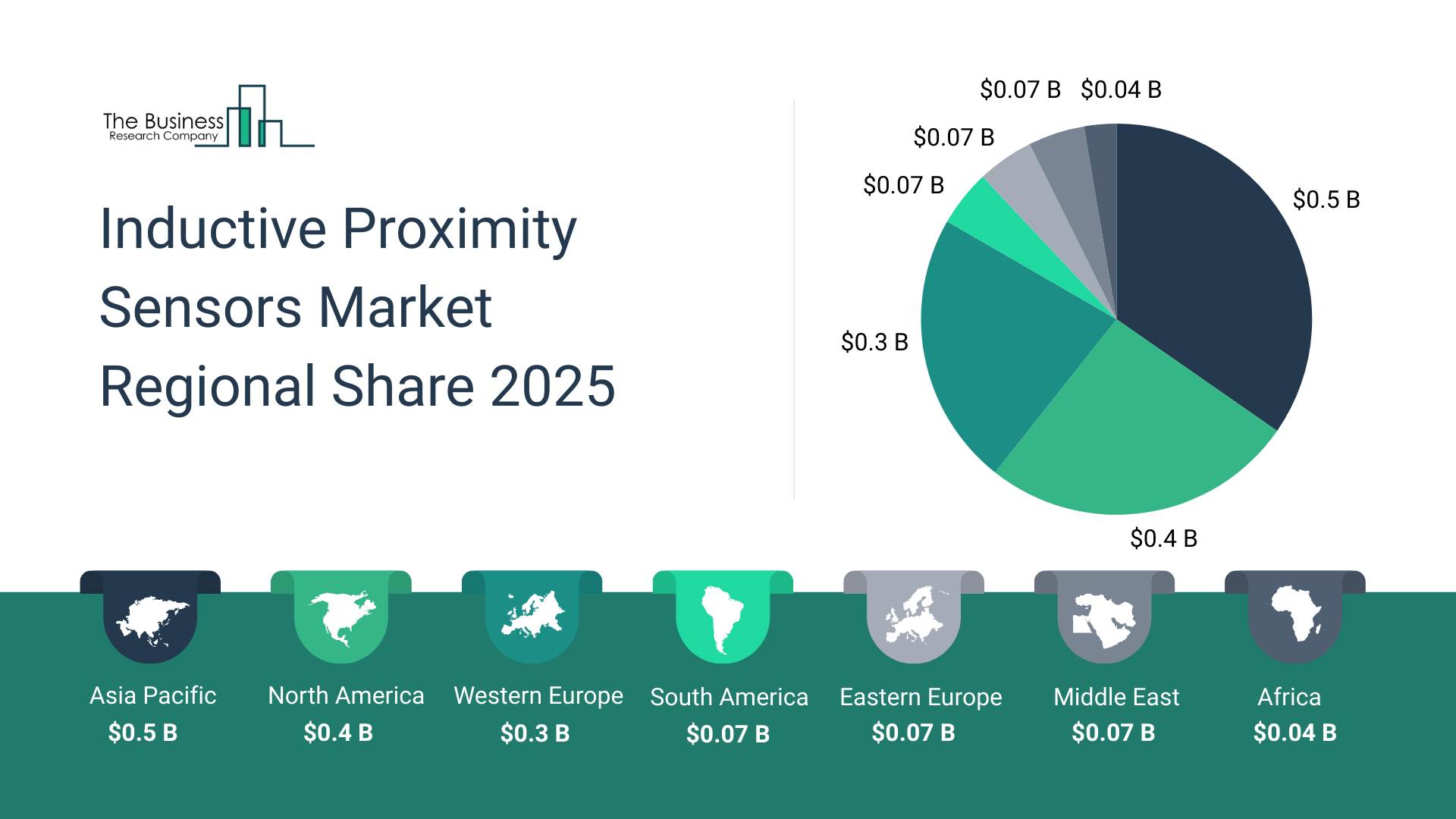
Inductive Proximity Sensors Global Market Report 2025 – Market Size, Trends, And Forecast 2025-2034
The Business Research Company’s Inductive Proximity Sensors Global Market Report 2025 – Market Size, Trends, And Forecast 2025-2034
LONDON, GREATER LONDON, UNITED KINGDOM, December 25, 2025 /EINPresswire.com/ -- "Inductive Proximity Sensors Market to Surpass $2 billion in 2029. In comparison, the Electrical And Electronics Components market, which is considered as its parent market, is expected to be approximately $110 billion by 2029, with Inductive Proximity Sensors to represent around 2% of the parent market. Within the broader Electrical And Electronics industry, which is expected to be $5,240 billion by 2029, the Inductive Proximity Sensors market is estimated to account for nearly 0.03% of the total market value.
Which Will Be the Biggest Region in the Inductive Proximity Sensors Market in 2029
Asia Pacific will be the largest region in the inductive proximity sensors market in 2029, valued at $722 million. The market is expected to grow from $476 million in 2024 at a compound annual growth rate (CAGR) of 9%. The strong growth can be attributed to the rising renewable energy projects and the rising smart infrastructure projects.
Which Will Be The Largest Country In The Global Inductive Proximity Sensors Market In 2029?
The USA will be the largest country in the inductive proximity sensors market in 2029, valued at $457 million. The market is expected to grow from $317 million in 2024 at a compound annual growth rate (CAGR) of 8%. The strong growth can be attributed to the expansion of renewable energy projects, industrial internet of things (IIoT) expansion and product innovations.
Request a free sample of the Inductive Proximity Sensors Market report
https://www.thebusinessresearchcompany.com/sample_request?id=16089&type=smp
What will be Largest Segment in the Inductive Proximity Sensors Market in 2029?
The inductive proximity sensors market is segmented by type into negative-positive-negative (NPN) inductive proximity sensor, positive-negative-positive (PNP) inductive proximity sensor, shielded sensors, unshielded sensors. The negative-positive-negative (NPN) inductive proximity sensor market will be the largest segment of the inductive proximity sensors market segmented by type, accounting for 45% or $893 million of the total in 2029. The negative-positive-negative (NPN) inductive proximity sensor market will be supported by compatibility with sinking input control systems, rising adoption in industrial automation systems requiring open-collector outputs, increasing use in low-voltage DC applications, high reliability in noise-prone environments, cost-effective implementation in conveyor systems and material handling units, growing demand in Asia-Pacific industrial markets where NPN is more common and simple wiring configuration that allows flexible deployment.
The inductive proximity sensors market is segmented by technology into high-frequency oscillation, through-beam, pulse echo. The high-frequency oscillation market will be the largest segment of the inductive proximity sensors market segmented by technology, accounting for 67% or $1,342 million of the total in 2029. The high-frequency oscillation market will be supported by faster response time suitable for high-speed automation, superior stability in dynamic environments, increased use in factory automation requiring consistent signal output, rising demand for high-accuracy metal detection in precision engineering, reduced signal interference in harsh industrial settings, improved performance in multi-sensor environments and enhanced integration with digital control systems.
The inductive proximity sensors market is segmented by end user into industrial, automotive, aerospace and defence, packaging, other end-users. The industrial market will be the largest segment of the inductive proximity sensors market segmented by end user, accounting for 36% or $722 million of the total in 2029. The industrial market will be supported by increasing demand for factory automation, growing investment in smart manufacturing systems, rising need for efficient production line monitoring, expansion of industrial robotics, increased focus on predictive maintenance using sensors, integration with industrial IoT platforms and greater emphasis on energy efficiency and safety compliance.
What is the expected CAGR for the Inductive Proximity Sensors Market leading up to 2029?
The expected CAGR for the inductive proximity sensors market leading up to 2029 is 7%.
What Will Be The Growth Driving Factors In The Global Inductive Proximity Sensors Market In The Forecast Period?The rapid growth of the global inductive proximity sensors market leading up to 2029 will be driven by the following key factors that are expected to reshape industrial automation and equipment quality-control frameworks across global manufacturing environments worldwide.
Rising Industrial Automation - The rising industrial automation will become a key driver of growth in the inductive proximity sensors market by 2029. Rising industrial automation significantly boosts the demand for inductive proximity sensors, as these sensors are critical components in automated systems across manufacturing, packaging, and process industries. They enable precise, contactless detection of metal objects, which is essential for position sensing, machine safety, and quality control in automated workflows. As industries scale up automation to improve operational speed, consistency, and compliance with safety and regulatory standards, the adoption of inductive sensors grows rapidly. Their durability, reliability, and ability to function in harsh environments make them indispensable for supporting high-throughput, standardized, and intelligent production processes. Therefore, the rising industrial automation will drive the growth of the inductive proximity sensors market. As a result, the rising industrial automation is anticipated to contributing to a 1.5% annual growth in the market.
Expansion Of Renewable Energy Projects - The expansion of renewable energy projects will emerge as a major factor driving the expansion of the inductive proximity sensors market by 2029. Expansion of renewable energy projects, such as the growing deployment of wind farms, solar arrays, and hydropower systems, drives demand for inductive proximity sensors, as these sensors are essential for reliable, contactless detection in dynamic and often harsh operating environments. Renewable energy infrastructure depends on these sensors for accurate position sensing, component alignment, and equipment monitoring. As countries scale up clean energy investments and modernize their power grids, the need for durable and maintenance-free sensors increases. Additionally, the push for energy efficiency and system automation encourages the widespread integration of inductive proximity sensors across renewable energy operations. Therefore, expansion of renewable energy projects will drive the growth of the inductive proximity sensors market. Consequently, the expansion of renewable energy projects capabilities is projected to contributing to a 1.0% annual growth in the market.
Surge In Smart Infrastructure Projects - The surge in smart infrastructure projects will serve as a key growth catalyst for the inductive proximity sensors market by 2029. Surge in smart infrastructure projects drives the growth of inductive proximity sensors by increasing the need for precise, reliable, and automated sensing solutions across urban development initiatives. These sensors enhance the functionality of smart systems by enabling accurate position detection, motion sensing, and equipment monitoring in critical applications such as intelligent transportation, automated lighting, and smart utilities. As cities adopt data-driven infrastructure to improve efficiency, safety, and sustainability, the demand for robust and scalable sensor technologies rises. This trend also accelerates innovation in sensor integration to support the evolving requirements of interconnected and automated infrastructure environments. Therefore, the Surge in smart infrastructure projects will drive the growth of the inductive proximity sensors market. Therefore, this surge in smart infrastructure projects operations is projected to supporting to a 0.8% annual growth in the market.
Industrial Internet Of Things (IIoT) Expansion - The industrial internet of things (IIoT) expansion will become a significant driver contributing to the growth of the inductive proximity sensors market by 2029. Expansion of the Industrial Internet of Things (IIoT) is driving increased demand for inductive proximity sensors, as these sensors play a critical role in enabling smart automation across logistics and warehousing operations. IIOT-enabled systems rely on real-time data from sensors to optimize material handling, inventory tracking, and equipment positioning. In modern warehouses, inductive proximity sensors ensure accurate detection and control in applications such as conveyor systems, robotic handling, and automated storage and retrieval units. As IIOT adoption grows alongside e-commerce and just-in-time delivery models, the push for high-throughput, low-maintenance, and intelligent automation accelerates, fuelling broader integration of these sensors to enhance operational efficiency and data-driven logistics management. Therefore, industrial internet of things (IIOT) expansion will drive the growth of the inductive proximity sensors market. Consequently, the industrial internet of things (IIOT) expansion strategies is projected to contributing to a 0.5% annual growth in the market.
Access the detailed Inductive Proximity Sensors Market report here:
https://www.thebusinessresearchcompany.com/report/inductive-proximity-sensors-global-market-report
What Are The Key Growth Opportunities In The Inductive Proximity Sensors Market in 2029?
The most significant growth opportunities are anticipated in the high-frequency oscillation inductive proximity sensors market, the inductive NPN inductive proximity sensors market, and the industrial inductive proximity sensors market. Collectively, these segments are projected to contribute over $1 billion in market value by 2029, driven by rising automation in industrial environments, increasing demand for non-contact object detection, and the expanding deployment of smart manufacturing systems. This growth reflects the accelerating adoption of rugged, reliable, and high-precision sensing technologies that enhance real-time equipment monitoring, reduce downtime, and improve production efficiency fuelling transformative expansion across the broader inductive proximity sensors industry.
The high-frequency oscillation inductive proximity sensing market is projected to grow by $404 million, the inductive NPN inductive proximity sensors market by $264 million, and the industrial inductive proximity sensors market by $213 million over the next five years from 2024 to 2029.
The Business Research Company (www.thebusinessresearchcompany.com) is a leading market intelligence firm renowned for its expertise in company, market, and consumer research. We have published over 17,500 reports across 27 industries and 60+ geographies. Our research is powered by 1,500,000 datasets, extensive secondary research, and exclusive insights from interviews with industry leaders.
We provide continuous and custom research services, offering a range of specialized packages tailored to your needs, including Market Entry Research Package, Competitor Tracking Package, Supplier & Distributor Package and much more
Disclaimer: Please note that the findings, conclusions and recommendations that TBRC Business Research Pvt Ltd delivers are based on information gathered in good faith from both primary and secondary sources, whose accuracy we are not always in a position to guarantee. As such TBRC Business Research Pvt Ltd can accept no liability whatever for actions taken based on any information that may subsequently prove to be incorrect. Analysis and findings included in TBRC reports and presentations are our estimates, opinions and are not intended as statements of fact or investment guidance.
The Business Research Company
Americas +1 310-496-7795
Europe +44 7882 955267
Asia & Others +44 7882 955267 & +91 8897263534
Email: info@tbrc.info"
Oliver Guirdham
The Business Research Company
+44 7882 955267
info@tbrc.info
Legal Disclaimer:
EIN Presswire provides this news content "as is" without warranty of any kind. We do not accept any responsibility or liability for the accuracy, content, images, videos, licenses, completeness, legality, or reliability of the information contained in this article. If you have any complaints or copyright issues related to this article, kindly contact the author above.
