
Today’s Small Businesses in A Diverse World: 9 Recruitment Strategies for Sustainable Success

Dr. Daryl Green
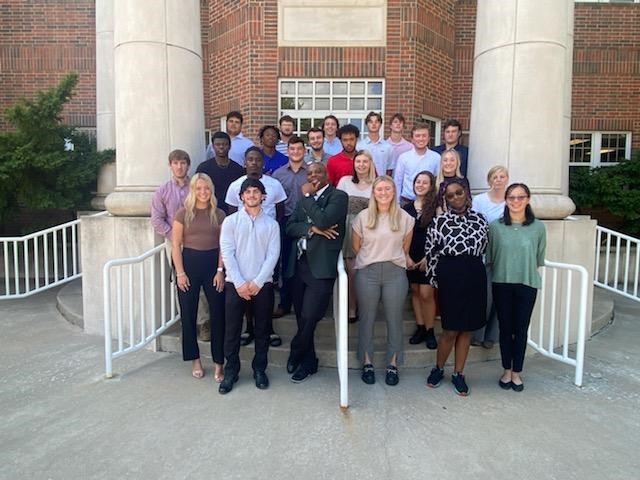
Dr. Green coaches college students to build a talent pipeline for small businesses and other organizations.
Sadly, diversity and inclusion have become synonymous with ‘Wokeness’ and ‘Shaming.’ Those individuals who negatively perceive the changing demographics as fearful must understand that they cannot stop the impending global transformations. Over the next decade, the world will become different. The article examines the need for high cultural intelligence for today’s small businesses.
The US workforce dynamic is changing. According to the US Census, the U.S. population is projected to increase from 319 million to 417 million, reaching 400 million in 2051. The U.S. population is projected to grow more slowly in future decades than in the recent past. In fact, immigration and higher fertility rates in racial and ethnic groups have increased the labor force base, creating a much more diverse workforce.
By 2044, more than half of all Americans are projected to belong to a minority group (any group other than non-Hispanic White alone); and by 2060, nearly one in five of the nation’s total population is projected to be foreign-born. As a consequence, businesses have adapted and have a more diverse workforce. Diversity is only adding fuel to a fire that is already smoking. Today’s employees don't want to be a component of a big machine; employees want to be valued.
Why does cultural intelligence matter for today’s small businesses? Today’s leaders need a high sense of cultural intelligence in the United States as it relates to African-Americans and People of Color. With the complicated history of race relationships, individuals do not see their own biases when dealing with others who are different from the majority. Yet, the acceptance of individual differences is essential in building trust and a productive workplace. Dr. David Livermore, author of Leading with Cultural Intelligence, provides a framework for global leaders to address the complexities of cultural differences. Cultural intelligence (CQ) is related to “a person’s capability to function effectively in situations characterized by cultural diversity.”
Western mentality often brings a superior to other cultures. For example, travelers from the United States visit other countries and attempt to use their own cultural beliefs in the host country. Dr. Livermore adds, “Leadership today is a multicultural challenge. Few of us need to be convinced of that fact. We’re competing in a global marketplace, managing a diverse workforce, and trying to keep up with rapidly shifting trends… cultural intelligence helps a leader develop an overall repertoire and perspective that results in more effective leadership.” When the head, body, and heart work together, leaders have a high CQ. Contrarily, leaders have a low CQ when these key elements do not align well. Miscues are bound to happen with a leader with low CQ in a different culture.
The following strategies are suggested for building a more inclusive culture for your organization:
• Build a welcoming culture.
• Lead by modeling the way of an inclusive culture.
• Hold leaders accountable to an inclusive culture.
• Assess the cultural intelligence of your organization as well as the leadership.
• Develop human capital strategies that value all people.
• Create a diverse pipeline by partnering with underserved community organizations.
• Provide incentives to current employees to refer diverse candidates.
• Grow your pool of candidates through minority media and sponsoring events in diverse communities.
• Commit to continuous learning and professional growth.
What have you prepared for the future workforce? Many organizations are struggling to understand the meaning of a culturally diverse organization. Unfortunately, most managers miss what diversity is all about. The future of work will require today’s organizations to make significant adjustments or become extinct. Today’s small businesses are no exception. Therefore, organizations that can effectively recruit, manage, and retain a diverse workforce will have a clear advantage in the marketplace. The article demonstrated the need for high cultural intelligence for today’s small businesses. I pray it won’t be too late.
© 2023 by D. D. Green
About Dr. Daryl D. Green:
Dr. Daryl D. Green is a business strategist, speaker, and noted author. He is the Vice President of Marketing at AGSM Consulting LLC. He is the author of the business book Small Business Marketing.
Dr. Green has been noted and quoted by USA Today, Ebony Magazine, and the Associated Press. He provides consulting guidance and management training for today's small businesses. Additionally, he is an award-winning college professor, developing new innovative approaches for today’s small businesses. If you would like more information about this article or business assistance, please contact Dr. Green at drdarylgreen@gmail.com or visit www.drdarylgreen.com.
Dr. Daryl Green
Dr. Daryl Green
email us here
Visit us on social media:
Facebook
LinkedIn
Legal Disclaimer:
EIN Presswire provides this news content "as is" without warranty of any kind. We do not accept any responsibility or liability for the accuracy, content, images, videos, licenses, completeness, legality, or reliability of the information contained in this article. If you have any complaints or copyright issues related to this article, kindly contact the author above.
