
Secrets of Tree Hyraxes Uncovered with New Techniques
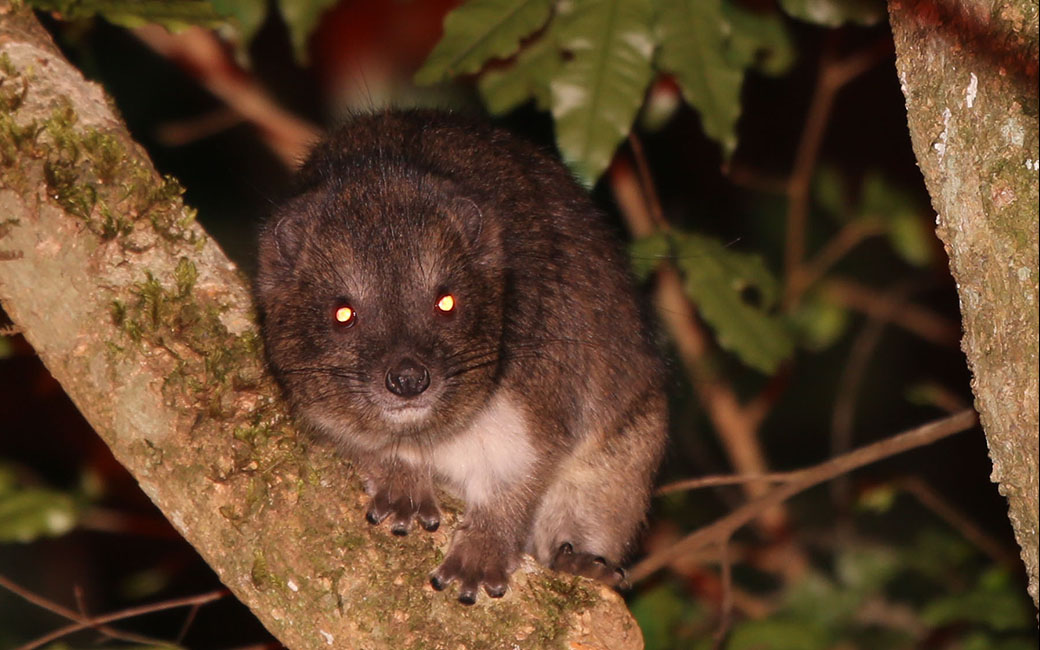
Taita tree hyrax from Taita Hills, Kenya
Published in Scientific Reports https://www.nature.com/articles/s41598-022-10235-7
”Tree hyraxes are peculiar, intriguing animals, and following them in the tropical cloud forest was magical and unforgettable”. Says PhD student Hanna Rosti, smiling.”
FINLAND, April 20, 2022 /EINPresswire.com/ -- Tree hyraxes, distant relatives of elephants and manatees, live in the canopies of tropical rain forests. As these animals are nocturnal and very shy, almost nothing has been known about them. However, with thermal imaging camera, tree hyraxes can be observed without disturbing them. Research conducted by researchers from the University of Helsinki revealed, for example, that tree hyraxes are social animals, and their calling is not hostile, as previously believed, but a means of keeping contact with other tree hyraxes.— Hanna Rosti
In the fragmented mountain forests of Taita Hills, Kenya, lives an endemic tree hyrax species, with previously unknown range, behavior and population numbers. With thermal imaging camera, it was possible to follow the natural behavior of tree hyraxes, and passive acoustic recorders were used to collect various information of acoustic communication of tree hyraxes during the dark hours of the night.
”Tree hyraxes are peculiar, intriguing animals, and following them in the tropical cloud forest was magical and unforgettable”. Says PhD student Hanna Rosti, smiling. She has spent dozens of nights in the mountain forests of Taita Hills during the past three years.
From the recordings, it was possible to estimate the numbers of tree hyraxes in different forests in Taita Hills. Most animals live in the two largest remaining forest fragments. Models of forest structure produced by airborne lidar (laser scanning) analysis confirmed that tree hyraxes prefer sites where forest is dense, multistructured and where the largest trees reach heights of more than 45 meters.
”I was happy to see that airborne lidar analysis can produce very detailed information from the forests that would be very difficult and laborious to obtain from the ground” says researcher Janne Heiskanen from the University of Helsinki.
The thermal imaging camera revealed what tree and woody liana species were particularly preferred by tree hyraxes, which leaves they were eating, and where they were hiding during the days. In small forest fragments tree hyraxes are calling only rarely and only during very early morning hours. This is most likely because those tree hyraxes that are still alive and surviving in these small fragments try to avoid being detected and noticed by poachers.
”Results acquired in this research will move tree hyrax conservation significantly forward, not only in Taita Hills, but also in other parts of Africa” says professor Jouko Rikkinen. “Hanna’s methods can also be applied to other nocturnal animals that are shy, cryptic and challenging” he adds.
Published in Scientific Reports https://www.nature.com/articles/s41598-022-10235-7
Hanna Rosti
University of Helsinki
hanna.z.rosti@helsinki.fi
Visit us on social media:
Other
Tree hyraxes from Taita Hills, Kenya - Scientific Reports
Legal Disclaimer:
EIN Presswire provides this news content "as is" without warranty of any kind. We do not accept any responsibility or liability for the accuracy, content, images, videos, licenses, completeness, legality, or reliability of the information contained in this article. If you have any complaints or copyright issues related to this article, kindly contact the author above.
