
Mobile Engagement Survey Results Show Top Priorities for Mobile Developers
OpenBack Device-Side Hybrid Mobile Engagement Platform
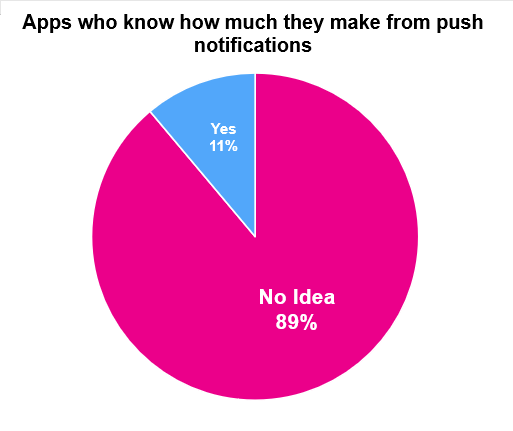
Figure 1
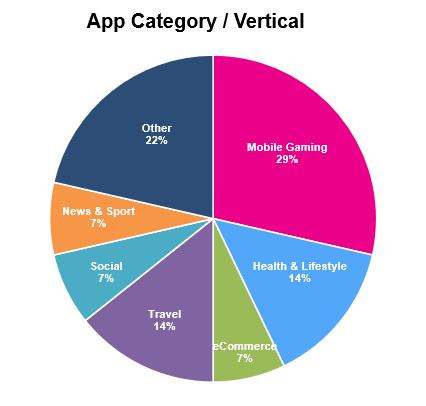
Figure 2
We took a survey of mobile marketers, app developers, and publishers about what their priorities are for push notifications. Their answers may surprise you.
DUBLIN, IRELAND, December 2, 2021 /EINPresswire.com/ -- OpenBack is trying to jumpstart a new conversation around mobile engagement. They conducted a qualitative and quantitative survey which was shared across thousands of leading mobile app product managers, growth teams, marketing and CRM managers. They also conducted follow-up interviews with mobile app and game developers about their thoughts and attitudes around push. The results were enlightening with regard to the state of the mobile marketing industry.Q1: How much money do push notifications earn for mobile apps?
An astonishing 88.9% of respondents didn't know the dollar amount of revenues earned by push notifications. It's hard to imagine any other marketing channel getting this sort of response. Without tracking how much money a marketing channel earns, it’s impossible to gauge whether a campaign is successful, or whether to adopt different strategies. Most push notification SDKs don’t provide any insights on what return on push their campaigns earn. In fact, providing metrics beyond open, click-through, and unsubscribe is beyond the technical capacity of most mobile engagement platforms.
This lack of transparency gives a clear insight on why mobile marketers have failed to get a conversation rolling about push notifications. When developers are using SDKs without any way of tracking their progress or designing a roadmap for future strategies, it becomes difficult to justify investing time and money into push as opposed to other marketing channels
[Figure 1]
Q2: What are mobile developers' top priorities?
Most survey respondents stated their #1 priority when it came to sending notifications was not annoying their users. After that came click-through or open rate, and tied for third were reliable delivery and data privacy. The least pressing priority for respondents was a tie of revenue and life-time value (LTV), which is in line with results for the previous question: most mobile marketers are sending push notification regardless of whether it makes them massive returns.
These answers showed how important the app-user relationship is to users. Developers view UX and user retention as the most important factors to a healthy app. They understand that irritating or irrelevant push notifications can be a high factor in customer churn, but many are unsure of how many notifications they should send, and how often.
Q3: What are key pain points with notifications/in-app messages?
A top-ranking concern among survey respondents was the lack of transparency and flexibility in most mobile engagement platforms, and the scarcity of any actionable metrics to help them improve their push notification strategy. Some respondents mentioned wishing they could have all their comms tools connected in one platform, while others mentioned the difficulty of poor dashboard interface that didn’t allow multiple user roles.
Q4: How important is data privacy compliance in the mobile app industry?
All respondents said data privacy was important to some extent, with 55.6% saying it was of vital importance to their app. Some went on to cite specific data privacy regulations that concerned them, with 22% stating it was important for their app and/or push notification platform to be COPPA compliant. 2x that number stating the same for GDPR.
Q5: What vertical of apps did respondents work in?
Of our respondents, 29% worked on mobile games. Travel and Health & Lifestyle apps were tied at roughly 14%. 7% each of respondents stated they worked on either eCommerce, Social, or News & Sports apps. And the remaining 22% checked “Other” for their app’s genre.
[Figure 2]
Q6: Who is involved in driving decisions around push notifications?
Far from expectations that decisions around push notifications would be the sole responsibility of the marketing team, most survey respondents are joint decision-makers. In fact, the majority answered that Engineering and C-Suite teams were most involved with designing push campaigns, at 67% and 56% respectively.
Interestingly, only 44% of respondents stated that marketing personnel were involved in sending push notifications, and likewise with product team members. Finally, a third of respondents each stated that their CEOs and Data Science teams were involved in decisions surrounding push notifications.
This shows that a majority of respondents view push notifications as more the area of developers and software specialists, as opposed to marketers. This would seem counter-intuitive, as push notifications are a marketing tool. But given previous answers about the lack of metrics and non-user-friendly dashboard interfaces of many push notification platforms, it’s understandable that many apps take a mixed bag approach.
Q7: How do mobile developers learn strategies for improving push notifications?
In follow-up questions about how respondents learn about push notification strategies, or how they can improve their campaigns, many responded that they don’t.
Many devs answered they research online, visit forums and exchange successful strategies with their peers. Others mentioned reading articles, or tracking their competition. But the common vein was frustration in the lack of good insights beyond basic delivery/CTR metrics. Many app developers feel they’re making it up as they go, as they receive very little support in terms of campaign optimization from their push notification platform.
Conclusion
Ultimately, the above insights get to the heart of why push notifications tend to be overlooked as a key marketing channel. The days of push notifications blasted out of cloud servers and delivering at random hours are gone. Today, notifications must be hyper-personalized and deliver in real-time, scheduled to ping the user’s device at the exact moment when it’s most convenient for them to read them.
Most importantly, the platform for sending notifications has to be intuitive and simple to use, with fast and easy onboarding and complete performance metrics, so apps can track their campaigns progress on a rolling basis. Only when mobile engagement platforms become more user-friendly and transparent will the mobile app industry be able to unlock the full potential of a marketing tool that, when optimized correctly, allows developers to send real-time, highly personalized messages literally to their app user’s pocket.
Anna Snyder
OpenBack
abenn@openback.com
Visit us on social media:
Facebook
Twitter
LinkedIn
Other
Using Metrics and Measurements to Maximize Your Return on Push Notifications
Legal Disclaimer:
EIN Presswire provides this news content "as is" without warranty of any kind. We do not accept any responsibility or liability for the accuracy, content, images, videos, licenses, completeness, legality, or reliability of the information contained in this article. If you have any complaints or copyright issues related to this article, kindly contact the author above.
