
Choosing a Distribution Board: Balancing Safety, Efficiency, and Future Expansion Needs
Industry experts emphasize that selecting the right distribution board is not merely a procurement decision—it is a long-term investment in safety, operational efficiency, and system reliability. According to international electrical safety studies, improper selection or installation of distribution boards can lead to significant energy inefficiencies, increased maintenance costs, and in some cases, serious electrical hazards.
1. Distribution Boards as the Core of Electrical Systems
A distribution board functions as the “control center” of an electrical network. It receives incoming power and distributes it into multiple subsidiary circuits while providing essential protection through circuit breakers, fuses, and isolation devices.
In modern electrical design, distribution boards are no longer simple power splitters. They now integrate smart monitoring systems, modular structures, and advanced safety mechanisms to meet the demands of evolving power consumption patterns.
The increasing adoption of renewable energy systems, electric vehicles, and smart buildings has further elevated the importance of high-performance distribution boards capable of handling dynamic and complex loads.
2. Types of Distribution Boards in Today’s Market
The global market offers several types of distribution boards, each designed for different applications and load requirements:
Single-phase distribution boards: Common in residential environments, supporting light to moderate electrical loads.
Three-phase distribution boards: Widely used in industrial and commercial applications where higher power distribution is required.
Modular distribution boards: Designed for flexibility, allowing users to expand circuits as demand increases.
Smart distribution boards: Integrated with monitoring systems for real-time energy management and diagnostics.
Market trends indicate that demand for modular and smart distribution boards is growing rapidly due to increasing emphasis on energy efficiency and system scalability.
3. Key Specifications That Define Performance
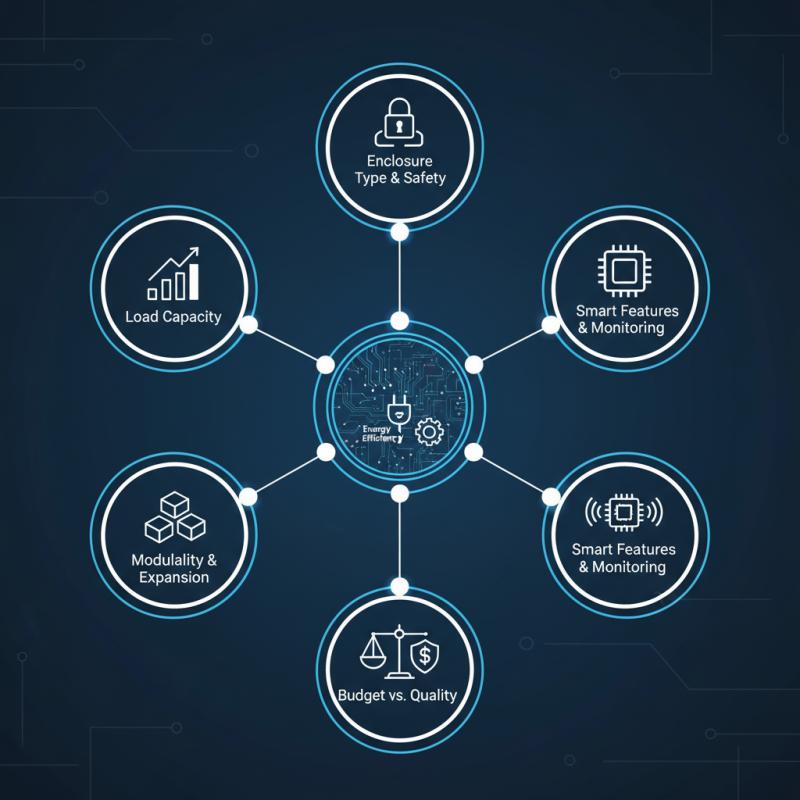
When selecting a distribution board, technical specifications play a decisive role in ensuring proper functionality and safety. Key parameters include:
Rated current capacity
Number of outgoing circuits
Short-circuit protection level
Enclosure protection rating (IP rating)
Internal wiring configuration and airflow design
Experts recommend carefully matching load requirements with board capacity. Overloading can lead to overheating, system failures, or fire risks, while underutilization may reduce efficiency and increase costs.
Proper circuit protection components such as high-quality breakers and surge protection devices are essential to ensure operational stability under fluctuating electrical loads.
4. Understanding Load Requirements and System Sizing
Accurate load calculation is fundamental when choosing a distribution board. Every electrical device contributes to the total load, and failure to account for cumulative demand can compromise system safety.
For example, industrial machinery, HVAC systems, lighting, and IT equipment all contribute different load levels that must be carefully balanced.
Electrical engineers emphasize the importance of considering future expansion during the sizing process. As buildings and facilities grow, electrical demand often increases significantly. Selecting a distribution board with additional capacity helps avoid costly upgrades in the future.
5. Safety Standards and Global Compliance Requirements
Safety remains the most critical factor in distribution board selection. International standards such as IEC (International Electrotechnical Commission) and NEC (National Electrical Code) define strict requirements for electrical safety, installation, and performance.
Certified products from recognized testing bodies ensure compliance with essential safety benchmarks, including:
Overload protection
Short-circuit resistance
Thermal stability
Fire resistance
Electrical insulation integrity
Industry data suggests that a significant portion of electrical system failures is linked to non-compliance or substandard installation practices. Therefore, adherence to certified safety standards is essential for reducing operational risks and ensuring long-term reliability.
6. Material Quality and Structural Durability
The durability of a distribution board depends heavily on its construction materials and manufacturing quality. Common materials include:
Galvanized steel (high durability and corrosion resistance)
Aluminum (lightweight with good thermal performance)
Polycarbonate (resistant to environmental stress in indoor applications)
Fiberglass (high impact resistance for specialized environments)
High-quality enclosures protect internal components from dust, moisture, heat, and mechanical damage. In industrial or outdoor environments, corrosion-resistant coatings and reinforced structures are particularly important for ensuring long-term stability.
Poor material selection can lead to premature failure, increased maintenance costs, and safety hazards.
7. Installation Efficiency and Maintenance Considerations
Ease of installation is another important factor influencing distribution board selection. Modern designs focus on reducing installation complexity through:
Color-coded wiring systems
Clearly labeled circuit layouts
Modular plug-in components
Standardized mounting structures
Studies show that user-friendly installation design can reduce labor time significantly and minimize wiring errors.
Maintenance accessibility is equally important. Boards with modular components allow quick replacement or upgrades without dismantling the entire system. This improves system uptime and reduces long-term operational costs.
Regular inspection and preventive maintenance further extend the lifespan of electrical systems and reduce unexpected failures.
8. Expandability and Future-Proof Design
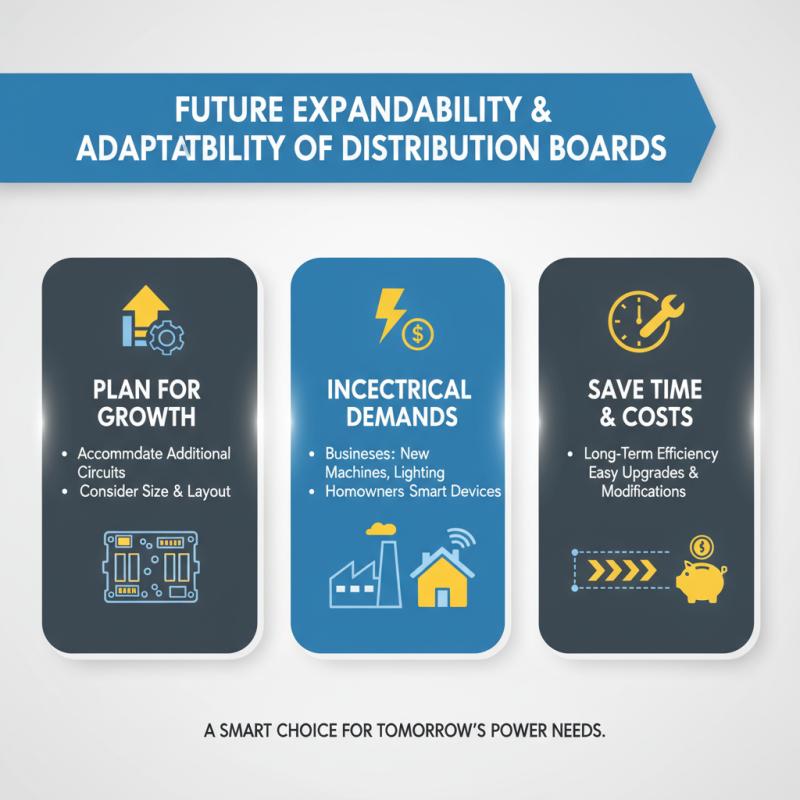
One of the most critical considerations in modern electrical planning is future expandability. Electrical demand rarely remains static, especially in commercial and industrial environments.
Expandable distribution boards offer several advantages:
Additional circuit slots for future upgrades
Modular architecture for flexible configuration
Compatibility with smart monitoring systems
Easier integration of renewable energy inputs
A future-proof design ensures that electrical systems can evolve alongside technological and operational changes without requiring full system replacement.
Industry professionals increasingly recommend modular and scalable distribution boards as the standard choice for modern infrastructure projects.
9. The Rise of Smart Distribution Boards
Digital transformation has reached the electrical distribution sector, leading to the development of smart distribution boards equipped with:
Real-time energy monitoring
Remote control and diagnostics
Load balancing automation
Predictive maintenance alerts
These systems help optimize energy usage, reduce operational costs, and improve safety management. As smart buildings and industrial automation expand, the adoption of intelligent distribution systems is expected to accelerate further.
10. Industry Outlook and Market Trends
The global distribution board market is experiencing steady growth driven by:
Urbanization and infrastructure development
Expansion of renewable energy systems
Industrial automation and digitalization
Increasing demand for energy-efficient solutions
As electrical systems become more complex, the need for safe, scalable, and intelligent distribution solutions will continue to rise. Manufacturers are responding with more advanced designs that combine safety, flexibility, and digital integration.
Conclusion
Choosing the right distribution board is a critical decision that directly impacts electrical safety, efficiency, and long-term system performance. Factors such as load capacity, safety compliance, material quality, installation ease, and future expandability must all be carefully evaluated.
With the rapid evolution of electrical infrastructure and increasing demand for intelligent energy systems, selecting a well-designed and certified distribution board is essential for ensuring operational reliability and sustainability.
For more information, please visit:
https://www.farsou.com/
CHOSO Electric Group Co., Ltd.
CHOSO Electric Group Co., Ltd.
+ +86 13968720200
admin@farso.cn
Legal Disclaimer:
EIN Presswire provides this news content "as is" without warranty of any kind. We do not accept any responsibility or liability for the accuracy, content, images, videos, licenses, completeness, legality, or reliability of the information contained in this article. If you have any complaints or copyright issues related to this article, kindly contact the author above.
