
Reusable and Modular Launch Systems Emerging as the Future of Space Access & Cost-Effective Deployment|DataMIntelligence
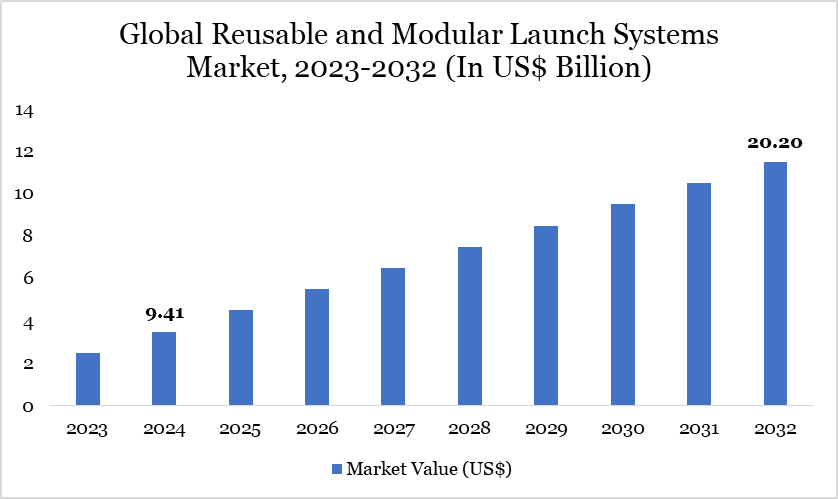
Reusable and Modular Launch Systems Market Analysis
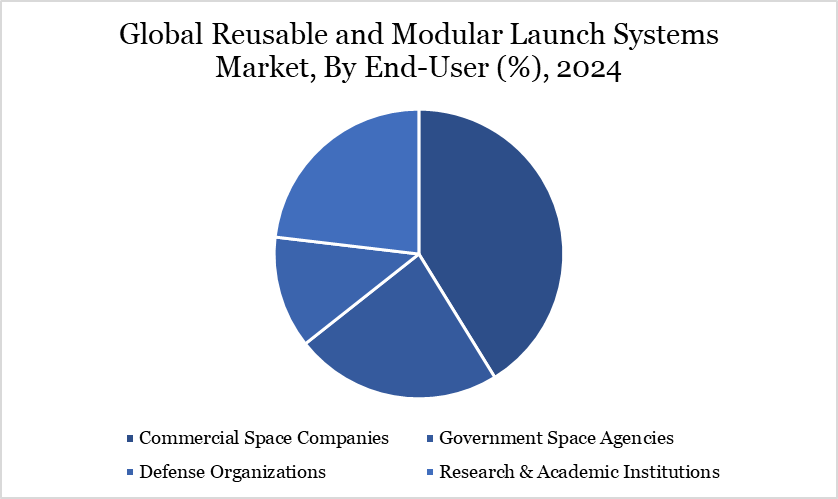
Reusable and Modular Launch Systems Market
Reusable & modular launch systems are transforming space access through reusability cost-efficient launch solutions across defense and commercial domains.
Download Latest Sample Report : https://www.datamintelligence.com/download-sample/reusable-and-modular-launch-systems-market
Reusable and Modular Launch Systems Latest Innovations and Technological Developments :-
August 2025 – Blue Origin successfully completed a static fire test of its reusable New Glenn first-stage booster, showcasing advancements in rapid refurbishment and reuse of launch components. The company also announced a collaborative program with NASA for co-developing reusable thermal protection systems.
July 2025 – Rocket Lab USA unveiled its modular Neutron launch vehicle’s final stage design, focusing on rapid reusability and improved integration with small satellite constellations. The company emphasized its role in streamlining commercial and defense payload deliveries.
June 2025 – SPACEX hit a milestone with the 20th consecutive reuse of a single Falcon 9 first-stage booster, setting a global industry benchmark for operational reusability. Its Starship program also initiated vertical stacking trials for interplanetary modular missions.
May 2025 – Arianegroup introduced modular adaptations for the upcoming Ariane Next vehicle, integrating AI-driven predictive maintenance systems that drastically reduce turnaround time between missions. The European initiative seeks to compete head-on with SpaceX’s operational cadence.
Reusable and Modular Launch Systems Market Acquisitions and Mergers
In July 2025, Virgin Galactic announced a strategic acquisition of UK-based propulsion technology startup AstroDrive, aimed at integrating modular hybrid propulsion units into its future orbital-class vehicles.
In Q2 2025, Northrop Grumman finalized a merger with LunarOrbitTech, strengthening its reusable lunar launch platforms and advancing modular payload integration capabilities in the Artemis support program.
In early 2025, AIRBUS entered a joint development agreement with Japan Aerospace Exploration Agency (JAXA) to co-design modular stages for regional launches across Asia-Pacific, focusing on sustainable and repeatable access to low-Earth orbit (LEO).
Reusable and Modular Launch Systems Market Opportunities :
The future of the reusable and modular launch systems market is closely tied to three major opportunity pillars:
Commercial Satellite Demand: The rise of mega-constellations for internet connectivity and Earth imaging creates demand for rapid, low-cost launches.
Defense and Surveillance Missions: National defense agencies are increasingly investing in reusable systems to ensure faster access and orbital superiority.
Space Tourism and Deep Space Missions: Modular and reusable designs present an ideal architecture for scaling space tourism operations and enabling deep space cargo or crewed missions to the Moon and Mars.
Emerging economies entering the space domain are also pushing for cost-efficient launch mechanisms, further expanding the market scope globally.
Market Segmentation
By Launch System Type:
Reusable Launch Vehicles (RLVs)
Modular Launch Platforms
Hybrid Systems
By Payload Type:
Small Satellites
Medium Payloads
Heavy Payloads
By Application:
Commercial Satellite Deployment
Military and Defense Missions
Cargo Resupply and Crew Transport
Interplanetary Exploration
Space Tourism
By End-User:
Government Space Agencies
Commercial Space Operators
Defense Organizations
Research Institutions
By Geography:
North America
Europe
Asia-Pacific
Latin America
Middle East & Africa
Latest News – USA
As of August 2025, the U.S. government has greenlit a $3.2 billion funding allocation through NASA and the Department of Defense for next-generation reusable launch infrastructure. A key highlight includes the extension of SpaceX’s and Blue Origin’s launch contracts for both orbital and lunar missions. Meanwhile, Northrop Grumman has begun ground trials for its autonomous reusable micro-launch system targeted at responsive space access for tactical defense operations. U.S.-based startups like StellarRidge and XOrbital are also gaining traction with rapid-assembly modular launch prototypes currently undergoing FAA certification.
Latest News – Japan
In July 2025, the Japanese government, in partnership with JAXA and private players, unveiled the Sakura Initiative, a national program to develop a fully reusable modular launch vehicle by 2028. The project, backed by over ¥480 billion, is spearheaded by a collaboration between Mitsubishi Heavy Industries and AIRBUS. JAXA also announced a successful orbital test of its modular HTV-XR system, designed for adaptable payload configurations and reusability. Japan aims to position itself as a competitive hub for commercial launches in Asia-Pacific by reducing per-launch costs and boosting launch cadence.
Reusable and Modular Launch Systems Key Players :-
The global market is significantly shaped by the following industry leaders:
Northrop Grumman – Focuses on reusable defense-centric orbital platforms and autonomous systems.
AIRBUS – Engaged in European and Asian modular launch system collaborations, notably with JAXA.
Boeing – Plays a central role in NASA’s Artemis and CST-100 Starliner programs with reusable crew transport modules.
SPACEX – The market leader in operational reusability with Falcon 9 and Starship platforms, revolutionizing launch economics.
Thales – Specializes in modular avionics and reusability-focused subsystems for European missions.
Blue Origin – Investing in both suborbital (New Shepard) and orbital reusable technologies.
China Aerospace Science and Technology Corporation (CASC) – Developing reusable heavy-lift vehicles and modular orbital architectures as part of China’s space expansion roadmap.
Rocket Lab USA – Pivoting from expendable to reusable systems with Neutron and photon-class vehicles.
Arianegroup – European leader developing Ariane Next with modular enhancements and reusability at its core.
Virgin Galactic – Expanding from suborbital tourism to orbital-class reusable vehicles through recent acquisitions.
Concluding Paragraph
The Reusable and Modular Launch Systems Market is entering a new era marked by rapid innovation, strategic partnerships, and global competition. As countries and companies vie for dominance in a rapidly commercializing space economy, the emphasis on reusability and modularity is no longer a futuristic concept it’s the foundation of the next phase of space exploration and orbital logistics. With launch costs steadily decreasing and the demand for on-demand access to space rising, the market is poised for transformational growth.
Unlock 360° Market Intelligence with DataM Subscription Services:
https://www.datamintelligence.com/reports-subscription
Power your decisions with real-time competitor tracking, strategic forecasts, and
global investment insights all in one place.
✅ Competitive Landscape
✅ Sustainability Impact Analysis
✅ KOL / Stakeholder Insights
✅ Unmet Needs & Positioning, Pricing & Market Access Snapshots
✅ Market Volatility & Emerging Risks Analysis
✅ Quarterly Industry Report Updated
✅ Live Market & Pricing Trends
✅ Import-Export Data Monitoring
✅ Consumer Behavior & Demand Analysis
Have a look at our Subscription Dashboard:
https://www.youtube.com/watch?v=x5oEiqEqTWg
Browse Related Reports :
Space Tourism Market
Traction Transformer Market
Sai Kumar
DataM Intelligence 4market Research LLP
+1 877-441-4866
email us here
Visit us on social media:
LinkedIn
X
Legal Disclaimer:
EIN Presswire provides this news content "as is" without warranty of any kind. We do not accept any responsibility or liability for the accuracy, content, images, videos, licenses, completeness, legality, or reliability of the information contained in this article. If you have any complaints or copyright issues related to this article, kindly contact the author above.
