
Material Handling Equipment Market to Surpass USD 400.6 Billion by 2032 – Persistence Market Research
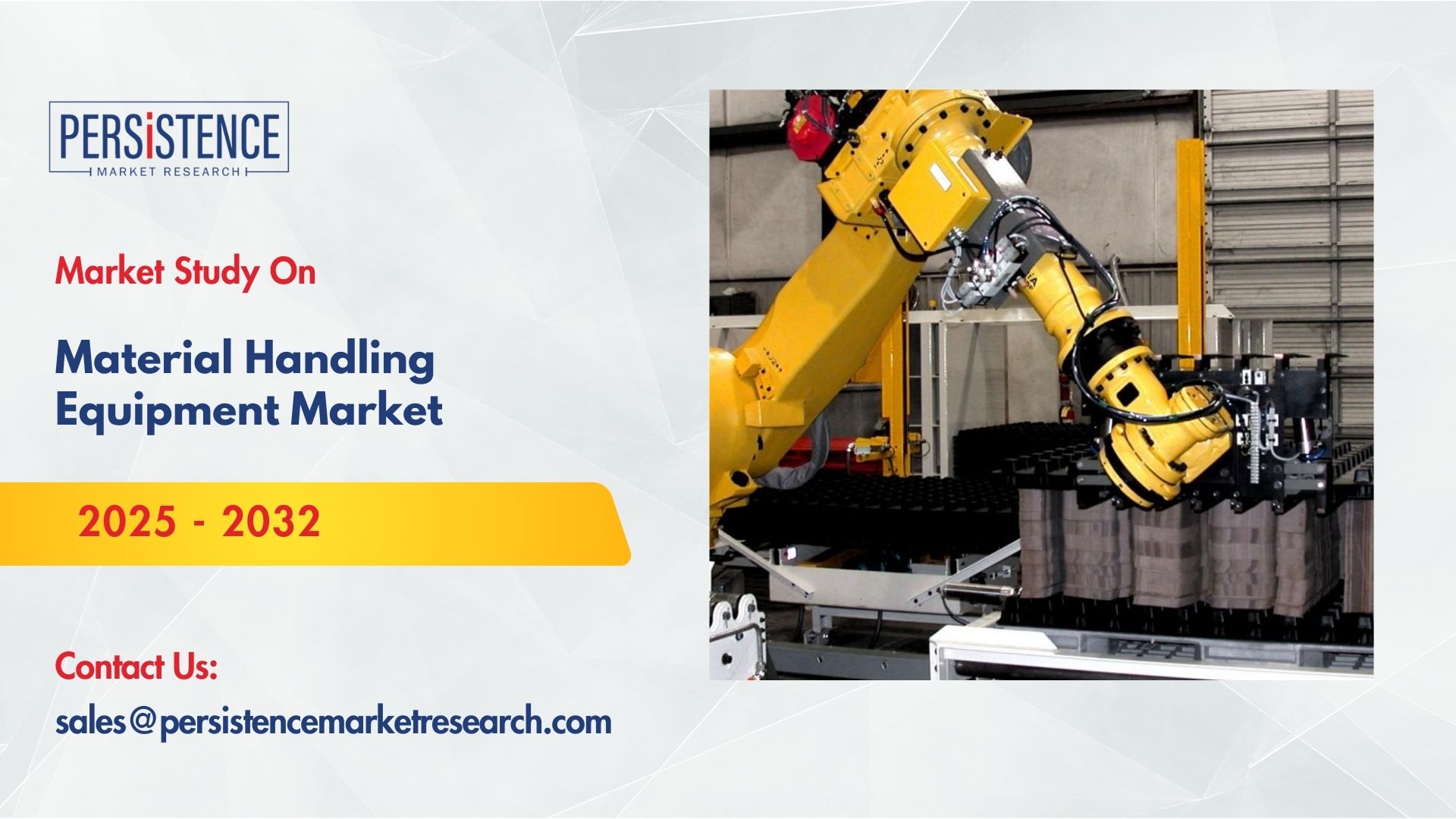
Material Handling Equipment Market
The global material handling equipment market is projected to reach USD 263.3 Bn in 2025, expanding at a CAGR of 6.2% to hit USD 400.6 Bn by 2032.
LOS ANGELES, CA, UNITED STATES, February 14, 2025 /EINPresswire.com/ -- Introduction
The material handling equipment market plays a crucial role in industries such as manufacturing, warehousing, logistics, and construction. With rapid industrialization and the growing need for efficient supply chain operations, material handling solutions have become essential in optimizing productivity, reducing labor costs, and ensuring workplace safety.
According to Persistence Market Research, the global material handling equipment market is projected to reach US$ 263.3 billion in 2025 and expand at a CAGR of 6.2% to attain a value of US$ 400.6 billion by 2032. This growth is driven by technological advancements, the rising adoption of automation, and the increasing demand for e-commerce and warehousing solutions.
Get a Sample PDF Brochure of the Report (Use Corporate Email ID for a Quick Response): https://www.persistencemarketresearch.com/samples/33178
Market Dynamics and Growth Drivers
The expansion of the material handling equipment market is fueled by several key factors that contribute to its growing adoption across industries.
The increasing reliance on automation and robotics in manufacturing and logistics has significantly influenced market growth. Automated Guided Vehicles (AGVs), robotic arms, and conveyor systems are enhancing operational efficiency by reducing human intervention and minimizing errors. With businesses focusing on Industry 4.0 and smart factories, the demand for intelligent material handling solutions is rising.
The rapid growth of e-commerce and third-party logistics (3PL) services is driving the need for advanced warehousing solutions. Retailers and logistics providers are investing heavily in automated storage and retrieval systems (AS/RS), conveyor belts, and smart packaging systems to streamline order fulfillment processes and meet customer demands efficiently.
Stringent workplace safety regulations are also contributing to the increased adoption of material handling equipment. Governments and regulatory bodies worldwide are enforcing strict safety guidelines, encouraging companies to invest in ergonomic and automated solutions that reduce workplace injuries and improve operational efficiency.
Additionally, the rising trend of sustainable and energy-efficient equipment is shaping the market landscape. Businesses are shifting towards electric forklifts, battery-operated AGVs, and eco-friendly conveyor systems to reduce carbon footprints and comply with environmental regulations.
Technological Advancements and Innovations
Technology is transforming the material handling equipment industry, making it more efficient, intelligent, and adaptable to modern business needs.
The integration of Artificial Intelligence (AI) and Machine Learning (ML) in material handling systems is optimizing warehouse operations. AI-powered robots can predict demand, optimize picking and sorting processes, and reduce downtime. Machine learning algorithms are being used to enhance predictive maintenance, minimizing equipment failures and operational disruptions.
The adoption of Internet of Things (IoT) and connected devices is revolutionizing inventory management. Smart sensors and real-time tracking systems provide accurate data on stock levels, equipment performance, and warehouse conditions, helping businesses make data-driven decisions and improve supply chain visibility.
The rise of autonomous material handling equipment, such as driverless forklifts and self-navigating AGVs, is enhancing productivity and reducing dependency on manual labor. These autonomous solutions are equipped with advanced navigation systems and collision avoidance technologies, ensuring smooth and safe material movement within warehouses and production facilities.
Market Segmentation and Key Applications
Material handling equipment is classified into various types based on its application and functionality.
By Equipment Type
The market consists of different categories of equipment, each serving a unique purpose in logistics and manufacturing operations.
Storage and Retrieval Systems: Includes automated storage and retrieval systems (AS/RS), shelving, and pallet racking, widely used in warehouses for efficient inventory management.
Conveyors and Sortation Systems: Essential in distribution centers, these systems ensure smooth material flow and automated sorting of goods.
Industrial Trucks and Forklifts: Used in warehouses, ports, and factories, forklifts and trucks handle the movement of heavy loads efficiently.
Robotic Systems and AGVs: Increasingly adopted for automated warehouse operations, reducing human intervention and enhancing efficiency.
By End-Use Industry
Material handling equipment is extensively used across multiple industries.
Manufacturing: Enhances production efficiency, reduces downtime, and streamlines material flow within factories.
Warehousing and Distribution: Essential for order fulfillment, storage, and transportation of goods in e-commerce and retail sectors.
Construction: Used for lifting and transporting heavy materials in construction sites, improving safety and efficiency.
Aerospace and Automotive: Supports assembly lines and logistics operations in highly specialized manufacturing environments.
Competitive Landscape and Key Players
The material handling equipment market is highly competitive, with several global and regional players focusing on innovation and strategic collaborations to strengthen their market presence.
Leading companies in the market include:
Toyota Industries Corporation: A dominant player in forklifts and automated warehouse solutions.
KION Group AG: A major provider of industrial trucks, automation, and software-driven solutions.
Jungheinrich AG: Known for advanced warehouse automation and material handling systems.
Hyster-Yale Materials Handling, Inc.: Specializes in lift trucks and warehousing solutions.
Daifuku Co., Ltd.: A key innovator in AS/RS and conveyor systems.
These companies are investing heavily in research and development to introduce smart and AI-driven material handling solutions. Strategic partnerships, mergers, and acquisitions are common trends in the industry as companies strive to expand their product portfolios and gain a competitive edge.
Challenges and Restraints
Despite its rapid growth, the material handling equipment market faces several challenges that could hinder its expansion.
High initial investment costs remain a significant barrier for small and medium-sized enterprises (SMEs). Advanced material handling solutions, such as robotics and automated systems, require substantial upfront capital, limiting adoption in cost-sensitive industries.
The complexity of integrating automation with existing infrastructure is another challenge. Many businesses, especially those with legacy systems, face difficulties in transitioning to fully automated material handling solutions without disrupting operations.
Supply chain disruptions and raw material shortages are affecting the manufacturing of material handling equipment. The COVID-19 pandemic exposed vulnerabilities in global supply chains, leading to delays in production and increased equipment costs.
Skilled labor shortages in operating and maintaining advanced material handling equipment also pose a challenge. As automation increases, the need for trained professionals to manage AI-driven and robotic systems is growing, creating a demand-supply gap in the workforce.
Future Outlook and Emerging Trends
The future of the material handling equipment market is poised for continued innovation and expansion, driven by emerging trends and technological advancements.
The adoption of 5G and edge computing in warehouses will enhance real-time communication and data processing, improving the efficiency of automated material handling systems. These technologies will enable faster decision-making, lower latency in equipment operations, and seamless integration of IoT devices.
The growing emphasis on sustainability and green logistics will drive the development of energy-efficient and eco-friendly material handling solutions. Manufacturers are focusing on electric and hydrogen-powered forklifts, reducing dependence on fossil fuels and lowering carbon emissions.
The expansion of micro-fulfillment centers and urban warehouses in response to the booming e-commerce industry will boost demand for compact and highly automated material handling systems. Companies are increasingly investing in small-scale robotics and AI-driven logistics solutions to improve last-mile delivery efficiency.
Blockchain technology is expected to enhance supply chain transparency and security, allowing businesses to track material handling operations in real-time and reduce fraud and errors.
Conclusion
The material handling equipment market is experiencing robust growth, driven by advancements in automation, AI, and smart logistics solutions. With an estimated market value of US$ 400.6 billion by 2032, the industry is set to play a critical role in optimizing supply chain operations, enhancing warehouse efficiency, and improving workplace safety.
As industries continue to embrace automation and digital transformation, material handling equipment will become an essential component of modern logistics and manufacturing. Companies that invest in innovative and sustainable solutions will gain a competitive advantage in this rapidly evolving market landscape.
Persistence Market Research Pvt Ltd
Persistence Market Research
+1 646-878-6329
email us here
Visit us on social media:
Facebook
X
LinkedIn
Instagram
YouTube
Legal Disclaimer:
EIN Presswire provides this news content "as is" without warranty of any kind. We do not accept any responsibility or liability for the accuracy, content, images, videos, licenses, completeness, legality, or reliability of the information contained in this article. If you have any complaints or copyright issues related to this article, kindly contact the author above.
