
Precision diabetes management: glucose-triggered insulin delivery membrane
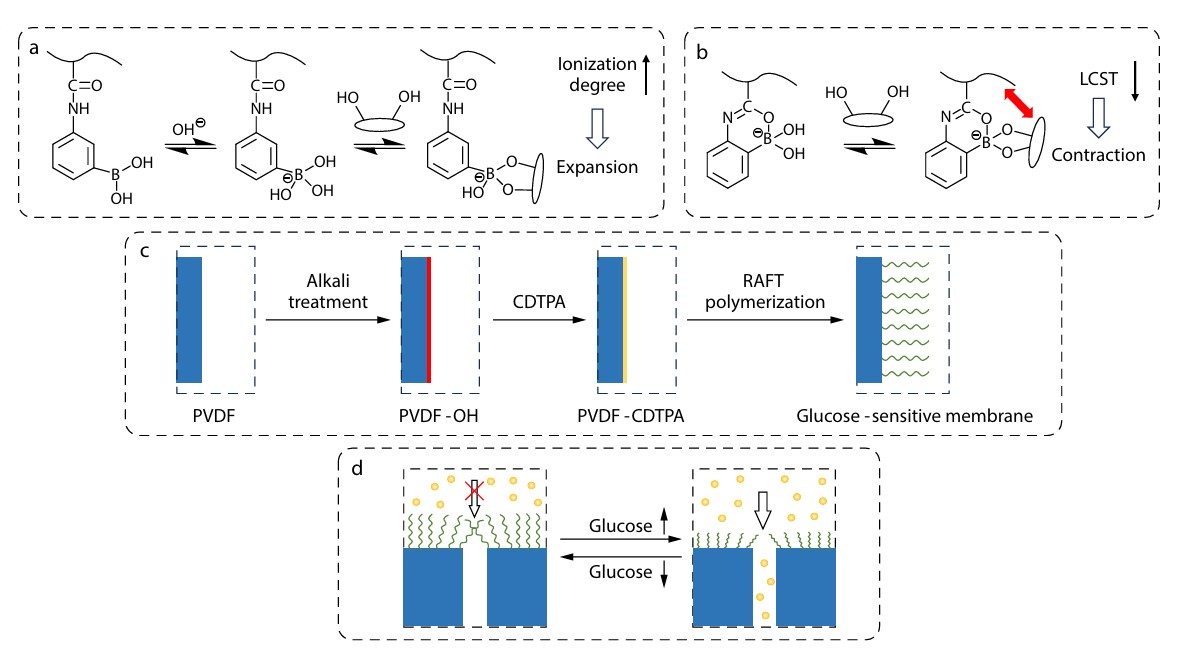
Schematic Representation of Glucose-Responsive Membrane Development for Insulin Delivery. (a) The traditional glucose-sensitive mechanism of PBA; (b) The new glucose-sensitive mechanism of PBA; (c) Preparation process of the glucose-sensitive membrane by
GA, UNITED STATES, December 9, 2024 /EINPresswire.com/ -- Scientists have developed an innovative glucose-responsive membrane capable of self-regulating insulin release, offering a potential revolution in diabetes management. This cutting-edge material responds to glucose levels by contracting, functioning as an automatic chemical valve that controls insulin delivery. This advance could greatly enhance blood sugar regulation for diabetic patients, reducing the need for frequent manual insulin adjustments and improving overall management of the disease.
For years, glucose-sensitive membranes have been a key focus for improving controlled insulin release in diabetes treatments. Glucose-sensitive membrane was previously constructed using glucose oxidase (GOD)-based glucose-sensitive materials. GOD-based systems suffer from limited oxygen supply and inactivation by hydrogen peroxide. Phenylboronic acid (PBA), well-known glucose reporter, exhibits higher reliability compared with GOD. Unfortunately, most PBA-based glucose-sensitive materials are expansion-type and cannot be used as chemical valves in glucose-sensitive membrane for insulin delivery.
In a recent study (DOI: 10.1007/s10118-024-3135-3) published in Chinese Journal of Polymer Science on May 17, 2024, a team of researchers from Tiangong University unveiled a novel glucose-sensitive membrane that uses PBA-based contraction-type linear polymers. Through advanced surface grafting techniques, the researchers have engineered a membrane capable of modulating insulin release with remarkable stability and efficiency, even under fluctuating glucose levels. This breakthrough promises to create more reliable insulin regulation for diabetic patients, mimicking natural insulin release patterns.
The standout feature of this study is the use of a PBA-based contraction-type polymer, which shrinks in response to glucose. This contraction opens the membrane’s pores, allowing for precise insulin release. By fine-tuning the polymer chain length and density, the researchers achieved reversible insulin release in both simulated body fluids and fetal bovine serum. Additionally, the membrane demonstrated exceptional anti-fouling properties, biocompatibility, and long-term stability—qualities critical for real-world applications in diabetes management. Most notably, it responded effectively to fluctuations in blood glucose, making it an ideal candidate for continuous insulin regulation.
Prof. Yong-Jun Zhang, a leading bioengineering expert and the principal investigator of the study, commented on the breakthrough: "This new membrane technology addresses a crucial challenge in diabetes care by providing a stable, controlled release system. The use of contraction-type polymers not only enhances insulin regulation but also paves the way for more reliable and efficient glucose-responsive devices."
The implications of this technology extend far beyond diabetes care. The ability to regulate insulin release in response to real-time glucose concentrations opens the door to advanced, self-regulating insulin delivery systems. Furthermore, this technology could have applications in other fields requiring precise biochemical regulation, such as hormone delivery and bioengineering, broadening its impact across multiple medical disciplines.
DOI
10.1007/s10118-024-3135-3
Original Source URL
https://doi.org/10.1007/s10118-024-3135-3
Funding information
This work was financially supported by the National Natural Science Foundation of China (Nos. 52033004, 52273109 and 22275137), Cangzhou Institute of Tiangong University (No. TGCYY-F-0203) and Hebei Province Natural Science Foundation (No. E2023110007).
Lucy Wang
BioDesign Research
email us here
Legal Disclaimer:
EIN Presswire provides this news content "as is" without warranty of any kind. We do not accept any responsibility or liability for the accuracy, content, images, videos, licenses, completeness, legality, or reliability of the information contained in this article. If you have any complaints or copyright issues related to this article, kindly contact the author above.
