
Neuroprosthetics Market Size, Growth, Trends and Forecasts to USD 30.26 Billion by 2031
neuroprosthetics market
Neuroprosthetics Market Poised for Growth Fueled by Advances in Technology and Rising Neurological Disorders
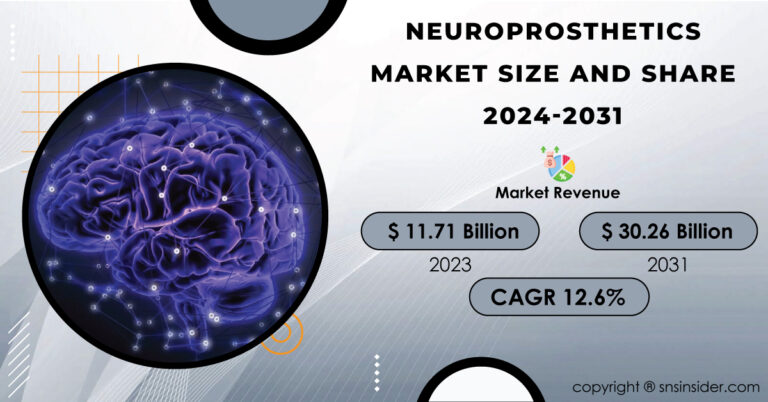
AUSTIN, TEXAS, UNITED STATES, May 20, 2024 /EINPresswire.com/ -- The global neuroprosthetics market, valued at $11.71 billion in 2023, is projected to expand significantly, reaching $30.26 billion by 2031. This substantial growth, at a compound annual growth rate (CAGR) of 12.6% over the forecast period from 2024 to 2031, is driven by technological advancements, increasing prevalence of neurological disorders, and the growing demand for improved quality of life for patients with neural impairments.Neuroprosthetics, also known as neural prosthetics, involve the use of devices that can replace or enhance the function of a damaged nervous system or sensory organ. These devices are instrumental in helping patients with conditions such as Parkinson's disease, epilepsy, spinal cord injuries, and hearing loss regain functionality and improve their quality of life.
"Technological innovations and the rising incidence of neurological conditions are key drivers of growth in the neuroprosthetics market," said Dr. Anna Roberts, Chief Scientist at NeuroTech Solutions. "The ability of neuroprosthetics to restore lost functions and enhance the lives of patients with neural impairments is driving significant advancements and investments in this field."
Download Free Sample Report of Neuroprosthetics Market @ https://www.snsinsider.com/sample-request/2882
List of Neuroprosthetics Companies Profiled in Report:
• Medtronic plc
• Cochlear Ltd
• Boston Scientific
• Abbott laboratories
• LivaNova
• Retina implant Ag
• Sonova
• Neuropace
• Second Sight medical products
• Nevro
• MED-EL
(To view Full list of companies, Ask for Sample Report)
Technological Innovations Driving Market Growth
The rapid development of cutting-edge technologies such as brain-computer interfaces (BCIs), deep brain stimulation (DBS), and cochlear implants is a significant factor propelling the neuroprosthetics market. These innovations are enhancing the effectiveness, safety, and usability of neuroprosthetic devices. BCIs, for example, allow direct communication between the brain and external devices, enabling patients to control prosthetic limbs or computer cursors with their thoughts. DBS involves the implantation of electrodes that deliver electrical impulses to specific brain regions, providing relief from symptoms of Parkinson's disease, tremors, and other movement disorders.
"Cochlear implants have revolutionized the treatment of hearing loss, allowing patients to perceive sound and communicate more effectively," noted Dr. Roberts. "Similarly, advancements in DBS and BCIs are opening new possibilities for treating a range of neurological conditions."
Increasing Prevalence of Neurological Disorders
The global burden of neurological disorders, such as Parkinson's disease, epilepsy, and multiple sclerosis, is on the rise, driven by aging populations and improved diagnostic capabilities. These conditions often result in significant physical and cognitive impairments, necessitating effective treatment and rehabilitation options. Neuroprosthetics offer promising solutions for managing and mitigating the effects of these disorders. For example, spinal cord stimulators can alleviate chronic pain in patients with nerve injuries, while retinal implants can restore partial vision in individuals with certain types of blindness.
"The increasing prevalence of neurological disorders is driving demand for advanced neuroprosthetic devices," emphasized Dr. Roberts. "These devices provide critical therapeutic benefits and enhance the independence and quality of life for patients."
Growing Demand for Improved Quality of Life
Patients with neurological impairments often face significant challenges in their daily lives. Neuroprosthetics play a crucial role in improving their quality of life by restoring lost functions and enabling greater independence. The growing awareness and acceptance of these devices are contributing to market growth. For instance, myoelectric prosthetic limbs, which use electrical signals from the user's muscles to control movement, provide amputees with more natural and precise control. Similarly, bladder control implants help patients with spinal cord injuries manage urinary functions, reducing the need for catheterization and improving overall well-being.
"Improving patient quality of life is a primary goal of neuroprosthetics," stated Dr. Roberts. "These devices offer significant functional and psychological benefits, making them indispensable for patients with neural impairments."
Regional Insights
North America currently dominates the neuroprosthetics market, driven by a robust healthcare infrastructure, significant R&D investments, and high adoption rates of advanced medical technologies. The United States, in particular, is a major contributor to market growth, with strong support for neurotechnology innovation and a high prevalence of neurological disorders. The Asia-Pacific region is expected to witness the fastest growth during the forecast period. Factors such as increasing healthcare expenditure, growing awareness about neuroprosthetic devices, and the expansion of healthcare infrastructure in countries like China and India are contributing to this growth.
"North America leads the market, but the Asia-Pacific region is rapidly emerging as a significant growth area," noted Dr. Roberts. "With rising affluence and a growing focus on healthcare, these markets hold substantial potential."
Check Discount on This Report @ https://www.snsinsider.com/discount/2882
Market Challenges and Opportunities
Despite the promising outlook, the neuroprosthetics market faces challenges such as high costs, regulatory hurdles, and the need for extensive clinical validation. Ensuring the safety, efficacy, and affordability of neuroprosthetic devices remains a critical focus for manufacturers and healthcare providers.
However, these challenges also present opportunities for innovation and growth. Companies are investing in research and development to create cost-effective, scalable solutions and enhance the integration of neuroprosthetics with existing healthcare systems. Additionally, collaborations between technology providers, healthcare institutions, and regulatory bodies are essential for streamlining approval processes and ensuring patient safety.
Key Takeaways:
• The global neuroprosthetics market is projected to grow from $11.71 billion in 2023 to $30.26 billion by 2031, at a CAGR of 12.6%.
• Technological advancements, including BCIs, DBS, and cochlear implants, are driving market growth.
• The increasing prevalence of neurological disorders is boosting demand for neuroprosthetic devices.
• Neuroprosthetics play a crucial role in improving the quality of life for patients with neural impairments.
• North America currently leads the market, but the Asia-Pacific region is expected to experience the fastest growth.
• Challenges such as high costs and regulatory hurdles present opportunities for innovation and collaboration.
As the neuroprosthetics market continues to evolve, driven by technological advancements and a focus on improving patient outcomes, it holds significant potential for transforming the treatment of neurological disorders. Industry stakeholders are well-positioned to leverage these trends, delivering advanced neuroprosthetic solutions that meet the diverse needs of patients worldwide.
Check Discount on This Report @ https://www.snsinsider.com/discount/2882
Table of Content
Chapter 1 Introduction
Chapter 2 Research Methodology
Chapter 3 Neuroprosthetics Market Dynamics
Chapter 4 Impact Analysis (COVID-19, Ukraine- Russia war, Ongoing Recession on Major Economies)
Chapter 5 Value Chain Analysis
Chapter 6 Porter’s 5 forces model
Chapter 7 PEST Analysis
Chapter 8 Neuroprosthetics Market Segmentation, By Type
Chapter 9 Neuroprosthetics Market Segmentation, By Technique
Chapter 11 Neuroprosthetics Market Segmentation, By Application
Chapter 10 Regional Analysis
Chapter 11 Company profile
Chapter 12 Competitive Landscape
Chapter 13 Use Case and Best Practices
Chapter 14 Conclusion
Continued…
Akash Anand
SNS Insider Pvt. Ltd
+1 415-230-0044
email us here
Visit us on social media:
Facebook
Twitter
LinkedIn
Instagram
YouTube
Legal Disclaimer:
EIN Presswire provides this news content "as is" without warranty of any kind. We do not accept any responsibility or liability for the accuracy, content, images, videos, licenses, completeness, legality, or reliability of the information contained in this article. If you have any complaints or copyright issues related to this article, kindly contact the author above.
