
Healthcare Assistive Robot Market Predicted to Surpass USD 38.4 Billion by 2031
Healthcare Assistive Robot Market
The healthcare assistive robot market size is estimated to reach $38.4 billion by 2031, growing at a CAGR of 16.5% from 2022 to 2031.
PORTLAND, OREGON, UNITED STATES, February 16, 2024 /EINPresswire.com/ -- According to a new report published by Allied Market Research, titled, “Healthcare Assistive Robot Market," The healthcare assistive robot market size was valued at $8.3 billion in 2021, and is estimated to reach $38.4 billion by 2031, growing at a CAGR of 16.5% from 2022 to 2031.
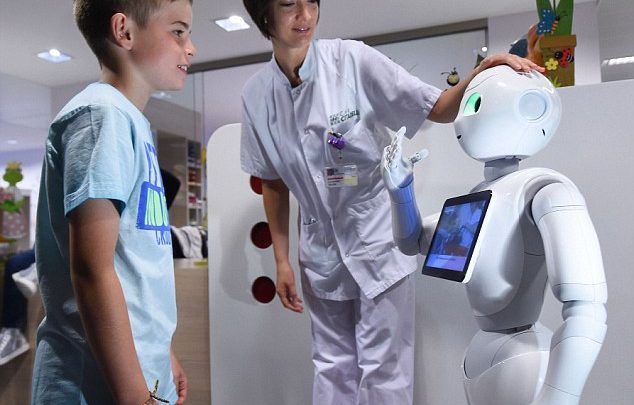
Healthcare assistive robots have the potential to provide support for a range of care-related tasks such as physical and social assistance, physiotherapy, and rehabilitation as well as surgical assistance. Healthcare assistive robots have computerized reasoning by nature since they collaborate with patients which stimulates their cognitive and social development. Healthcare assistance robots are transforming how operations are carried out, improving supply delivery and sterilization, and allowing healthcare professionals to concentrate on interacting and caring for patients.
It provides a broad range of technology for the creation of medical robots, such as surgical assistance, modular, and mobile robots that operate on their own. These robots are used for elderly, injured, and disabled persons since they provide both movement controllability and measurement reliability which render them ideal for quick rehabilitation.
𝑹𝒆𝒒𝒖𝒆𝒔𝒕 𝑺𝒂𝒎𝒑𝒍𝒆 𝑪𝒐𝒑𝒚 𝒐𝒇 𝑹𝒆𝒑𝒐𝒓𝒕 https://www.alliedmarketresearch.com/request-sample/A10981
The healthcare assistive robot market trends which drive the growth of the market include, are the increase in the prevalence of spinal cord injury and musculoskeletal disorders. In addition, healthcare assistive robots are being used more frequently to aid patients who are physically disabled or differently abled in standing up, balancing, and maintaining gait, which drives the growth of the market. Moreover, technological advancements, such as the incorporation of artificial intelligence (AI) and machine learning (ML) along with advanced sensors, are further expected to boost market growth during the forecast period.
However, strict regulatory rules and high costs are expected to hamper the growth during healthcare assistive robot market analysis. Conversely, an increase in the growth potential of emerging economies is expected to provide numerous opportunities for market growth during the forecast period.
By type, the surgical assistive robot segment dominated the market in 2021 and is expected to remain dominant during the forecast period, owing to the increase in the prevalence of neurological, gynecological, and urological diseases, which also increases the adoption of surgical assistive robots for surgical purposes. In addition, surgical assistive robots help to reduce the workload of medical staff, allowing them to spend more time directly caring for patients, while also developing an important operational procedure that offers effectiveness and low-cost investments in healthcare amenities, which increase the demand for surgical robots and drives the growth of the healthcare assistive robot market size.
By portability, the fixed base segment dominated the healthcare assistive robot market share in 2021 and is expected to remain dominant during the forecast period, as most of the surgical assistive robots are available in fixed-based robots in hospitals. Thus, the increase in the adoption of surgical assistive robots also drives the growth of the fixed-based segment.
By end user, the hospitals and clinics segment dominated the market in 2021 and is expected to remain dominant during the forecast period, owing to increase healthcare expenditure and rapid adoption of new technologies in hospitals and clinics.
Region-wise, North America has the highest healthcare assistive robot market share and is expected to remain dominant during the forecast period owing to the presence of a large patient population, strong presence of key players, ease of product availability, and well-developed healthcare infrastructure. In addition, favorable reimbursement policies in healthcare systems and a higher number of R&D activities further boost the market growth.
Asia-Pacific is projected to register the highest CAGR of 18.5% during the healthcare assistive robot market forecast period. The evolving healthcare regulatory landscape and the government's emphasis on enhancing R&D capabilities for innovative product development are the key driving factors that boost the growth of the market in the region.
𝐈𝐧𝐭𝐞𝐫𝐞𝐬𝐭𝐞𝐝 𝐢𝐧 𝐏𝐫𝐨𝐜𝐮𝐫𝐢𝐧𝐠 𝐭𝐡𝐢𝐬 𝐑𝐞𝐩𝐨𝐫𝐭? 𝐕𝐢𝐬𝐢𝐭 𝐇𝐞𝐫𝐞: https://www.alliedmarketresearch.com/purchase-enquiry/11346
𝐊𝐞𝐲 𝐁𝐞𝐧𝐞𝐟𝐢𝐭𝐬 𝐅𝐨𝐫 𝐒𝐭𝐚𝐤𝐞𝐡𝐨𝐥𝐝𝐞𝐫𝐬
This report provides a quantitative analysis of the market segments, current trends, estimations, and dynamics of the healthcare assistive robot market analysis from 2021 to 2031 to identify the prevailing healthcare assistive robot market opportunity.
The market research is offered along with information related to key drivers, restraints, and opportunities.
Porter's five forces analysis highlights the potency of buyers and suppliers to enable stakeholders make profit-oriented business decisions and strengthen their supplier-buyer network.
In-depth analysis of the healthcare assistive robot market segmentation assists to determine the prevailing market opportunities.
Major countries in each region are mapped according to their revenue contribution to the global market.
Market player positioning facilitates benchmarking and provides a clear understanding of the present position of the market players.
The report includes the analysis of the regional as well as global healthcare assistive robot market trends, key players, market segments, application areas, and market growth strategies.
𝐊𝐞𝐲 𝐟𝐢𝐧𝐝𝐢𝐧𝐠𝐬 𝐨𝐟 𝐭𝐡𝐞 𝐬𝐭𝐮𝐝𝐲
• On the basis of product, the surgical assistive robot segment dominated the healthcare assistive robot industry in 2021, and is expected to continue this trend during the forecast period.
• By portability, the fixed base segment dominated the market in 2021, and is expected to continue this trend during the forecast period.
• On the basis of end user, the hospitals and clinics segment dominated the healthcare assistive robot industry in 2021, and is expected to continue this trend during the forecast period.
• Region-wise, North America garnered the largest revenue share in 2021. However, Asia-Pacific is anticipated to grow at the highest CAGR during the forecast period.
𝗧𝗿𝗲𝗻𝗱𝗶𝗻𝗴 𝗥𝗲𝗽𝗼𝗿𝘁𝘀 𝗶𝗻 𝗛𝗲𝗮𝗹𝘁𝗵𝗰𝗮𝗿𝗲 𝗜𝗻𝗱𝘂𝘀𝘁𝗿𝘆 (𝗕𝗼𝗼𝗸 𝗡𝗼𝘄 𝘄𝗶𝘁𝗵 𝟭𝟬% 𝗗𝗶𝘀𝗰𝗼𝘂𝗻𝘁):
𝐀𝐧𝐭𝐢𝐦𝐢𝐜𝐫𝐨𝐛𝐢𝐚𝐥 𝐬𝐮𝐬𝐜𝐞𝐩𝐭𝐢𝐛𝐢𝐥𝐢𝐭𝐲 𝐭𝐞𝐬𝐭𝐢𝐧𝐠 𝐦𝐚𝐫𝐤𝐞𝐭 https://www.alliedmarketresearch.com/antimicrobial-susceptibility-testing-market-A10282
𝐒𝐚𝐫𝐜𝐨𝐩𝐞𝐧𝐢𝐚 𝐓𝐫𝐞𝐚𝐭𝐦𝐞𝐧𝐭 𝐌𝐚𝐫𝐤𝐞𝐭 https://www.alliedmarketresearch.com/sarcopenia-treatment-market-A10526
David Correa
Allied Market Research
+1 5038946022
email us here
Visit us on social media:
Facebook
Twitter
LinkedIn
Legal Disclaimer:
EIN Presswire provides this news content "as is" without warranty of any kind. We do not accept any responsibility or liability for the accuracy, content, images, videos, licenses, completeness, legality, or reliability of the information contained in this article. If you have any complaints or copyright issues related to this article, kindly contact the author above.
