
Vehicle networking environment information sharing based on distributed fountain code
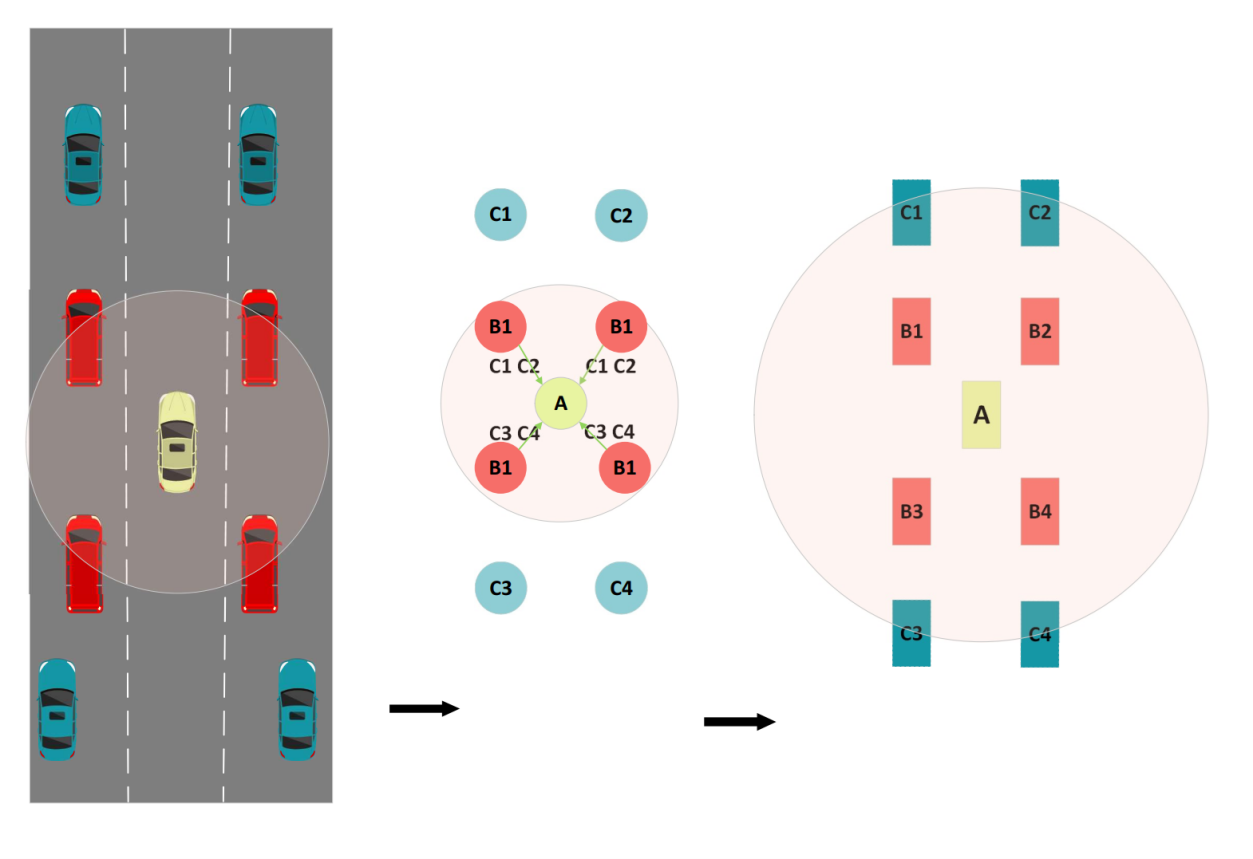
MULTI VEHICLE COLLABORATION EXPANDS PERCEPTION RANGE.
USA, January 31, 2024 /EINPresswire.com/ -- Researchers propose a new motion prediction compensation method, which includes a distributed fountain coding scheme, motion prediction model, and information transmission control algorithm, which reduces channel bandwidth resource consumption and improves transmission efficiency.
Intelligent Transportation systems (ITS) have shown great potential in smart cities in recent years. Using information processing and communication technology, ITS significantly improves the quality of urban traffic operation and service. Autonomous vehicles (AVs), a key component of ITS, are able to sense their surroundings and operate without the need for human intervention. However, while autonomous vehicles have been deployed and tested in specific pilot areas, they still face challenges such as slow operation and long response delays. The root cause behind these problems is the limited perceptual range of a single vehicle, hindered by surrounding vehicles, buildings, and other obstacles.
In response to this limitation, a new study (https://doi.org/10.1016/j.ijin.2024.01.001) published in the International Journal of Intelligent Networks highlighted that in the vehicle network environment, vehicle movement speed is fast, topology changes frequently and packet loss rate is high.
“However, the existing TCP protocol timeout retransmission mechanism leads to frequent retransmission in complex vehicle-connected environments, resulting in a large number of invalid packets and reducing transmission efficiency,” says lead author Jianhang Liu.
To address these challenges, the research team proposes a data-sharing solution based on distributed fountain coding, called Vehicle Information Perception Method using Distributed Fountain Codes (VIPMDFC). To reduce the amount of data transferred, the researchers extracted features from the sensed vehicles and segmented and encoded the data using Fountain coding's powerful error correction capabilities, low retransmission rates and fast transmission speeds, thus improving the reliability of the transmission.
“We also dynamically adjusted the encoding length according to the environment to improve transmission efficiency,” shares Liu. “The proposed distributed fountain coding sharing method allows the receiver to accept encoded packets from different vehicles, avoids decoding failure caused by network anomalies of specific transmission vehicles, effectively solving the problem of high packet loss and prolonged delay in vehicle communication, and thus improving the reliability and efficiency of communication.”
In addition, the team introduced a trajectory prediction algorithm based on the attention mechanism codec model, which can predict the motion state of the object to compensate for the information delay caused by the network delay and reduce the frequency of information transmission.
This series of innovative initiatives marks an important step in improving the reliability and safety of autonomous driving systems and is expected to play a greater role in the future of smart cities.
DOI
10.1016/j.ijin.2024.01.001
Original Source URL
https://doi.org/10.1016/j.ijin.2024.01.001
Funding information
This work is partially supported by the Shandong Provincial Natural Science Foundation, China under Grant ZR2020MF005, and National Natural Science Foundation of China 61972417.
Lucy Wang
BioDesign Research
email us here
Legal Disclaimer:
EIN Presswire provides this news content "as is" without warranty of any kind. We do not accept any responsibility or liability for the accuracy, content, images, videos, licenses, completeness, legality, or reliability of the information contained in this article. If you have any complaints or copyright issues related to this article, kindly contact the author above.
