
DCS Rescue Discusses the Options for Confined Space Air Monitoring
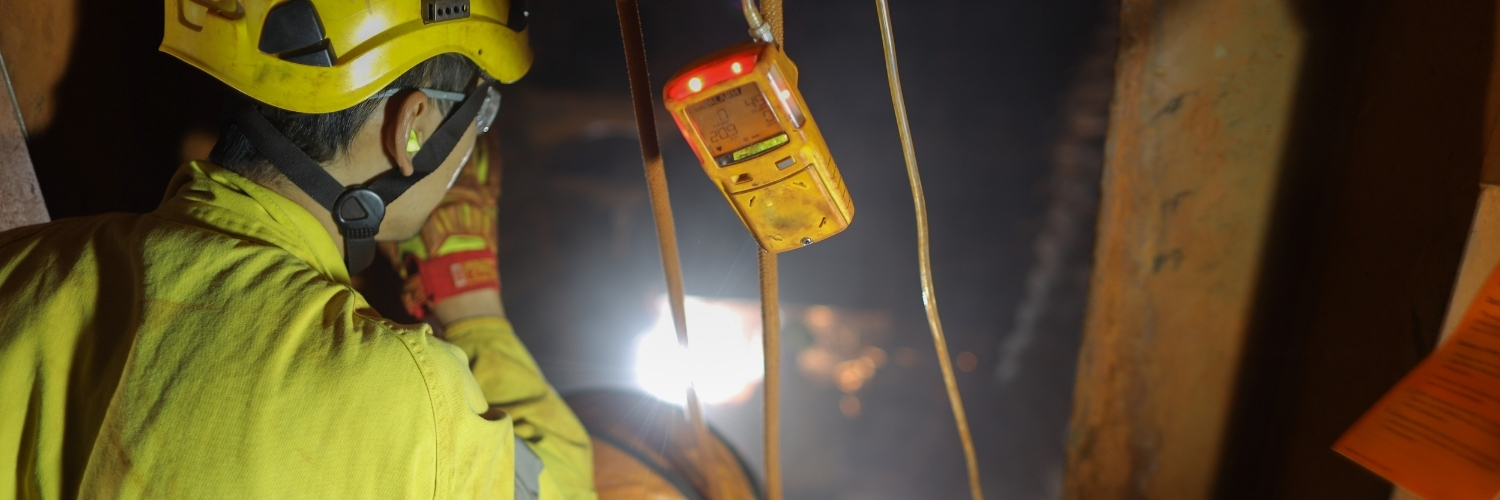
Air Monitoring Options
OSHA Regulations and the Importance of Pre-Entry Testing
The Occupational Safety and Health Administration (OSHA) standard 1910.146(c)(5)(ii)(C) mandates that “Before an employee enters the space, the internal atmosphere shall be tested, with a calibrated direct-reading instrument, for oxygen content, for flammable gases and vapors, and for potential toxic air contaminants, in that order.”
In simpler terms, before entering a confined space, workers must use a gas detection monitor to test for hazardous gases like carbon monoxide, explosive gases, and hydrogen sulfide. They must also ensure sufficient oxygen levels. All confined spaces must undergo pre-entry testing, also known as “remote testing,” before any worker enters.
3 Confined Space Remote Testing Methods
Lowering a Gas Monitor on a Rope:
Most gas monitors have a clip or ring for easy rope attachment, making it simple to lower the device for remote air testing. This method allows testing at multiple depths by slowly lowering the monitor and taking readings at different levels. However, there’s a risk of dropping the monitor, and water damage is a concern if lowered into water. Reading data can be challenging, as the monitor only tracks peak readings, requiring scrolling to analyze them.
Attached Pump Method:
Most confined space air monitors accept detachable pumps, either battery-operated or hand-squeezed, for sample drawing. If the pump breaks, the monitor can still function using the rope method. This method offers real-time readings, eliminating the need to scroll for peak data. However, hand-squeezing a sample can be difficult, requiring repetitive squeezing for accurate results, especially with long hoses.
Battery-powered pumps require patience, as the sample tube needs to stay at each layer for several seconds for accurate sampling.
Both sample methods risk sucking water into the monitor if filters are not set correctly. Pumps also require additional maintenance, including changing filters, checking water levels, replacing batteries, and potential failure or breakage.
Internal Pump Method:
Some gas monitors come with built-in internal pumps. This method eliminates the risk of dropping equipment and offers real-time readings.
However, a pump failure can render the entire monitor unusable, depending on its diffusion capabilities and calibration needs.
Similar to the attached pump method, internal pumps share concerns regarding water intake, filter maintenance, and potential failure.
Safety First: Utilizing Confined Space Rescue Providers
For optimal safety, consider using a confined space rescue provider for rescue and technical support. These professionals possess the expertise and air monitors for confined spaces to handle emergencies effectively.
Choosing the Right Method
The ideal remote testing method depends on various factors, including the specific confined space, available equipment, and worker comfort levels.
Prioritizing proper air monitoring procedures and utilizing qualified confined space rescue providers are essential for safeguarding worker well-being in confined space environments.
Lance B
DCS Rescue
+1 562-595-3002
lanceb@anconservices.com
Visit us on social media:
Facebook
LinkedIn
Legal Disclaimer:
EIN Presswire provides this news content "as is" without warranty of any kind. We do not accept any responsibility or liability for the accuracy, content, images, videos, licenses, completeness, legality, or reliability of the information contained in this article. If you have any complaints or copyright issues related to this article, kindly contact the author above.
