
Exploring the Growing Sciatica Treatment Market: Trends and Projections to 2031
Sciatica Treatment Market Research Reports
PORTLAND, OREGON, UNITED STATES, September 20, 2023/EINPresswire.com/ -- Download PDF Brochure at: https://www.alliedmarketresearch.com/request-sample/13748
Introduction:
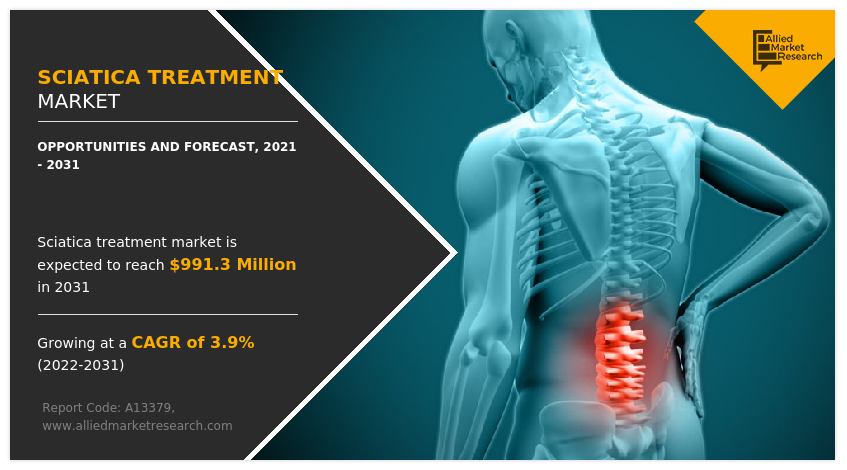
The sciatica treatment market is experiencing significant growth, with a promising trajectory that extends into the next decade. In 2021, the market was valued at an impressive $678 million, and it is expected to reach a staggering $991.3 million by 2031. This substantial growth, driven by a compound annual growth rate (CAGR) of 3.9% from 2022 to 2031, reflects the increasing prevalence of sciatica and advancements in treatment modalities.
Understanding Sciatica: Sciatica is a prevalent and often debilitating condition characterized by pain radiating from the lower back down the leg. It typically occurs due to compression or irritation of the sciatic nerve, causing discomfort, numbness, or tingling sensations. Factors such as aging, spinal injuries, and lifestyle choices contribute to the rising incidence of sciatica worldwide.
Key Growth Drivers: Several factors are fueling the growth of the sciatica treatment market:
1. Aging Population: As the global population ages, the prevalence of sciatica is expected to rise. Older individuals are more susceptible to conditions that can lead to sciatic nerve compression, such as degenerative disc disease and spinal stenosis.
2. Technological Advancements: Advances in medical technology have led to the development of minimally invasive surgical procedures, targeted drug therapies, and innovative diagnostic tools. These innovations are providing patients with more effective and less invasive treatment options.
3. Increased Awareness: Growing awareness about sciatica and its available treatments is encouraging individuals to seek medical help earlier in their condition. This proactive approach is contributing to higher diagnosis rates and demand for treatment.
4. Lifestyle Factors: Sedentary lifestyles, poor posture, and obesity are contributing to an increased risk of sciatica. Lifestyle modifications and preventive measures are becoming important aspects of sciatica management.
Market Segmentation: The sciatica treatment market can be segmented into various categories, including:
1. Treatment Modalities: This includes conservative approaches like physical therapy and pain management, as well as surgical interventions such as discectomy and laminectomy.
2. Medications: Pharmaceuticals targeting pain management and inflammation play a crucial role in alleviating sciatica symptoms.
3. Geography: Regional factors, healthcare infrastructure, and economic conditions can influence the market's growth in specific areas.
Future Prospects: The sciatica treatment market's growth trajectory remains positive, with ongoing research and development efforts expected to introduce even more effective treatments and therapies. Furthermore, the integration of telemedicine and digital health solutions is likely to improve patient access to diagnosis and treatment, particularly in remote or underserved areas.
Key Market Players
1. Sinfonia Biotherapeutics
2. Alkem Laboratories
3. Sun Pharmaceutical Industries
4. Abbott Laboratories
5. Johnson and Johnson
6. Amneal Pharmaceuticals
7. Sorrento Therapeutics
8. Zydus Lifesciences
9. Teva Pharmaceutical Industries
10. Aurobindo Pharma
Sciatica Treatment Market Report Highlights
Types of Sciatica:
1. Acute Sciatica: This type of sciatica refers to the sudden and severe onset of symptoms. Patients with acute sciatica often experience intense pain and discomfort and require prompt medical attention for relief.
2. Chronic Sciatica: Chronic sciatica, on the other hand, entails long-term or recurring symptoms that persist over an extended period. Managing chronic sciatica typically involves ongoing treatments and lifestyle adjustments.
3. Others: This category encompasses less common or atypical forms of sciatica, which may have unique characteristics or causes requiring specialized treatment approaches.
Drug Classes for Sciatica Treatment:
1. Non-Steroidal Anti-Inflammatory Drugs (NSAIDs): NSAIDs are commonly used to alleviate pain and reduce inflammation associated with sciatica. They are available both over-the-counter and as prescription medications.
2. Steroids: Steroids, such as corticosteroids, are sometimes administered through injections to reduce inflammation around the sciatic nerve, providing relief from pain and discomfort.
3. Antidepressants: Certain antidepressant medications, particularly tricyclic antidepressants, are prescribed to manage the chronic pain often associated with sciatica. They can help modulate pain signals in the nervous system.
4. Others: This category encompasses various drugs and treatment modalities that may be employed to address specific symptoms or underlying causes of sciatica, such as muscle relaxants or nerve pain medications.
Distribution Channels:
1. Hospital Pharmacies: Hospital pharmacies play a critical role in providing immediate access to sciatica medications for patients admitted to healthcare facilities. They ensure that patients receive the right medications and dosages as part of their treatment plan.
2. Retail and Specialty Pharmacies: These pharmacies serve as essential points of contact for patients seeking ongoing medication management for chronic sciatica. Retail pharmacies offer convenience for prescription refills, while specialty pharmacies cater to patients with more specialized medication needs.
3. Online Providers: The emergence of online pharmacies and telemedicine platforms has expanded access to sciatica treatment options. Patients can order medications and consult with healthcare professionals online, making it convenient for those with mobility issues or in remote areas.
FREQUENTLY ASKED QUESTIONS?
1. What are the current trends in non-pharmacological treatments for chronic sciatica?
2. How has the COVID-19 pandemic impacted the demand for sciatica treatment options?
3. What emerging technologies are being incorporated into sciatica treatment, and how do they improve patient outcomes?
4. Can you explain the role of physical therapy in managing acute and chronic sciatica?
5. What specific challenges do healthcare providers face in delivering effective sciatica treatment in rural areas?
6. Are there any promising breakthroughs in regenerative medicine for sciatica, such as stem cell therapy?
7. How do insurance policies affect access to advanced sciatica treatment options, and what can be done to improve coverage?
8. What role do patient support groups and online communities play in helping individuals cope with sciatica and make informed treatment decisions?
9. Are there any regional disparities in the prevalence of sciatica, and how does this impact the market for treatment options?
10. How is the sciatica treatment market addressing the issue of over-reliance on opioids for pain management, given the opioid epidemic concerns?
Order a copy of this research Sciatica Treatment Market research report: https://www.alliedmarketresearch.com/sciatica-treatment-market/purchase-options
David Correa
Allied Analytics LLP
+1 800-792-5285
email us here
Visit us on social media:
Facebook
Twitter
LinkedIn
Legal Disclaimer:
EIN Presswire provides this news content "as is" without warranty of any kind. We do not accept any responsibility or liability for the accuracy, content, images, videos, licenses, completeness, legality, or reliability of the information contained in this article. If you have any complaints or copyright issues related to this article, kindly contact the author above.
