
Exploring the Future of No & Low Drinks: An Expert’s Perspective
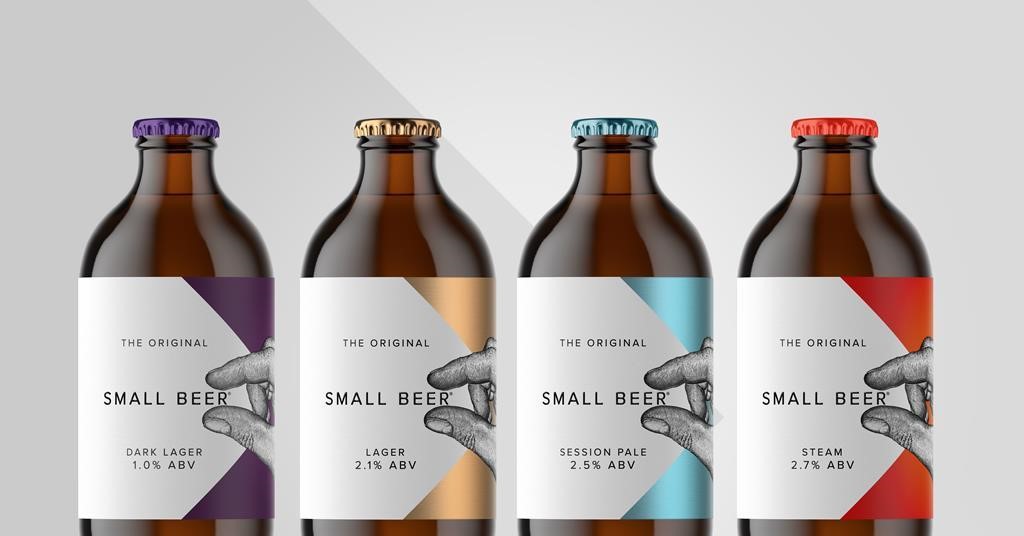
Small Beer, the epitome of the No and Low category, offers a captivating harmony of flavor and moderation, redefining the art of mindful drinking

Chief Ideas Officer at MMR Research,
Andrew Wardlaw warns of potential risks in the no/low alcohol categories, comparing them to plant-based meat alternatives' slowdowns and shakeouts.
The assertion is made as sales of plant-based meat alternatives plummet across several key markets including the U.S. and the U.K. The decline has seen several players pull products from shelves including Taste & Glory, Garden Gourmet, and Heck. Andrew Wardlaw, Chief Ideas Officer at independent consumer and sensory research agency, MMR Research, admits that his view makes him an outlier, but he insists that growth cannot be assured. “If we look at meat alternatives, we see a sector that’s been built on the art of mimicry, and despite massive gains in product performance, we know that ‘mainstreamers’ who initially bought into the category out of curiosity have not come back because of a continuing – albeit smaller - sensory gap. And if there is one thing that we’ve learned over the last few years, it’s that most consumers won’t compromise – not even to save the planet,” says Andrew.
Andrew continues. “My concern is that a significant number of no & low buyers were on a curiosity trip and are unlikely to become repertoire buyers. There will always be demand, not least from nominated drivers – but this cannot sustain exponential growth.” In response, Andrew believes that manufacturers should begin testing products that are lower in alcohol, but not to the extent of a typical no & low proposition. A study by IWSR revealed that around half of all adult drinkers of alcoholic beverages surveyed across 17 markets want to moderate their alcohol consumption. However, it is common knowledge that zero propositions find their way into no more than 5% of households. For the bulk of consumers, a quest for moderation does not equal abstention, and therein lies an opportunity. Industry assessments of lower alcohol products typically show vast improvements in consumers’ sensory experience because a little alcohol can substantially narrow the sensory gap. A bottle of very low-alcohol wine is often considered vastly superior to a 0% bottle of wine, for example.
“To create a more inclusive category for the future, manufacturers should look at opportunities at the lower end of ABV, ranging from 1.2% ABV to 2.8% ABV. There are some pioneering brands in this space, with high-performing liquids, but their visibility currently is low.” One beer brand that has successfully carved out a position in the lower space is Small Beer. It has invested in a bespoke brewing kit to exclusively produce lower alcohol beer - up to 2.8% ABV. This pioneering brand claims to be the world's first dedicated small beer brewery. According to the brand’s website, a beer brewed below 2.8% ABV was a safe and nutritional alternative when Shakespeare was writing his sonnets because drinking water was unpleasant and unsafe to consume. Small beer was enjoyed in households, workplaces, and even schools across the country. With the provision of clean drinking water in the 19th century, the need for small beer passed and the art of its creation was lost.
In addition to the ‘lower’ opportunity, finding ways to offset no & low’s reductive narrative is recommended by Andrew. In his recent think piece titled Saving ‘no & low’ alcohol from stagnation, Wardlaw further asserts that, "there are some truly exciting developments on the fringes, with low ABV players like Rally Beer and Impossibrew adding functional benefits such as electrolytes and nootropics – hitting that sweet spot for today’s competitive Gen Z contingent”. Andrew also believes that category naming and framing must compete harder in the age of maximization. “One major impact of the pandemic has been the surge in a YOLO (you only live once) attitude to life. Everywhere you look brands are turning up the heat, amplifying sensory signatures, and making more potent products. Manufacturers everywhere are responding to consumers’ rising expectations of an experience."
For brands that exist in a world of experimentation and maximization, the positioning of no, low, and lower brews becomes crucial. New Wave Beverages or Next Gen Sips could potentially be the solution. Brave manufacturers and retailers have the opportunity to take advantage of this situation and test future scenarios. While stagnation of the no & low sector is not inevitable, Andrew thinks that it is prudent for beverage companies to not wait around. “The category needs to consider new ways to capture a greater proportion of self-proclaimed moderators - who mostly consumer alcohol as well - and tap into an increasing desire for functional beverages,” he adds.
If the total category can achieve this, it has the potential to safeguard buyer numbers and frequency for a long time to come.
Palesa Mthiyane
MMR Research
+44 1491 824999
p.mthiyane@mmr-research.com
Visit us on social media:
Facebook
Twitter
LinkedIn
Instagram
YouTube
Legal Disclaimer:
EIN Presswire provides this news content "as is" without warranty of any kind. We do not accept any responsibility or liability for the accuracy, content, images, videos, licenses, completeness, legality, or reliability of the information contained in this article. If you have any complaints or copyright issues related to this article, kindly contact the author above.
