
Revolutionizing Construction: Exploring the Advanced Building Materials Market
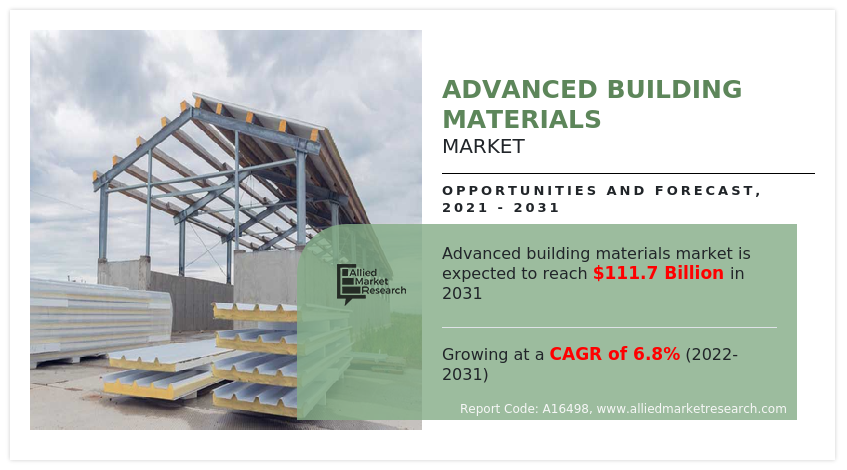
global advanced building materials market was valued at $56.7 billion in 2021, and is projected to reach $111.7 billion by 2031, growing at a CAGR of 6.8%
PORTLAND, UNITED STATES, UNITED STATES, June 19, 2023/EINPresswire.com/ -- The construction industry is undergoing a significant transformation, driven by the need for sustainable, energy-efficient, and durable structures. Advanced building materials have emerged as a key catalyst in this transformation, offering innovative solutions that enhance performance, reduce environmental impact, and improve the overall quality of buildings. In this blog post, we will delve into the advanced building materials market, conducting a segmented analysis to gain insights into its diverse applications and potential for growth.
𝘿𝙤𝙬𝙣𝙡𝙤𝙖𝙙 𝙍𝙚𝙨𝙚𝙖𝙧𝙘𝙝 𝙎𝙖𝙢𝙥𝙡𝙚 𝙬𝙞𝙩𝙝 𝙄𝙣𝙙𝙪𝙨𝙩𝙧𝙮 𝙄𝙣𝙨𝙞𝙜𝙝𝙩𝙨 𝙉𝙤𝙬 𝙒𝙞𝙩𝙝 𝘼𝙡𝙡 𝙂𝙧𝙖𝙥𝙝𝙨 & 𝘾𝙝𝙖𝙧𝙩𝙨 – https://www.alliedmarketresearch.com/request-sample/16871
Segmentation of the Advanced Building Materials Market:
To better understand the advanced building materials market, let's segment it based on key factors:
Material Type:
a) Structural Materials: This segment includes advanced materials used for structural components, such as high-performance concrete, advanced steel alloys, fiber-reinforced polymers (FRPs), and engineered timber. These materials offer superior strength, durability, and load-bearing capabilities, enabling the construction of resilient and sustainable structures.
b) Insulation Materials: Insulation plays a crucial role in improving energy efficiency and thermal performance in buildings. Advanced insulation materials, including aerogels, vacuum insulation panels (VIPs), and phase change materials (PCMs), provide enhanced insulation properties, reducing energy consumption and carbon footprint.
c) Functional Materials: Functional materials enhance the performance and functionality of buildings. Examples include self-cleaning glass, smart glass, photovoltaic glass, and smart coatings that can regulate temperature, control lighting, or generate renewable energy.
d) Other Materials: This segment encompasses a wide range of materials, such as advanced composites, nanomaterials, geopolymer, and bio-based materials, which offer unique properties, sustainability benefits, or innovative applications in construction.
Application:
a) Residential Buildings: Advanced building materials find applications in residential construction, ranging from single-family homes to multi-story apartment buildings. These materials enhance energy efficiency, durability, and aesthetics, creating comfortable and sustainable living spaces.
b) Commercial Buildings: The commercial sector, including office buildings, retail spaces, and hotels, benefits from advanced materials that improve energy efficiency, indoor air quality, and overall building performance. Innovative materials also contribute to iconic architectural designs.
c) Industrial Buildings: Industrial structures, such as warehouses, factories, and manufacturing facilities, utilize advanced materials to improve structural integrity, optimize energy consumption, and enhance safety and productivity.
d) Infrastructure Projects: Advanced building materials play a vital role in infrastructure projects, including bridges, tunnels, roads, and airports. These materials offer durability, resistance to environmental factors, and reduced maintenance requirements.
Make a Purchase Inquiry - https://www.alliedmarketresearch.com/purchase-enquiry/16871
Region:
The advanced building materials market can be segmented based on geographical regions, including North America, Europe, Asia Pacific, and the Rest of the World. Each region may have specific market drivers, regulatory frameworks, and adoption rates for advanced building materials.
Segmented Analysis of the Advanced Building Materials Market:
Structural Materials:
High-performance concrete is gaining traction in infrastructure projects for its durability, strength, and sustainability benefits.
Advanced steel alloys and FRPs are increasingly used in building construction, offering lightweight and corrosion-resistant solutions.
Engineered timber, including cross-laminated timber (CLT), is becoming popular for its sustainability and versatility in construction.
Insulation Materials:
Aerogels are being utilized for their exceptional thermal insulation properties, enabling energy-efficient buildings.
VIPs and PCMs are gaining popularity in both residential and commercial buildings to enhance insulation and reduce energy consumption.
Functional Materials:
Self-cleaning and smart glass technologies are being adopted to improve energy efficiency, natural lighting, and occupant comfort.
Photovoltaic glass is integrated into building facades to generate renewable energy while serving as a design element.
Other Materials:
Advanced composites find applications in lightweight structures and architectural features.
Nanomaterials offer enhanced strength, durability, and self-healing properties in construction materials.
Bio-based materials and geopolymer concrete contribute to sustainable construction practices, reducing carbon emissions.
𝘿𝙤𝙬𝙣𝙡𝙤𝙖𝙙 𝙍𝙚𝙨𝙚𝙖𝙧𝙘𝙝 𝙎𝙖𝙢𝙥𝙡𝙚 𝙬𝙞𝙩𝙝 𝙄𝙣𝙙𝙪𝙨𝙩𝙧𝙮 𝙄𝙣𝙨𝙞𝙜𝙝𝙩𝙨 𝙉𝙤𝙬 𝙒𝙞𝙩𝙝 𝘼𝙡𝙡 𝙂𝙧𝙖𝙥𝙝𝙨 & 𝘾𝙝𝙖𝙧𝙩𝙨 – https://www.alliedmarketresearch.com/request-sample/16871
COMPETITION ANALYSIS
The major players profiled in the advanced building materials market include Saint-Gobain group, DowDupont Inc., Kingspan Group Plc, PPG Industries Inc., BASF SE, APV Engineered Coatings Inc., Cemex, Knauf Gips KG, Oerlikon Balzers Coating India Limited, and Sherwin-Williams Company.
Conclusion:
The advanced building materials market is reshaping the construction industry, providing innovative solutions for sustainable, energy-efficient, and resilient buildings. By segmenting the market based on material type, application, and region, we can appreciate the breadth and depth of advancements in structural materials, insulation materials, functional materials, and other materials. As the demand for eco-friendly and high-performance buildings continues to rise, the adoption of advanced building materials will accelerate, driving the construction industry toward a more sustainable and technologically advanced future.
Buy This Report: https://www.alliedmarketresearch.com/checkout-final/519d3734fa0415d244a5a488447bc4df
David Correa
Allied Analytics LLP
+15038946022 ext.
email us here
Legal Disclaimer:
EIN Presswire provides this news content "as is" without warranty of any kind. We do not accept any responsibility or liability for the accuracy, content, images, videos, licenses, completeness, legality, or reliability of the information contained in this article. If you have any complaints or copyright issues related to this article, kindly contact the author above.
