
The Complexity of Natural Intelligence Meets Artificial General Intelligence
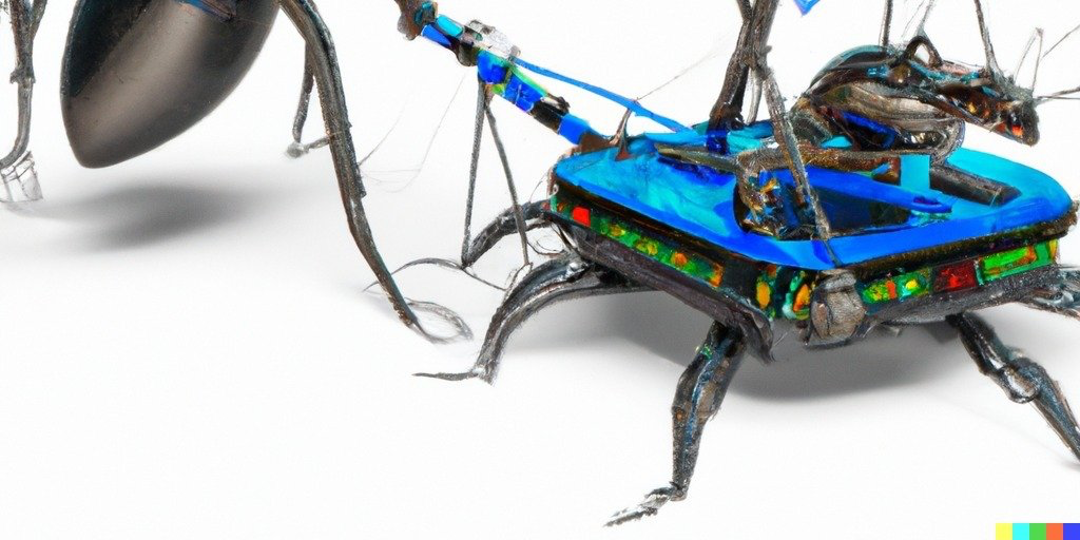
Representation of robot ants and robot rats
A new paper shows how computational tools can evaluate intelligent systems, from animals to robots
The tools introduced here could contribute to modeling animal behavior, discovering fundamental mechanisms, and modeling complex phenomena like disease”
READING, BERKSHIRE, UNITED KINGDOM, April 3, 2023/EINPresswire.com/ -- A new paper co-authored by a group of AI scholars from Cambridge, Oxford, KAUST, and Sheffield, published in the journal Frontiers in Computational Neuroscience provides important insights and indicators of the way natural intelligence can be understood, mimicked and evaluated using tools based on an approach to Artificial General Intelligence capable of evaluating, capturing and predicting the complexity of behavioral patterns resulting from human or animal decision making. Ultimately, these could find applications in the design of new cognitive strategies to improve narrower applications of artificial intelligence, including generative AI like ChatGPT, or robotics.— Dr. Zenil
The team, led by Dr. Hector Zenil and Prof. James Marshall, both of whom also lead the British natural and artificial intelligence startups Oxford Immune Algorithmics and Opteran, respectively, together with Prof. Jesper Tegner of King Abdullah University of Science and Technology (KAUST), examined research looking at the behavior of ants, fruit flies, and rats to ascertain whether mathematical models based on the theory of algorithmic probability, a theoretical framework for the most powerful type of artificial intelligence, namely Artificial General Intelligence or AGI, could be used to derive a set of objective tools with which to characterize “complexity” in behavioral experiments, both natural and artificial. One shared insight arrived at by applying these tools to animal behavior across all the studies is that animals appear to have some as yet unknown mechanism(s) with which to perceive and cope appropriately with different degrees of complexity in their environments. Beyond coping, it appears they can harness and utilize the environment in their internal decision processes and in how they implement their decisions.
“Fruit flies trying to develop navigation strategies in featureless environments behaved in a non-random way, suggesting a non-trivial process in their small brains, even when appearing to behave randomly. A 'simple' environment drives the animal toward an algorithmic process in an attempt to devise a useful (navigation) strategy. This could be important for robotics, as machines like drones and autonomous vehicles must be able to cope in a wide variety of environments, such as dim light” said Dr. Zenil, first and leading author of the study.
In another experiment, if a rat could not outsmart a competitor, it switched to random behavior. Here the rat had to try to simulate statistical randomness in order to reproduce a random-looking behavior, but it appeared to engage in an algorithmic process to perform such a simulation, which is consistent with previous suggestions based on sophisticated experiments. In the context of learning, deciding, and predicting, complexity measures captured subtle differences hinting at the mapping between an animal’s environment, its sensory inputs, and its reactions. In all cases, the team’s research suggested that animals react or adjust to the different scenarios using the same type of universal tool that can trace back, capture and quantify the extent of the thought process involved from their apparent behavior, rather than through invasive experiments (such as connecting diodes to an animal’s brain).
“For an animal to exploit the environmental deviation from equilibrium, it must go beyond probabilities, i.e., beyond merely calculating the frequency of moves and beyond trivial statistical entanglement with the environment, unlike tools from generative statistical AI toolboxes like ChatGPT. Animals clearly distinguish between environments of varying complexity, reacting accordingly in real-time. The tools introduced here could contribute to modeling animal behavior, discovering fundamental mechanisms, and modeling complex phenomena like disease,” said Dr. Zenil, a member of the Machine Learning Group in the Department of Chemical Engineering and Biochemistry at the University of Cambridge, who was affiliated with the University of Oxford as a Senior researcher and faculty member in the Department of Computer Science, to the Alan Turing Institute in London, to the Living Systems Lab at KAUST, and to the Algorithmic Dynamics Lab, as lab co-leader at the Karolinska Institute in Stockholm, the institution that awards the Nobel Prize in Physiology or Medicine.
This could be relevant to the understanding of human decision systems, particularly to understanding how humans perceive and utilize randomness and complex behavior. In another paper, published by the journal PLoS Computational Biology, a group led by Dr. Zenil with other collaborators, had already demonstrated how the same tools could frame human intelligence-- in what amounted to a reverse Turing test-- modeling the peak and decline of human intelligence. This paper attracted wide media attention. Taken together, the results reported in the recently published paper and these previous results suggest the existence of an algorithmic bias in human and animal reasoning for decision processes that brains exploit to their advantage, beyond simple statistical pattern recognition. This happens to be consistent with recent developments in other areas of science, such as Integrated Information Theory (IIT), according to which consciousness necessarily entails an internal experience. Here one indication of such an experience is the internal computation necessary to filter out or even adopt non-random strategies, even in the absence of stimuli, that may appear random by design.
Media contact: hector.zenil@ox.cs.ac.uk
Oxford Immune Algorithmics Ltd
University of Cambridge
email us here
Visit us on social media:
LinkedIn
The Complexity of Natural Intelligence Meets Artificial General Intelligence
Legal Disclaimer:
EIN Presswire provides this news content "as is" without warranty of any kind. We do not accept any responsibility or liability for the accuracy, content, images, videos, licenses, completeness, legality, or reliability of the information contained in this article. If you have any complaints or copyright issues related to this article, kindly contact the author above.
