
Traditional Chinese Medicine Market CAGR Status, Company Profiles, Regional Demand and Future Insights
Traditional Chinese Medicine Market
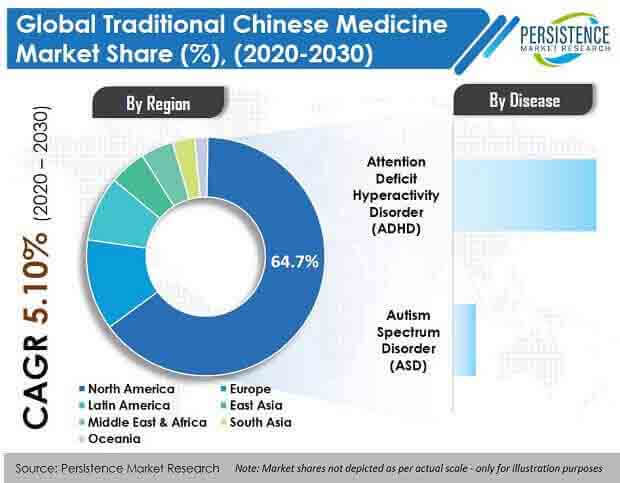
Global Traditional Chinese Medicine Market Is Expected to Witness A CAGR of 5.10% In Terms of Revenue During the Forecast, 2030
NEW YORK, NY, UNITED STATES, November 18, 2022 /EINPresswire.com/ -- The "Traditional Chinese Medicine Market" is likely to grow at an impertinent level shortly. Chabot’s powered by machine learning is the transformation of the way interaction amongst patients happens. Machine learning is there to help radiologists to identify differences in the scans. This, in turn, helps them in diagnosing and detecting health issues, that too, at an early stage. This is the ongoing trend in the healthcare vertical and the status quo is expected to remain unchanged even going forward.
Traditional Chinese medicine is one of the oldest systems of health and wellness that has been used in China for thousands of years. Other medicines mainly focus on treating a disease. But traditional Chinese medicines aim to increase immune power and look at the entire well-being. The most common type of traditional Chinese medicines includes herbal products, acupuncture, and Tai Chi, among others.
Get Sample Copy of this Report@ https://www.persistencemarketresearch.com/samples/16219
According to a latest report published by PMR, the global traditional Chinese medicine market is expected to witness a CAGR of more than 5% over the forecast period (2020–2030).
Company Profiles:
• Tongrentang
• Zhongxin Pharmaceuticals
• Tianjin Tasly Group
• Yuannan Baiyao
• Solstice Medicine Company, Inc.
• Shanghai Sundise Traditional Chinese Medicine Co., Ltd
• China Chinese Medicine Holding Co., Ltd.
• Hunan goldliloo pharmaceutical Co., Ltd
• Wanbang Pharma Group Corp.
• Chengdu Qiankun Veterinary Pharmaceuticals Co., Ltd.
• Pfizer Inc.
• Eli Lilly and Company
• Novartis AG
• GlaxoSmithKline PLC
• Mallinckrodt Pharmaceuticals
• Hisamitsu Pharmaceutical Co., Inc.
Request for Methodology@ https://www.persistencemarketresearch.com/methodology/16219
Key Takeaways from Traditional Chinese Medicine Market Study
• Non-traditional Chinese medicines is the leading segment by product in the global traditional Chinese medicine market. The Autism Spectrum disorder (ASD) segment has been gaining more traction in recent years, and is expected to expand at a rate of 6.7% during the forecast period.
• North America is the leading region in the traditional Chinese medicine market, followed by Europe.
• East and South Asia, including China, South Korea, Japan, India, and ASEAN countries, is the fastest-growing region in the traditional Chinese medicine market, due improving medical infrastructure.
• Tong Ren Tang, Pfizer, and Novartis AG are amongst the leading players in the global traditional Chinese medicine market. These companies invest most of their revenue in R&D, and focus on strengthening their distribution channels to maintain a leading position in the traditional Chinese medicine market space.
• 100+ health systems are partnering with retail chains, providing physician oversights and increased patient traffic to retail clinics, and extending health system networks to new patient populations.
• The COVID-19 pandemic is a cause for concern, which has deprioritized non-essential medical treatments. This will hurt the growth of the global traditional Chinese medicine market in the short term.
“Increasing incidence of ADHD to boost growth of global traditional Chinese medicine market,” says a PMR analyst.
Rising prevalence of ADHD is a major factor contributing to revenue growth of the traditional Chinese medicine market across the globe. The exact cause of ADHD is still unclear, although genetic influence is observed in most cases.
As per data released by the Centers for Disease Control and Prevention (CDC), approximately 6.1 million (9.4%) – 388,000 children aged 2–5 years, 4 million children aged 6–11 years, and 3 million children aged 12–17 years – were diagnosed with ADHD in the U.S. In Spain, pooled prevalence of ADHD in a population of 361,580 representing children and adolescents was estimated at 6.8% from the last decade.
Prevalence of ADHD is rising at an alarming rate, which is expected to fuel revenue growth of ADHD therapeutics such traditional Chinese medicines, as there is no specific treatment for this disorder.
Product Innovation – Key Strategy of Traditional Chinese Medicine Market Players
Major players in the global traditional Chinese medicine market are introducing innovative products to retain their market share. A patented technology called osmotic controlled release oral delivery system (OROS) is used in Concerta, manufactured by Johnson & Johnson. It releases an initial dose of methylphenidate within the first two hours of ingestion, and when the pill passes through the stomach and gastrointestinal track, water is absorbed, resulting in internal pressure, which releases small amounts of medication as the pill passes through gut. This technology was implemented to maintain consistency of improvement in cognitive performance throughout the day.
Buy Full Report Now and Get Up to 20% Discount @ https://www.persistencemarketresearch.com/checkout/16219
Atul Singh
PMR
+1 646-568-7751
email us here
Visit us on social media:
Twitter
LinkedIn
Legal Disclaimer:
EIN Presswire provides this news content "as is" without warranty of any kind. We do not accept any responsibility or liability for the accuracy, content, images, videos, licenses, completeness, legality, or reliability of the information contained in this article. If you have any complaints or copyright issues related to this article, kindly contact the author above.
