
Steven R. Pietro explains how to handle non-conforming goods and services
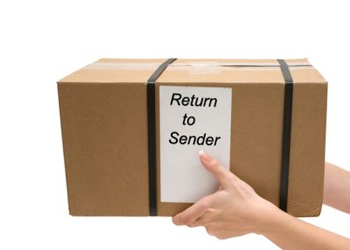
Defective or Nonconforming Goods
Non-conforming goods and services are a common problem for both businesses and consumers.
PEMBROKE PINES, FLORIDA, UNITED STATES, September 27, 2018 /EINPresswire.com/ -- If an individual or organization find themselves in receipt of non-conforming goods or services, it's time to reach for any contract which may be in place. In some cases, it may be necessary to consult a lawyer, although it's also important to understand the options available from the outset."If there's a contract in place, it's best to start there," explains Steven R. Pietro, and established corporate lawyer from Broward County, Florida. Where a written contract doesn't exist, an individual or organization may be covered by an additional set of terms, according to Pietro.
At this stage, he says, whether backed by a lawyer or acting independently, an individual or organization has a number of choices. "They may accept the non-conforming goods," explains Pietro, "although this would be ill-advised. They may also accept the non-conforming goods, but demand a price adjustment."
The corporate lawyer suggests that this is perhaps the most common response, but rarely ideal. Alternatively, a customer or client may reject the non-conforming goods or services entirely, and demand a full refund or a replacement.
"A less common outcome," adds Pietro, "is to accept the non-conforming goods or services with an agreement to have corrected whatever defect or issue exists, with the supplier covering those expenses."
Rarer still, the goods or services may also be rejected and sourced elsewhere, with the original supplier being made to cover any additional costs incurred as a result. "In this instance, it's a good idea to seek legal advice, especially where there's a significant value attached to the non-conforming goods or services in question and their replacement," Pietro adds.
In terms of business-to-business sales, from a legal standpoint, it's advisable to refer to the Uniform Commercial Code. First published in 1952, the Uniform Commercial Code is one of several uniform acts put into legislation with the goal of harmonizing the law of commercial transactions across the U.S.
"The Uniform Commercial Code is the body of laws governing commercial transactions in the U.S.," says Pietro, "and is something which an experienced lawyer will be able to advise on in detail."
A lawyer will also be able to advise on steps which can be taken to prevent similar future problems, such as by implementing a right to inspect clause into new contracts.
"If there's any doubt," Pietro adds, wrapping up, "consult with a lawyer before agreeing to any solution which may prove to be anything less than entirely favorable in its outcome."
Eric Ash
Web Presence, LLC
941-266-8620
email us here
Legal Disclaimer:
EIN Presswire provides this news content "as is" without warranty of any kind. We do not accept any responsibility or liability for the accuracy, content, images, videos, licenses, completeness, legality, or reliability of the information contained in this article. If you have any complaints or copyright issues related to this article, kindly contact the author above.
