
Islamic Finance Policy Recommendations for Pakistan
The below recommendations were written by Dr. Muhammad Hanif of Fast School of Management in Islamabad, Pakistan.
The Government of Pakistan and the State Bank of Pakistan may clarify their policy with regards to transforming the entire financial system of the country.
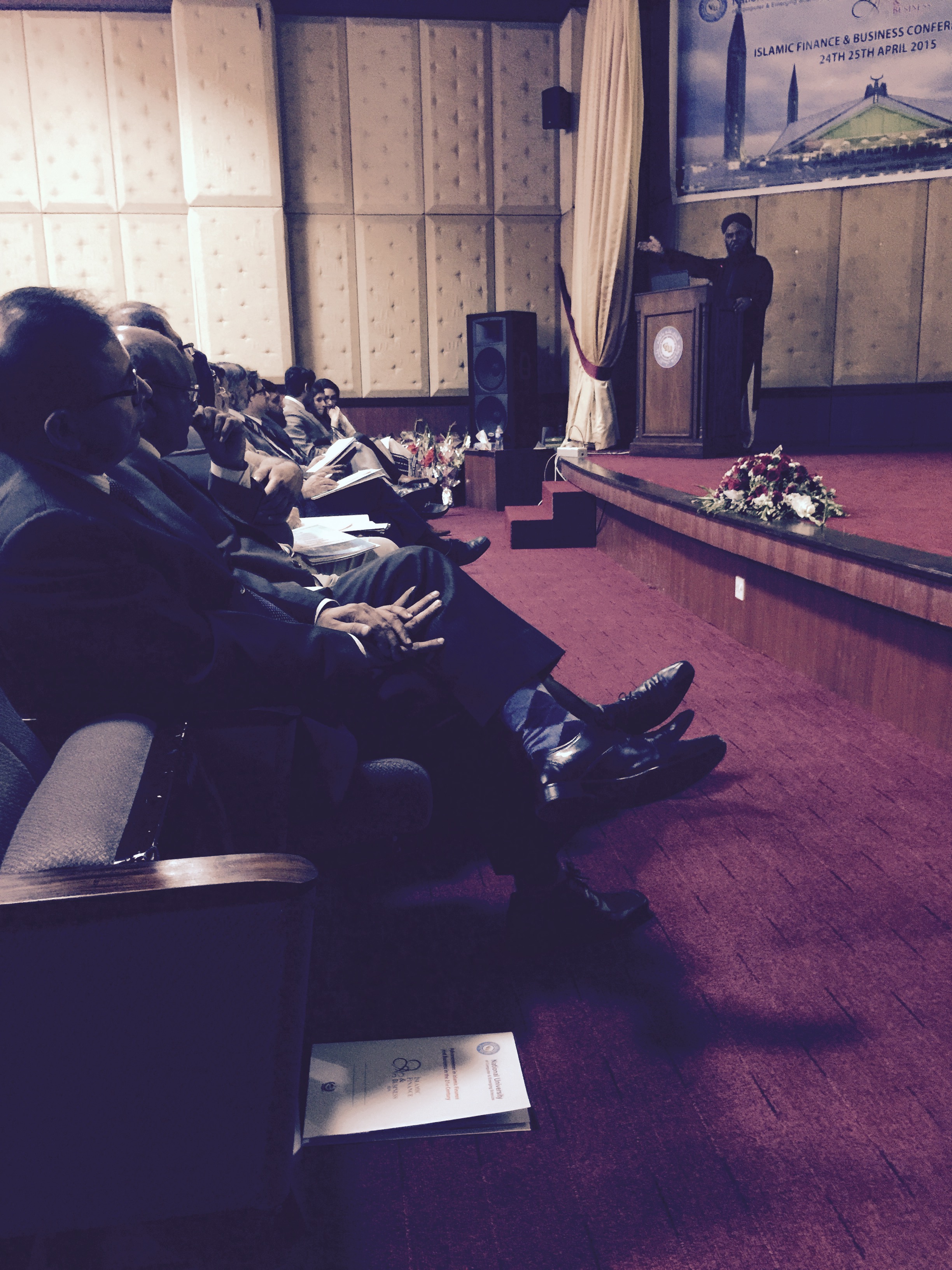
ISLAMABAD, PAKISTAN, May 19, 2015 /EINPresswire.com/ -- FAST School of Management (FSM), Islamabad concluded its two days conference, “Advancements in Islamic Finance and Business in the 21st Century,” on a very good note with a wide array of topics touched including Islamic Economics and Finance and the Shari’a and the regulatory support required for Islamic banking and practices. The conference discussion and analysis resulted in a vision for better products and services as well as the clarification of opportunities for further growth and research in the financial, economic, managerial, and governance areas based on the Islamic Shari’a. Speakers from academia, Shari’a supervisors as well as practitioners, the representatives from the State Bank of Pakistan’s Islamic Banking Department, professionals from the Securities and Exchange Commission (SECP) of Pakistan, and representatives of the Akhuwat Foundation contributed to the six sessions. In addition, the key note speeches by Dr. Asad Zaman, Rector, Pakistan Institute of Development Economics, Dr. Abdullah Iqbal, Senior Lecturer, Kent Business School, Canterbury, Dr Ahmad Jamal, Senior Lecturer in Marketing and Strategy, Cardiff Business School, Cardiff University, UK, Mr. Asif Zaman, Asif Zaman, Senior Lecturer in Islamic Finance and Strategy, Cardiff Metropolitan University, UK, Dr. Tahir Masoori, Shari’a Advisor, Askari Islamic Bank, Mr. Abdul Samad Khan, Shari’a Avisor, IBG, The Bank of Khyber, Dr. Sadia Nadeem, Associate Professor, FAST School of Management, NUCES, Islamabad, Dr. Nauman Farooqi, Professor, Ron Joyce Center for Business Studies, Mount Alison University, Canada, Mr. Muhammad Ayub, Editor, Journal of Islamic Business and Management (JIBM), Dr. Tahir Hijazi, Member Planning Commission of Pakistan, and Prof. Amanullah Khan, Dean Faculty of Management Sciences, Riphah International University added to the excitement of the Islamic banking and finance atmosphere. — Dr. Muhammad Hanif
The case defining whether or not conventional interest is Riba was decided by the Sharia’t Appellate Branch of the Supreme Court of Pakistan by delivering a comprehensive Judgment, which is being followed in banking operations by Islamic Banks and the Islamic Division of the State Bank of Pakistan despite subsequent order of remand. The Govt. of Pakistan should accept the Judgment of the Supreme Court as it is already being practiced and followed. The Federal Sharia’t Court may also be asked to adjudicate on the legality of some of the Islamic banking products now being offered in the market included in the questionnaire circulated in 2014. The Islamic banking products recommended and approved by AAOIFI, in some instances, have been misused by the practitioners, thereby, clouding the product away from the accepted standards and the objectives of the Sharia. Some examples of misused products include, e.g. commodity murabaha, sukuk murabaha, tawarruq, financial derivatives, and debt- generating sukuk.
Conclusions and Recommendations
(1) The Government of Pakistan and the State Bank of Pakistan may clarify their policy with regards to transforming the entire financial system of the country as required in the constitution of Pakistan (1973) and the current policy of parallel systems of conventional and Islamic financial systems.
(2) At the regulatory level there has to be a separate law for Islamic banking and finance. Islamic Financial Institutions (IFI’s may be allowed to build inventory of tradable commodities enabling them also to develop “tradable securities” for liquidity management by IFI’s.)
(3) In order to provide support to the agricultural sector and to the poor and needy, the SBP and the Federal and Provincial governments must work jointly to develop and introduce Bai Salam based products and commodity options within the precincts of Sharia.
(4) Fatawa for Sharia compliant products and Sharia Certification need to be looked into and standardized at national and international levels to avoid stretching the fatawa for self-interest.
(5) It is important that we live within our means instead of resorting to instalment based purchases. Standard of living is wrongly measured in terms of consumer income. Instead of studying in the books of business, finance, and management that the objective of a person is motivation based on self –interest and maximization of wealth, we must look into this matter and explore alternatives. We must then determine what is our objective as a Muslim society.
(6) Venture capital is an essential element of equity based activity, especially for the teaming young generations of Muslim countries. Work must be done in promoting venture capital and entrepreneurship on an institutional level as well as governmental levels.
(7) Commercial Banks are using Islamic finance terms, as directed by SBP in 1984, which creates doubt in the minds of general public; it is recommended to issue a circular for banning the use Islamic finance products-name by commercial banks.
(8) Trained Human resources is vital for the success of any sector and the Islamic financial system has no exception. It is recommended that courses, certifications, and diplomas and degrees should be started in academic institutions in Pakistan in order to provide the required skills to prospective Islamic finance professionals.
(9) Information systems including accounting software needs to be re-developed by incorporating built in checks to ensure the Shari’a compliance of transections.
(10) Islamic Finance free from Riba (Sood) must be utilized for producing Halal Food & Non-Food Products and Services as it is well recognized that a product produced or service rendered by employing Riba infested Finance shall remain Haram.
FAAIF Limited is a legal and management consultancy firm servicing clients in the legal, Islamic banking, finance, takaful, and the halal industry. FAAIF Events is an events production and management company http://www.faaif.com.
Camille Paldi
FAAIF
+971569500562
email us here
Legal Disclaimer:
EIN Presswire provides this news content "as is" without warranty of any kind. We do not accept any responsibility or liability for the accuracy, content, images, videos, licenses, completeness, legality, or reliability of the information contained in this article. If you have any complaints or copyright issues related to this article, kindly contact the author above.
