
Ebola Alert: FAQ, Video, FAO West Africa Urgent Food Security Response Initiative
ROME/DAKAR -  (NewMediaWire) - October 9, 2014 - FAO today launched a new programme to urgently
assist 90,000 vulnerable households in Guinea,
Liberia and Sierra Leone
whose food supplies and livelihoods are threatened by the disruptive effect the
Ebola epidemic is having on rural economies, agricultural activities and
markets.
(NewMediaWire) - October 9, 2014 - FAO today launched a new programme to urgently
assist 90,000 vulnerable households in Guinea,
Liberia and Sierra Leone
whose food supplies and livelihoods are threatened by the disruptive effect the
Ebola epidemic is having on rural economies, agricultural activities and
markets.
The Regional Response Programme for West Africa will scale-up the work FAO is currently doing with governments, United Nations partners and local networks of agriculture, veterinary and forestry workers, to help stop the spread of the disease, meet immediate and long-term food and nutrition security needs and build resilience.
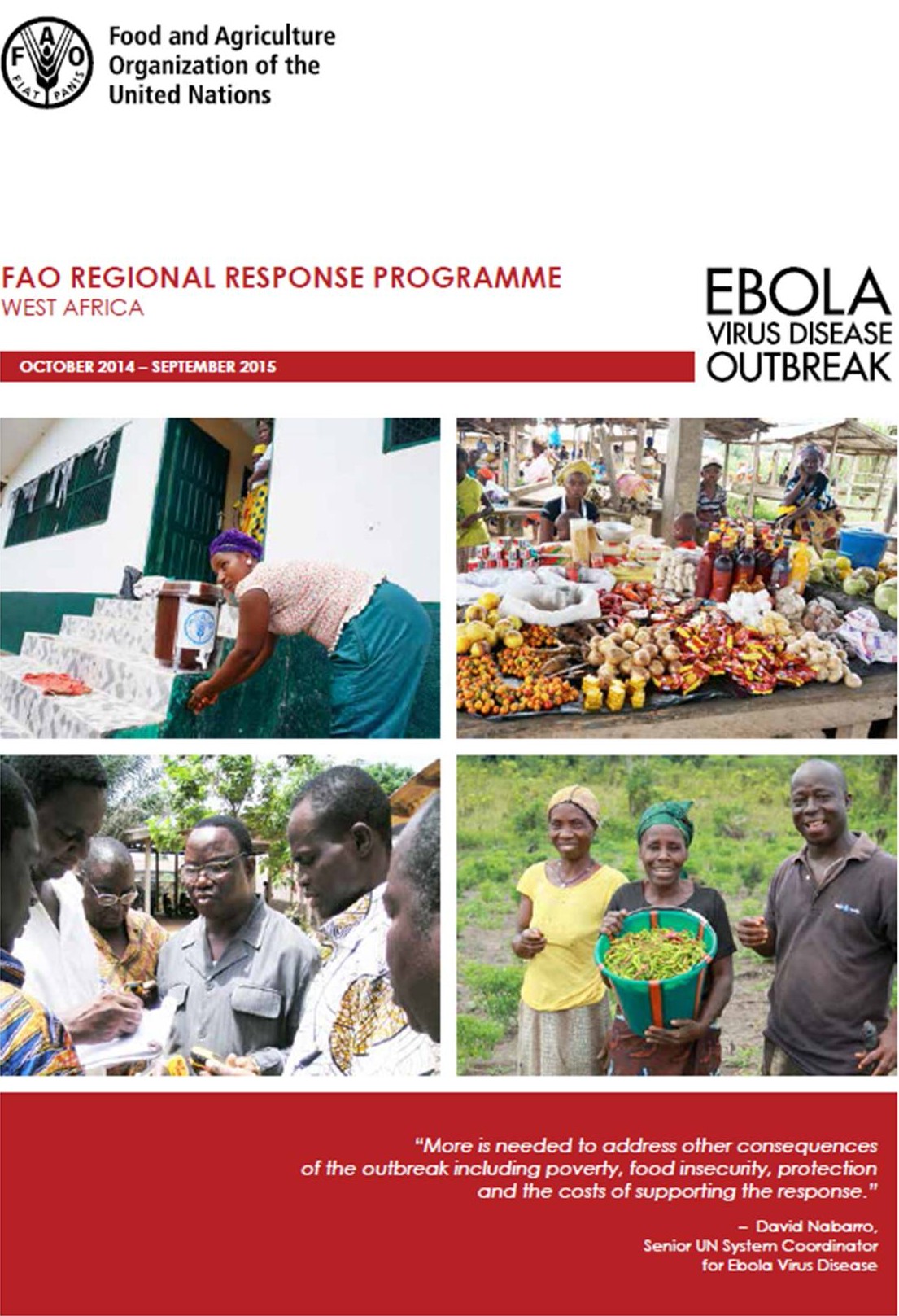
- contribute to saving lives by stopping the spread of the disease through social mobilization, training and awareness raising;
- boost incomes and agricultural production to safeguard livelihoods;
- build resilience of communities to disease threats; and
- strengthen coordination for improved response.
Watch video on West Africa emergency: https://www.youtube.com/watch?v=A5lNTTLM1IY
Ebola FAQ: http://www.fao.org/emergencies/fao-in-action/stories/stories-detail/en/c/251862/
Regional Response Programme download: www.fao.org/fileadmin/user_upload/emergencies/docs/FAO%20Regional%20Programme%20Ebola%20Outbreak%20West%20Africa%20%5BOct%202014%20-%20Sep%202015%5D.pdf
“Our comprehensive response is part of overall United Nations efforts to save lives and protect livelihoods,” said Vincent Martin, Head of FAO's Dakar-based Subregional Resilience Hub, the office coordinating FAO’s response. “We’re following a twin-track approach to help our United Nations partners halt the tragic loss of life while at the same time protecting incomes, nutrition levels and food security.”
Activities include mobilizing communities to reduce their risk of infection through awareness campaigns; boosting food and cash crops, livestock and fisheries production, introducing microfinance strategies to safeguard rural incomes; and setting up early warning and response systems to reduce Ebola risks at the human-animal interface. The programme will also ensure countries are coordinated and resourced by filling gaps in expertise, increasing knowledge sharing on best-practices and building collaborative networks.
“These actions cannot wait,” said Bukar Tijani, Assistant Director-General/Regional Representative, Regional Office for Africa. “The outbreak is already reducing the purchasing power of vulnerable households, which means less food on their plates and increased nutritional risks for families already on subsistence diets. Fear and stigmatization also threaten to reduce agricultural activities, thereby placing food security at risk.”
Early results from rapid assessments point to a worrisome situation. In Sierra Leone, for example, 47 percent of the respondents said Ebola was considerably disrupting their farming activities. In Lofa county, the most affected rural county in Liberia, the prices of commodities, including food, increased from 30 to 75 percent just in August 2014.
If not addressed now, the current impact of the outbreak on livelihoods could lead to long-lasting impacts on farmers' livelihoods and rural economies.
FAO mobilized its own funds to support United Nations’ and governments’ efforts. However, much more is needed and right away. FAO is calling for urgent support to enable the Organization to continue assisting vulnerable communities in affected and at-risk countries while also safeguarding their futures.
VIDEO:
West Africa Ebola Emergency - Interview with FAO Chief Veterinary Officer Juan Lubroth
LEARN MORE:
FAO Regional Ebola Response Programme
FOLLOW US:
https://www.facebook.com/UNFAO https://twitter.com/FAOnews/lists/fao-twitter-accounts
News on humanitarian response to disasters, emergencies and food security crises:
http://www.fao.org/news/rss-feed/en/
https://www.flickr.com/photos/faonews/collections/
http://www.slideshare.net/FAOoftheUN
FAO YouTube Channel: https://www.youtube.com/channel/UCM93UMoQKlj_8wTACRvl1iQ
ABOUT FAO
Achieving food security for all is at the heart of FAO's efforts – to make sure people have regular access to enough high-quality food to lead active, healthy lives. Our three main goals are: the eradication of hunger, food insecurity and malnutrition; the elimination of poverty and the driving forward of economic and social progress for all; and, the sustainable management and utilization of natural resources, including land, water, air, climate and genetic resources for the benefit of present and future generations.
FAO creates and shares critical information about food, agriculture and natural resources in the form of global public goods. But this is not a one-way flow. We play a connector role, through identifying and working with different partners with established expertise, and facilitating a dialogue between those who have the knowledge and those who need it. By turning knowledge into action, FAO links the field to national, regional and global initiatives in a mutually reinforcing cycle. By joining forces, we facilitate partnerships for food and nutrition security, agriculture and rural development between governments, development partners, civil society and the private sector.
An intergovernmental organization, FAO has 194 Member Nations, two associate members and one member organization, the European Union. Headquartered in Rome, Italy, FAO is present in over 130 countries. http://www.fao.org
CONTACT:
FAO Media Office (+39) 06 570 53625 FAO-Newsroom@fao.org
Sonia Nguyen FAO Resilience/Emergency Hub for West Africa (Dakar) (+221) 33 889 16 28 & (+221) 77 333 12 89 sonia.nguyen@fao.org
Peter Mayer Media Relations (Rome) (+39) 06 570 53304 peter.mayer@fao.org
Legal Disclaimer:
EIN Presswire provides this news content "as is" without warranty of any kind. We do not accept any responsibility or liability for the accuracy, content, images, videos, licenses, completeness, legality, or reliability of the information contained in this article. If you have any complaints or copyright issues related to this article, kindly contact the author above.
