
Hydrogen Safety Under Global Scrutiny After Ulsan Blast: New Monitoring Tech Emerges
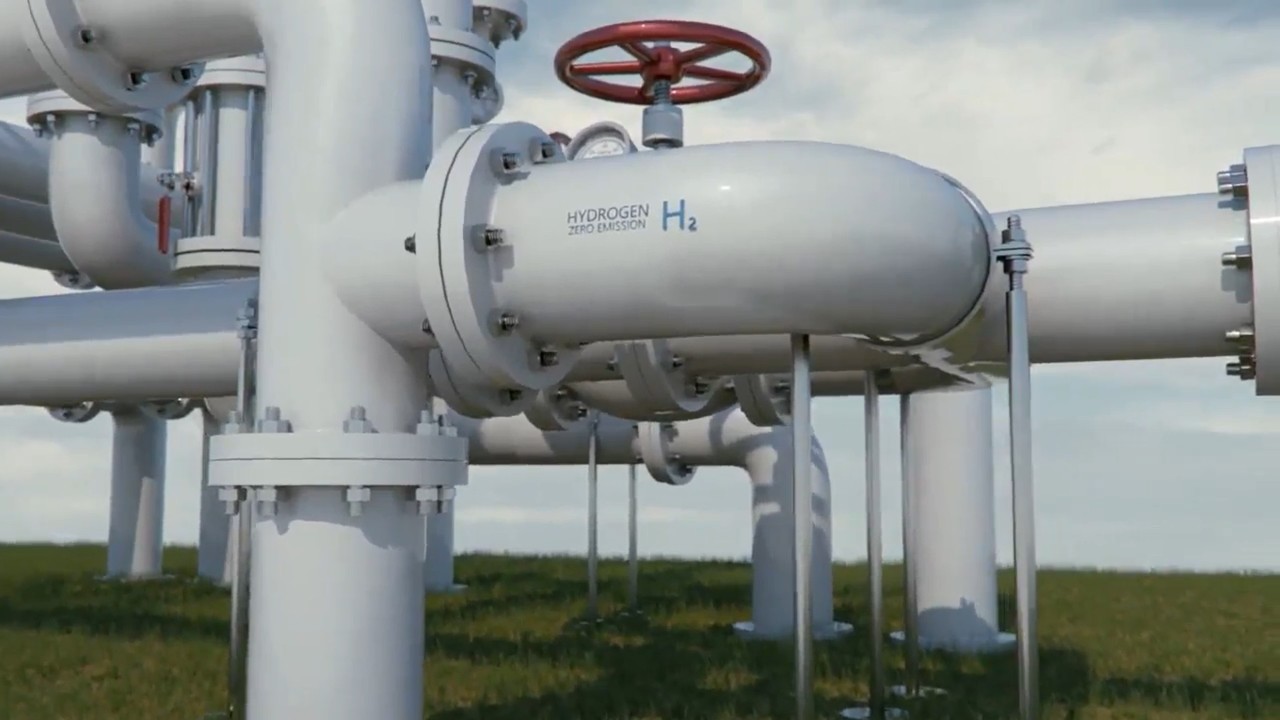
Advanced monitoring is essential to prevent and manage green hydrogen emergencies

Advanced O₂ and H₂ analyzers deliver continuous monitoring for safe hydrogen production

Modcon.AI uses advanced analytics to detect hydrogen safety risks before they escalate
Following the Ulsan blast, hydrogen safety standards face renewed scrutiny. Emerging in-situ monitoring technology offers faster, more reliable protection.
As hydrogen systems scale globally, real-time oxygen detection becomes critical. Safety must evolve with production capacity, and modern in-situ analyzers make that evolution possible.”
LONDON, UNITED KINGDOM, December 3, 2025 /EINPresswire.com/ -- LONDON, UNITED KINGDOM — December 3, 2025 —— Modcon Systems Spokesperson
The hydrogen industry is facing renewed global scrutiny after the recent explosion at SK Energy’s hydrogen manufacturing plant in Ulsan, South Korea. The October 17 incident, triggered by the ignition of residual hydrogen during routine maintenance, injured five workers and exposed critical gaps in the real-time monitoring and safety procedures used in high-pressure hydrogen systems.
While the fire was extinguished within minutes, the Ulsan explosion has stimulated widespread discussion among safety engineers, energy producers, and policymakers. As hydrogen production3 scales worldwide, the industry is confronting a stark reality: traditional monitoring methods often fail to detect hazardous conditions during the most vulnerable phases of operation, particularly during shutdown, purging, and maintenance.
Hydrogen’s unique physical properties create exceptional safety challenges. The gas ignites with just 0.02 millijoules of energy—significantly less than a common static electricity discharge—and forms explosive mixtures at concentrations as low as four percent in air. These characteristics make hydrogen a highly efficient clean-energy carrier, but also a substance that demands rigorous and continuous monitoring to prevent ignition.
The Ulsan accident is one of several similar events that highlight recurring weaknesses in hydrogen safety practices. Past incidents in South Korea, the United States and Europe have shown common patterns: insufficient purging procedures, delayed detection of oxygen ingress, and an overreliance on extractive sampling analyzers that cannot respond fast enough to changing process conditions. Traditional analyzers often rely on complex sampling systems that introduce leak points, time delays, or inaccuracies when measuring oxygen in high-pressure hydrogen environments.
In response to these challenges, Modcon Systems Ltd.1 has introduced a new generation of real-time, in-situ monitoring technology designed to address the limitations of conventional analyzers. The MOD-1040 Optical Oxygen Analyzer2 provides continuous oxygen monitoring directly inside the process line, eliminating the need for sample extraction, conditioning, or pressure reduction.
The MOD-1040 uses an advanced luminescence quenching technology, in which a proprietary sensor foil is illuminated by red light, and its optical response changes in proportion to oxygen concentration. This method enables fast, accurate measurement even at pressures exceeding 200 bar—conditions common in hydrogen production, compression, and storage systems.
The analyzer is certified for installation in hazardous areas (ATEX/IECEx Zone 1) and meets SIL-2 functional safety requirements. Unlike paramagnetic, zirconia, electrochemical, or tunable diode laser analyzers, the MOD-1040 has no consumable parts, requires minimal maintenance, and is immune to pressure-related measurement distortions. Its in-situ design removes the risk associated with sample handling systems and ensures immediate detection of oxygen contamination, even during transient operating states.
According to Modcon, integrating the MOD-1040 directly into hydrogen process streams can significantly enhance safety by providing continuous verification that oxygen concentrations remain below critical thresholds. “Real-time monitoring is essential for protecting personnel, equipment, and plant uptime,” the company states. “The Ulsan incident shows that the industry can no longer rely solely on manual procedures or extractive analyzers during maintenance and shutdown phases.”
Beyond safety improvements, in-situ analyzers can also deliver substantial economic benefits. By eliminating sample conditioning systems, facilities may reclassify certain hazardous zones, reducing the need for explosion-proof enclosures and specialized cabling. Continuous monitoring also supports tighter purity control, predictive maintenance strategies, and higher production efficiency—key factors as hydrogen producers scale operations to meet global demand for green and blue hydrogen.
The Ulsan explosion has underscored the urgency of adopting modern monitoring technologies that can adapt to the dynamic behavior of hydrogen processes. As hydrogen becomes a central pillar of decarbonization strategies in transportation, industry, and energy storage, its safe production and handling will depend increasingly on instrumentation that can detect risk instantly and automatically.
Industry analysts expect the adoption of in-situ analyzers to accelerate as hydrogen production expands and regulatory standards evolve. Government agencies and certification bodies are already examining how real-time monitoring can be incorporated into updated guidelines and best practices for electrolyzers, pipelines, storage facilities, and refueling stations.
Beyond hardware-based protection, Modcon is expanding hydrogen safety into the digital domain through Modcon.AI, an intelligent monitoring platform that integrates real-time analyzer data with advanced predictive algorithms. By continuously learning from process behavior, Modcon.AI can identify early warning patterns, detect abnormal gas trends, and trigger automated responses before hazardous conditions develop. This fusion of in-situ measurement and AI-driven insight provides a powerful new layer of protection for hydrogen production, storage, and refueling facilities—supporting safer, more resilient clean-energy operations.
With the introduction of the MOD-1040, Modcon Systems aims to support this shift by offering a measurement solution that enhances both safety and operational efficiency. The company notes that advanced monitoring tools will play a central role in building public confidence in hydrogen as a reliable clean-energy source.
Anya Alter
Modcon Systems Ltd.
+44 20 4577 1737
email us here
Visit us on social media:
LinkedIn
YouTube
1 https://modcon.group/
2 https://modcon-analyzers.com/analyzers/mod-1040-oxygen-analyzer/
3 https://www.modcon-systems.com/green-hydrogen-production/
