
Global Automotive Fleet Leasing Market to Grow to USD 49.6 Billion by 2033 with 6.8% CAGR
Automotive Fleet Leasing Market Size
Automotive Fleet Leasing Market Share
Automotive Fleet Leasing Market Region
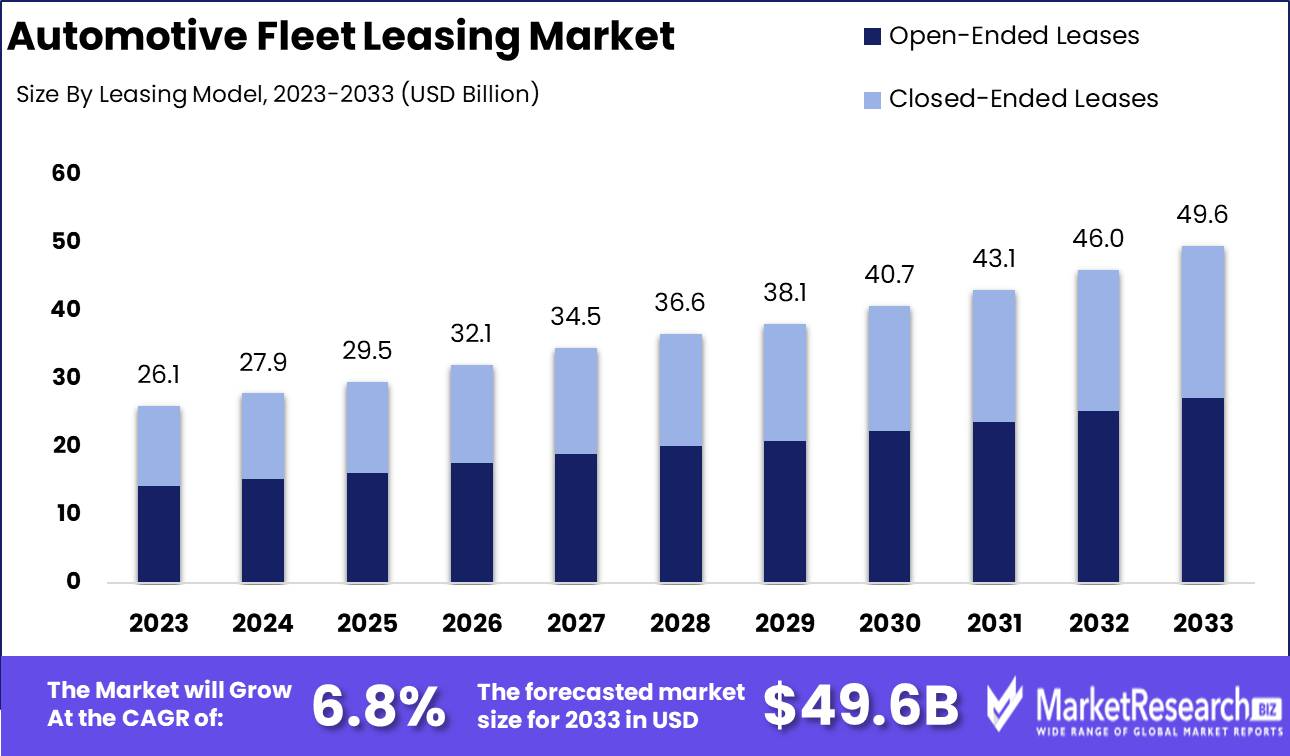
Automotive Fleet Leasing Market expected to reach USD 49.6 Billion by 2033 from USD 26.1 Billion in 2023 growing at a CAGR of 6.8%
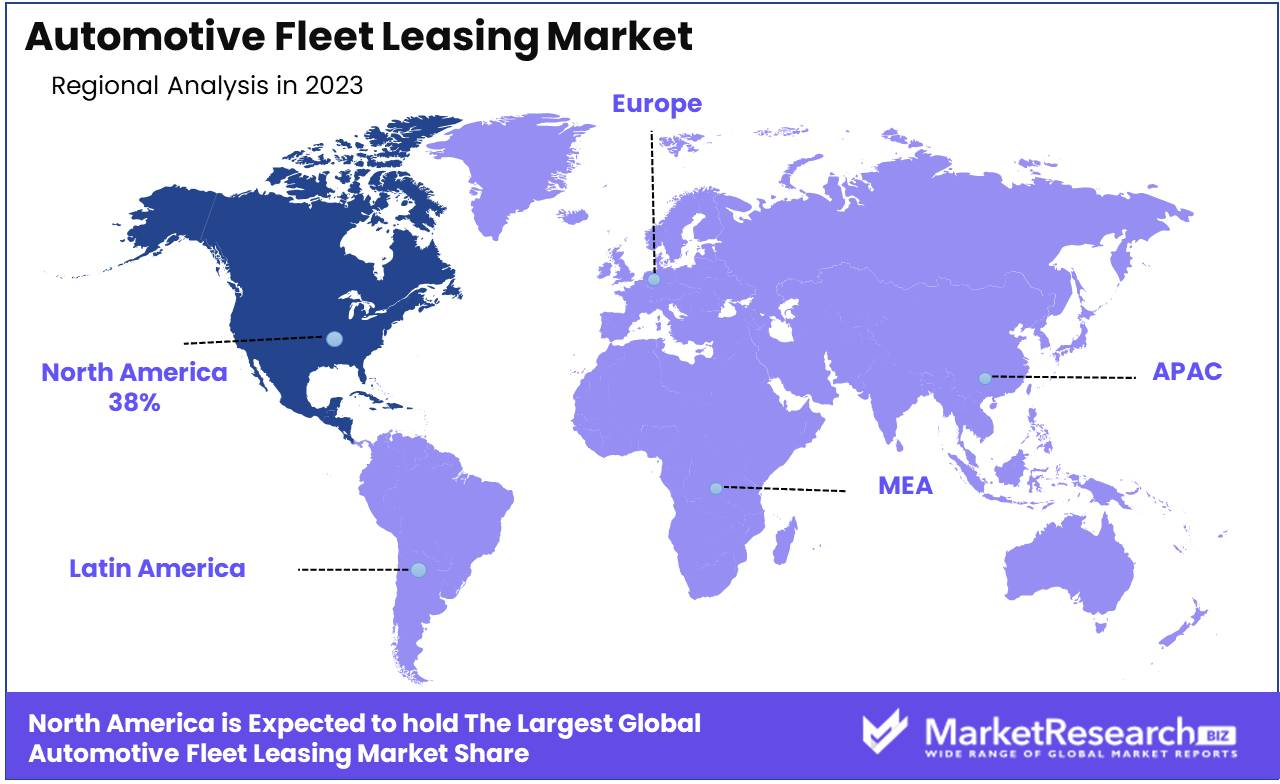
North America dominates the fleet leasing market with 38%, supported by corporate demand and sustainable vehicle adoption.”
NEW YORK, NY, UNITED STATES, February 3, 2025 /EINPresswire.com/ -- Market Overview— Tajammul Pangarkar
The Global Automotive Fleet Leasing Market was valued at USD 26.1 Bn in 2023. It is expected to reach USD 49.6 Bn by 2033, with a CAGR of 6.8% during the forecast period from 2024 to 2033.
The Automotive Fleet Leasing Market involves the leasing of vehicles, typically in bulk, to businesses, government entities, and large organizations. These fleets may include cars, trucks, vans, and specialized vehicles, and leasing is often chosen to provide companies with a cost-effective and flexible solution for managing their transportation needs. Fleet leasing allows organizations to avoid the upfront costs of vehicle ownership and offers benefits such as maintenance services, insurance, and vehicle management.
The Automotive Fleet Leasing Market is experiencing steady growth, driven by several key factors, including cost savings, operational flexibility, and the shift towards mobility-as-a-service solutions. Companies across industries are increasingly opting for fleet leasing due to the financial benefits it offers, such as reduced capital expenditure and predictable monthly expenses.
Additionally, with the rise of electric and hybrid vehicles, fleet leasing allows businesses to adopt greener transportation solutions without committing to the high upfront costs of purchasing these vehicles. As demand for flexible and scalable fleet solutions grows, especially in sectors like logistics, e-commerce, and public transportation, the market is expected to continue evolving.
Government investments and regulations play an important role in driving market growth, particularly with respect to environmental sustainability. Many governments are encouraging the adoption of electric vehicles (EVs) by offering tax incentives, subsidies, and regulatory frameworks aimed at reducing carbon emissions. This, in turn, benefits the automotive fleet leasing market, as more businesses look to lease EVs to meet corporate sustainability goals. Additionally, regulations around vehicle emissions and fuel efficiency standards are prompting fleet managers to seek compliant, low-emission vehicles, further boosting demand for fleet leasing services.
The growth of the Automotive Fleet Leasing Market is closely linked to government policies and incentives promoting sustainability and efficiency in transportation. Various governments are investing in infrastructure to support the transition to electric fleets, including charging stations and incentives for electric vehicle adoption. Regulatory standards that require businesses to meet specific environmental targets are pushing organizations to lease vehicles that align with these goals. This, combined with the rise of ride-sharing and delivery services, creates a strong growth trajectory for fleet leasing services.
The Automotive Fleet Leasing Market presents significant opportunities for both new and established players. New entrants can focus on offering innovative leasing options for electric and hybrid vehicles, tapping into the growing demand for eco-friendly fleets. Established players can expand their services by incorporating fleet management software, telematics, and data analytics to offer more value-added solutions. Additionally, collaborating with ride-sharing companies, delivery services, and local governments can help players capture a broader market share. Focusing on customized leasing plans and flexible contracts will also cater to the diverse needs of modern businesses.
Curious About Market Trends? Request Your Complimentary Sample Report Today: https://marketresearch.biz/report/automotive-fleet-leasing-market/request-sample/
Key Takeaway
-- Market Value: The Global Automotive Fleet Leasing Market was valued at USD 26.1 Bn in 2023. It is expected to reach USD 49.6 Bn by 2033, with a CAGR of 6.8% during the forecast period from 2024 to 2033.
-- By Vehicle Type: Passenger Vehicles hold a dominant 60% of the market, preferred for their utility in corporate and commercial fleet operations.
-- By Leasing Model: Closed-Ended Leases are the most common, comprising 55% of the market, providing predictable costs and hassle-free vehicle turnover for businesses.
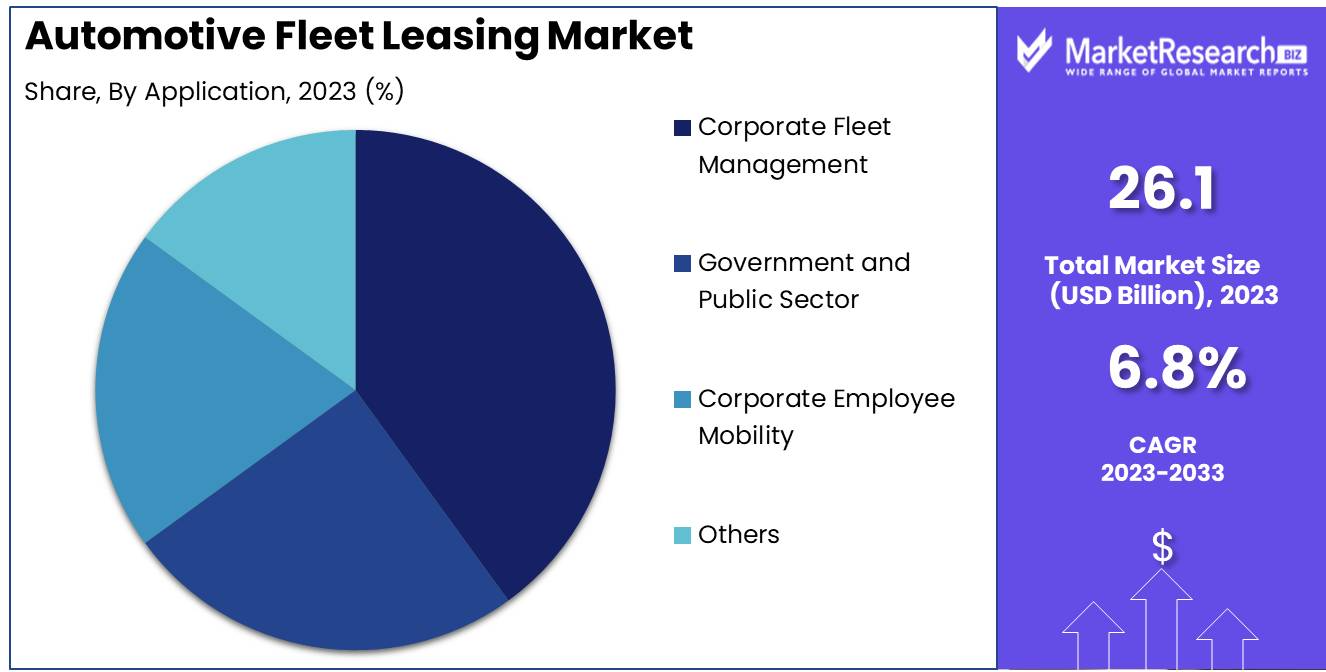
-- By Application: Corporate Fleet Management accounts for 40%, highlighting the importance of efficient fleet operations in reducing operational costs and enhancing service quality.
-- By End-User: The Logistics and Transportation sector is a notable end-user, making up 25% of the market, driven by the need for reliable and cost-effective vehicle solutions.
-- Regional Dominance: North America leads the market with 38%, supported by well-developed corporate sectors and advanced leasing services.
Use Cases
1. Corporate Vehicle Leasing for Businesses
Companies with large employee travel needs lease fleets of cars, vans, or SUVs instead of purchasing them outright. This helps businesses save costs on maintenance, insurance, and depreciation while ensuring employees have reliable transportation.
2. Ride-Sharing and Taxi Services
Ride-hailing companies like Uber, Lyft, and local taxi services lease vehicles for their drivers. Fleet leasing allows them to access a range of well-maintained vehicles without high upfront investment, keeping their operations scalable and efficient.
3. Government and Public Sector Fleets
Government agencies lease police cars, ambulances, and official vehicles for public services. This reduces the financial burden of purchasing large vehicle fleets while ensuring regular maintenance and replacements for optimal performance.
4. Logistics and Delivery Services
E-commerce companies, courier services, and food delivery businesses lease fleets of trucks, vans, or two-wheelers to handle deliveries efficiently. Leasing provides flexibility, especially for seasonal demand spikes like holiday shopping periods.
5. Electric Vehicle (EV) Fleet Leasing
As companies move toward sustainability, many are opting for leased electric fleets to reduce emissions. EV leasing helps businesses test green initiatives without the long-term financial commitment of purchasing expensive electric vehicles.
Driving Factors
1. Cost-Effectiveness and Budget Management: Leasing allows businesses to manage their budgets better by reducing upfront costs associated with purchasing vehicles. The predictability of monthly lease payments helps companies in financial planning and fleet management.
2. Shift Towards Greener Technologies: With increasing environmental awareness, fleets are transitioning to electric and hybrid vehicles to reduce carbon footprints. Fleet leasing companies are adapting by offering a range of eco-friendly vehicles, which is attractive to corporates aiming to meet sustainability goals.
3. Growth in SME Sector: The expansion of the small and medium enterprise (SME) sector globally is driving the demand for fleet leasing. SMEs often find leasing a viable option as it allows access to a modern fleet without the high capital outlay, aiding in their growth and operational efficiency.
4. Technological Advancements in Fleet Management: The integration of advanced technologies like GPS tracking, telematics, and automated fleet management software in leased vehicles enhances their appeal. These technologies help businesses in monitoring and managing their fleets more efficiently, thereby driving the leasing market.
5. Regulatory and Economic Uncertainties: Businesses face uncertainties due to changing economic conditions and regulatory environments, influencing them to opt for fleet leasing over ownership as it offers flexibility and reduces the risks associated with asset depreciation and resale.
Report Segmentation
By Vehicle Type
• Passenger Vehicles
• Commercial Vehicles
• Light Commercial Vehicles (LCV)
• Heavy Commercial Vehicles (HCV)
• Others
By Leasing Model
• Open-Ended Leases
• Closed-Ended Leases
By Application
• Corporate Fleet Management
• Government and Public Sector
• Corporate Employee Mobility
• Others
By End-User
• Construction and Infrastructure
• Healthcare and Pharmaceuticals
• Logistics and Transportation
• Retail and E-commerce
• Others
Ready to Act on Market Opportunities? Buy Your Report Now and Get 30% off: https://marketresearch.biz/purchase-report/?report_id=7341
Regional Analysis
North America leads the automotive fleet leasing market with a commanding 38% share, supported by a robust corporate sector and advanced leasing services. The region’s market dominance is facilitated by a well-established corporate culture that heavily utilizes leased vehicles for business operations, including sales fleets, service fleets, and executive transportation. North American companies are increasingly adopting fleet leasing due to its cost-efficiency, lower upfront investments, and tax advantages.
Additionally, the presence of mature leasing companies offering technologically advanced and flexible leasing solutions enhances this trend. These companies are integrating telematics, fleet management software, and data analytics to improve the efficiency of fleet operations. The push towards more sustainable practices is also evident, with an increase in leasing electric and hybrid vehicles as businesses aim to reduce their carbon footprint. With economic growth and the continuous evolution of corporate mobility needs, the fleet leasing market in North America is poised for sustained growth.
Growth Opportunities
Electric Vehicle (EV) Leasing
As businesses aim to reduce their carbon footprint, the demand for leased electric vehicles is growing. Fleet leasing companies can offer attractive EV leasing plans with charging infrastructure support.
Subscription-based Car Leasing
Flexible leasing options, where businesses and individuals can swap or upgrade vehicles without long-term commitments, are gaining popularity. Companies can introduce subscription-based fleet leasing for different industries.
Telematics and Fleet Management Technology
The integration of GPS tracking, AI-based maintenance alerts, and fuel efficiency monitoring in leased fleets can add value for businesses, improving operational efficiency and safety.
Expansion into Small and Medium Enterprises (SMEs)
Traditionally, large corporations lease vehicle fleets, but SMEs are now exploring this option to manage costs. Offering customized leasing plans for startups and small businesses can unlock new opportunities.
Leasing of Autonomous and Connected Vehicles
As self-driving technology advances, businesses will look for leasing options for autonomous commercial fleets. Leasing companies can prepare by investing in connected and semi-autonomous vehicle fleets.
Key Players
• ARI (Automotive Resources International)
• AutoFlex AFV
• Caldwell Leasing (also known as Caldwell Fleet Solutions)
• Glesby Marks
• Jim Pattison Lease
• LeasePlan Corporation N.V.
• PRO Leasing Services
• Sixt Leasing SE
• Velcor Leasing Corporation
• Wheels, Inc.
• Ayvens
• Enterprise Fleet Management
• Alphabet Inc.
• Arval
• ALD Automotive
Not Sure? Request a Sample Report and See How Our Insights Can Drive Your Business: https://marketresearch.biz/report/automotive-fleet-leasing-market/request-sample/
Conclusion
In conclusion, the markets analyzed are all experiencing growth driven by evolving consumer preferences, technological advancements, and increasing demand for customized, high-quality products. Key trends, such as the adoption of sustainable practices, integration of smart technologies, and rising disposable incomes, are shaping the competitive landscape. While challenges such as market saturation, price sensitivity, and regional differences persist, opportunities abound for companies to capitalize on niche segments, leverage digital platforms, and innovate to meet the specific needs of their target audiences. As these industries continue to expand, businesses that adapt to changing trends, prioritize customer-centric strategies, and invest in innovation will be well-positioned for long-term success.
Related Report
Autonomous Vehicles Market: https://marketresearch.biz/report/autonomous-vehicles-market/
Automotive Transparent Antenna Market: https://marketresearch.biz/report/automotive-transparent-antenna-market/
Hydraulic Hose Market: https://marketresearch.biz/report/hydraulic-hose-market/
Truck Drum Brake Market: https://marketresearch.biz/report/truck-drum-brake-market/
Train Seat Market: https://marketresearch.biz/report/train-seat-market/
Tower Crane Market: https://marketresearch.biz/report/tower-crane-market/
Lawrence John
Prudour
+91 91308 55334
Lawrence@prudour.com
Legal Disclaimer:
EIN Presswire provides this news content "as is" without warranty of any kind. We do not accept any responsibility or liability for the accuracy, content, images, videos, licenses, completeness, legality, or reliability of the information contained in this article. If you have any complaints or copyright issues related to this article, kindly contact the author above.
