
Analgesics Market Size, Growth, Industry Trends and to Expected Reach USD 48 Billion by 2030
Analgesics Market
Analgesics Market Shows Exponential Growth, Driven by Rising Prevalence of Chronic Pain and Advancements in Pain Management
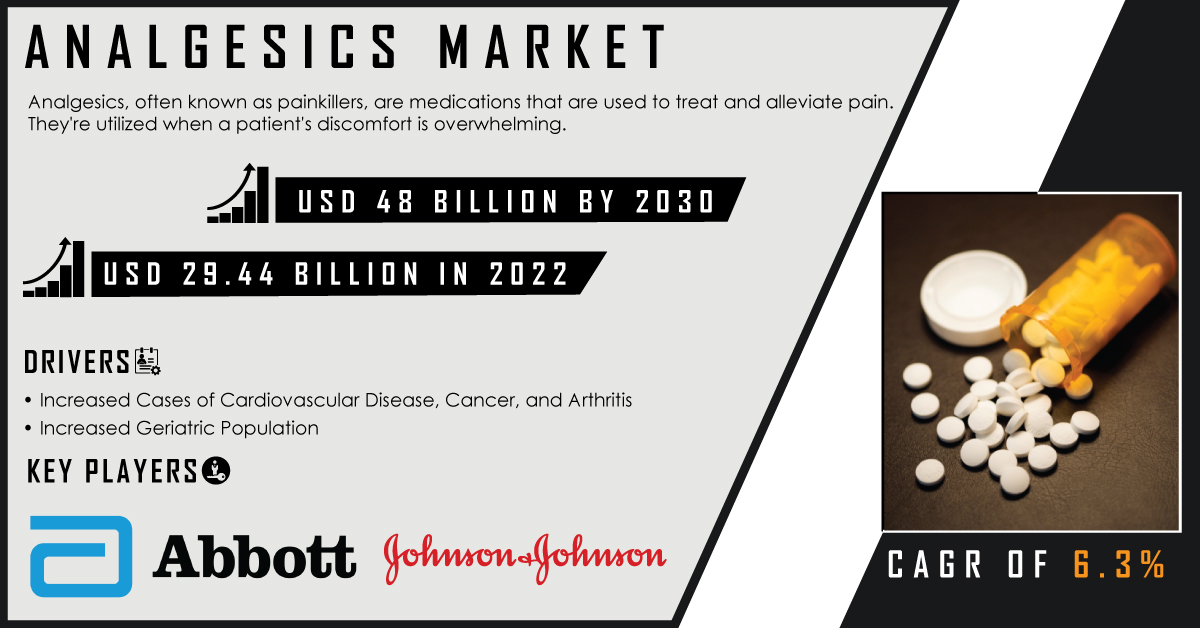
AUSTIN, TEXAS, UNITED STATES, May 21, 2024 /EINPresswire.com/ -- The global Analgesics Market Size, valued at USD 29.44 billion in 2022, is projected to experience substantial growth, reaching USD 48 billion by 2030. This impressive expansion, at a compound annual growth rate (CAGR) of 6.3% over the forecast period from 2023 to 2030, is fueled by the rising prevalence of chronic pain, advancements in pain management therapies, and increasing awareness of pain relief options.Analgesics, commonly known as painkillers, are medications designed to alleviate pain without causing loss of consciousness. They play a critical role in managing both acute and chronic pain conditions, improving the quality of life for millions of patients worldwide. The market encompasses a wide range of products, including nonsteroidal anti-inflammatory drugs (NSAIDs), opioids, and acetaminophen.
"The analgesics market is poised for significant growth as the burden of chronic pain increases and new, more effective pain management therapies are developed," said Dr. Susan Hamilton, Chief Medical Officer at Pain Relief Innovations. "Advancements in analgesic formulations and delivery methods are providing better pain control with fewer side effects."
Download Free Sample Report of Analgesics Market @ https://www.snsinsider.com/sample-request/1290
List of Analgesics Companies Profiled in Report:
• Abbott
• AbbVie Inc.
• Assertio Holdings, Inc.
• Bausch Health Companies Inc.
• Bayer AG
• Eli Lilly and Company
• Endo International plc
• endo pharmaceuticals
• F. Hoffmann-La Roche AG
• GlaxoSmithKline plc
• Janssen Global Services, LLC
• Johnson and johnson
• Merck & Co. Inc.
• Novartis AG
• Pfizer Inc.
• Purdue Pharma L.P.
• Reckitt Benckiser Group
• Sanofi
• Teva Pharmaceutical Industries Ltd.
• Viatris Inc.
(To view Full list of companies, Ask for Sample Report)
Rising Prevalence of Chronic Pain
The increasing prevalence of chronic pain conditions, such as arthritis, cancer, and neuropathic pain, is a major driver of the analgesics market. Chronic pain affects a significant portion of the global population, leading to reduced quality of life and increased healthcare utilization. As populations age and the incidence of chronic diseases rises, the demand for effective pain relief medications is growing. Chronic pain management is a complex and multifaceted challenge, requiring a combination of pharmacological and non-pharmacological approaches. Analgesics remain a cornerstone of pain management, offering relief for patients suffering from persistent pain conditions.
"The rising prevalence of chronic pain is driving demand for effective analgesic therapies," noted Dr. Hamilton. "As populations age and chronic diseases become more common, the need for reliable pain relief options is increasing."
Advancements in Pain Management Therapies
Technological advancements and innovations in pain management therapies are significantly enhancing the effectiveness of analgesics. New drug formulations, such as extended-release and abuse-deterrent opioids, are providing improved pain control while minimizing the risk of addiction and abuse. Additionally, novel delivery methods, including transdermal patches and intranasal sprays, are offering more convenient and targeted pain relief. Research in pain biology and pharmacology is leading to the development of new classes of analgesics that target specific pain pathways. For example, biologic therapies and personalized medicine approaches are emerging as promising avenues for treating chronic pain conditions with greater precision and efficacy.
"Advancements in pain management therapies are transforming the analgesics market," stated Dr. Hamilton. "Innovative formulations and delivery methods are improving patient outcomes and addressing concerns about opioid misuse."
Increasing Awareness of Pain Relief Options
Increasing awareness of pain relief options and the importance of pain management is contributing to market growth. Public health campaigns, educational initiatives, and advocacy by professional organizations are raising awareness about the availability and benefits of analgesics. This heightened awareness is encouraging more patients to seek treatment for their pain conditions and adhere to prescribed pain management regimens. Healthcare providers are also becoming more attuned to the need for comprehensive pain management, incorporating analgesics as part of a multidisciplinary approach to pain treatment. This holistic perspective is leading to better pain control and improved patient satisfaction.
"The increasing awareness of pain relief options is driving the growth of the analgesics market," emphasized Dr. Hamilton. "Patients and healthcare providers are recognizing the importance of effective pain management in enhancing quality of life."
Check Discount on This Report @ https://www.snsinsider.com/discount/1290
Regional Insights
North America currently dominates the analgesics market, driven by a well-established healthcare infrastructure, high prevalence of chronic pain conditions, and significant investments in pain management research. The United States, in particular, is a major contributor to market growth, with numerous leading pharmaceutical companies and research institutions developing advanced analgesic therapies.
The Europe and Asia-Pacific regions are also expected to witness significant growth during the forecast period. Factors such as increasing healthcare expenditure, rising awareness of pain management options, and the adoption of advanced analgesic therapies are driving market expansion in these regions. The Asia-Pacific region, in particular, is experiencing rapid growth due to the increasing number of patients with chronic pain and improving access to healthcare services.
"North America leads the market, but Europe and Asia-Pacific are emerging as significant growth areas," noted Dr. Hamilton. "Increased healthcare investments and technological adoption are driving market growth in these regions."
Market Challenges and Opportunities
Despite the promising outlook, the analgesics market faces challenges such as regulatory scrutiny, concerns about opioid misuse, and the need for effective pain management in underserved populations. Addressing these challenges requires robust regulatory frameworks, enhanced patient education, and the development of non-opioid analgesic alternatives.
However, these challenges also present opportunities for innovation and growth. Companies are investing in research and development to create safer and more effective analgesics. Additionally, strategic partnerships and collaborations are essential for advancing the field and expanding market reach.
Key Takeaways:
- The global analgesics market is projected to grow from $29.44 billion in 2022 to $48 billion by 2030, at a CAGR of 6.3%.
- The rising prevalence of chronic pain and advancements in pain management therapies are driving market growth.
- Increasing awareness of pain relief options is contributing to market expansion.
- North America currently leads the market, with significant growth expected in Europe and Asia-Pacific regions.
- Challenges such as regulatory scrutiny and concerns about opioid misuse present opportunities for innovation and collaboration.
As the analgesics market continues to evolve, driven by the increasing prevalence of chronic pain, advancements in pain management therapies, and growing awareness of pain relief options, it holds significant potential for improving the lives of individuals suffering from pain conditions. Industry stakeholders are well-positioned to capitalize on these trends, delivering innovative and effective analgesic solutions that meet the evolving needs of patients and healthcare providers alike.
Have Any Query? Ask Our Experts @ https://www.snsinsider.com/enquiry/1290
Table of Content
Chapter 1 Introduction
Chapter 2 Research Methodology
Chapter 3 Analgesics Market Dynamics
Chapter 4 Impact Analysis (COVID-19, Ukraine- Russia war, Ongoing Recession on Major Economies)
Chapter 5 Value Chain Analysis
Chapter 6 Porter’s 5 forces model
Chapter 7 PEST Analysis
Chapter 8 Analgesics Market Segmentation, By Type
Chapter 9 Analgesics Market Segmentation, By Drug type
Chapter 10 Analgesics Market Segmentation, By Route of Administration type
Chapter 11 Analgesics Market Segmentation, By Pain Type
Chapter 12 Analgesics Market Segmentation, By Application type
Chapter 13 Regional Analysis
Chapter 14 Company profile
Chapter 15 Competitive Landscape
Chapter 16 Use Case and Best Practices
Chapter 17 Conclusion
Continued…
Akash Anand
SNS Insider Pvt. Ltd
+1 415-230-0044
email us here
Visit us on social media:
Facebook
Twitter
LinkedIn
Instagram
YouTube
Legal Disclaimer:
EIN Presswire provides this news content "as is" without warranty of any kind. We do not accept any responsibility or liability for the accuracy, content, images, videos, licenses, completeness, legality, or reliability of the information contained in this article. If you have any complaints or copyright issues related to this article, kindly contact the author above.
