
Passenger Information System Market Flourishes Owing to Initiatives to Modernize Transportation Infrastructure
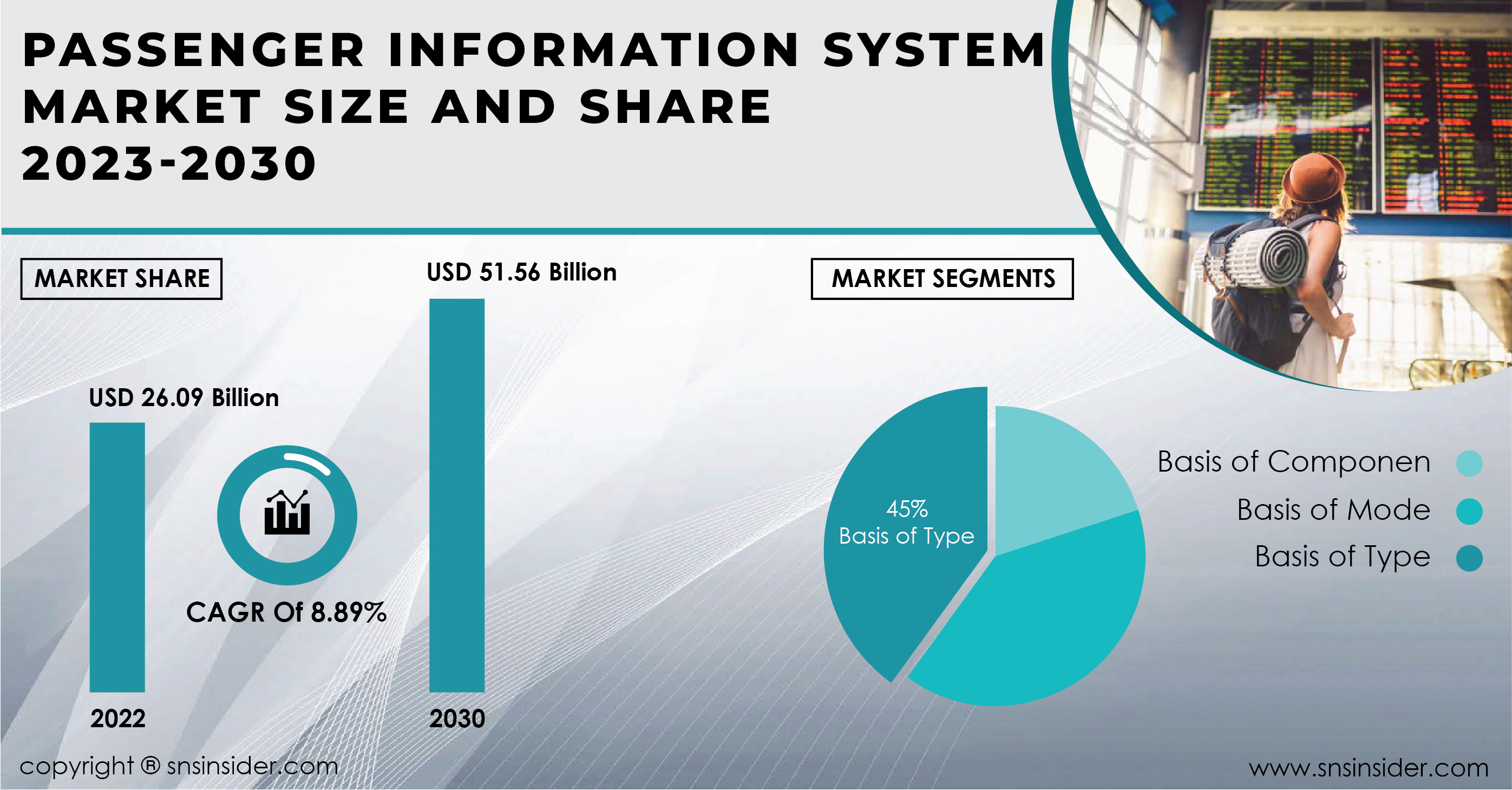
Passenger Information System Market Report
Increasing demand for real-time travel information and enhanced passenger experience drives the growth of the Passenger Information System Market.
Government initiatives to modernize transportation infrastructure and improve public transit services propel the Passenger Information System Market, fostering market expansion.”
AUSTIN, TEXAS, UNITED STATES, April 8, 2024 /EINPresswire.com/ -- Market Report Scope & Overview— SNS Insider Research
The Passenger Information System Market has witnessed remarkable growth and evolution in recent years, propelled by advancements in technology and the rising demand for enhanced travel experiences. PIS encompasses a range of solutions and services designed to provide real-time information to passengers regarding transit schedules, routes, delays, and other relevant travel details across various modes of transportation, including railways, buses, airports, and metro systems. This industry's scope extends beyond merely conveying information; it encompasses the seamless integration of data analytics, communication technologies, and user-friendly interfaces to optimize passenger satisfaction, operational efficiency, and safety within the transportation network.
Pivotal drivers propelling the passenger information system market is the growing urbanization and the subsequent increase in commuter traffic, leading to a greater need for efficient and reliable transit services. Moreover, the proliferation of smartphones and digital devices has revolutionized how passengers interact with transportation systems, fostering the demand for intuitive mobile applications and digital platforms for accessing real-time travel information. Additionally, regulatory mandates emphasizing passenger safety and accessibility standards further stimulate investments in advanced PIS solutions worldwide.
Get a Report Sample of Passenger Information System Market @ https://www.snsinsider.com/sample-request/2524
Some of the Major Key Players Studied in this Report are:
➤ Alstom
➤ Cubic Corporation
➤ Hitachi
➤ Indra Sistemas Sa
➤ Mitsubishi Electric Corporation
➤ Siemens
➤ Singapore Technologies Electronics
➤ Teleste Corporation
➤ Thales Group
➤ Toshiba Corporation
➤ Wabtec Corporation
➤ Other Players
Rising Demand for Enhanced Passenger Experience Propels Growth in Passenger Information System Market
The passenger information system market is poised for substantial growth in the coming years, driven by several key factors. One of the primary growth drivers is the increasing demand for enhanced passenger experience and satisfaction across various modes of transportation, including railways, roadways, and air travel. With the rising adoption of digital technologies and the Internet of Things (IoT), there has been a significant shift towards the integration of advanced PIS solutions to provide real-time information to passengers regarding schedules, delays, route changes, and other pertinent travel details. This integration not only improves the overall efficiency of transportation networks but also enhances passenger convenience and safety, thereby fostering market growth.
Stringent government regulations mandating the implementation of PIS to ensure passenger safety and security further contribute to passenger information system market expansion. Governments worldwide are increasingly focusing on improving public transportation infrastructure and services, which necessitates the deployment of sophisticated PIS solutions. Additionally, the growing urbanization and rapid expansion of smart cities are driving the adoption of intelligent transportation systems, thereby fueling the demand for passenger information systems. However, despite the promising growth prospects, the market faces certain restraints, including high installation costs, interoperability issues, and privacy concerns.
Opportunities for Passenger Information System Market Growth
The Passenger Information System (PIS) Market is poised for significant growth, driven by a myriad of opportunities that arise from evolving consumer expectations, technological advancements, and urbanization trends.
➤ Enhanced Passenger Experience: With an increasing focus on enhancing the overall passenger experience, there is a growing demand for advanced PIS solutions that provide real-time information, including arrival and departure updates, platform changes, and service disruptions. Opportunities lie in deploying user-friendly interfaces, such as mobile apps and digital signage, to deliver personalized and context-aware information to passengers, thereby improving satisfaction and loyalty.
➤ Integration with Smart City Initiatives: As cities worldwide embrace the concept of smart cities, there is a pressing need to integrate transportation systems seamlessly into urban landscapes. PIS vendors have the opportunity to collaborate with city authorities and transportation agencies to deploy integrated systems that provide passengers with not only transit information but also connectivity with other modes of transportation, such as buses, trams, and ride-sharing services. This integration fosters multimodal mobility and promotes sustainable urban living.
➤ IoT and Connectivity Advancements: The proliferation of Internet of Things (IoT) devices and advancements in connectivity technologies present opportunities for PIS vendors to deploy innovative solutions. By leveraging IoT sensors, GPS tracking, and wireless communication technologies, PIS can offer real-time insights into passenger flow, occupancy levels, and vehicle statuses. This data-driven approach enables transit operators to optimize service routes, improve operational efficiency, and enhance safety and security measures.
➤ Accessibility and Inclusivity: There is a growing emphasis on ensuring accessibility and inclusivity in public transportation systems. PIS vendors can seize opportunities by developing solutions that cater to the needs of diverse passenger demographics, including elderly individuals, people with disabilities, and non-native language speakers. Features such as voice-guided announcements, multilingual interfaces, and audiovisual alerts for passengers with sensory impairments contribute to creating a more inclusive transit environment.
➤ Emergence of AI and Predictive Analytics: The integration of artificial intelligence (AI) and predictive analytics holds promise for the PIS Market. By leveraging machine learning algorithms and data analytics techniques, PIS solutions can anticipate passenger demand, predict service disruptions, and optimize operational workflows. This proactive approach enables transit operators to mitigate delays, reduce congestion, and deliver a more reliable and efficient transportation experience.
➤ Monetization Opportunities: Beyond enhancing passenger experience, PIS solutions offer avenues for revenue generation through targeted advertising, sponsorships, and partnerships. By leveraging passenger data and location-based services, transit operators can deliver targeted advertisements and promotional offers to passengers, creating new revenue streams while offsetting operational costs.
In conclusion, the Passenger Information System Market is ripe with opportunities for growth, driven by the convergence of technology, urbanization trends, and evolving passenger expectations. By embracing innovation, collaboration, and a customer-centric approach, PIS vendors can capitalize on these opportunities to deliver value-added solutions and drive the transformation of public transportation systems worldwide.
Market Segmentation and Sub-Segmentation Included Are:
On The Basis of Component:
➤ Solution: This category encompasses the hardware and software components that form the core infrastructure of the PIS. It includes information management systems, communication devices, displays, sensors, and backend analytics platforms.
➤ Services: Services play a vital role in the implementation, customization, integration, and maintenance of PIS solutions. This category includes consulting, installation, training, support, and managed services provided by vendors and system integrators.
On The Basis of Type:
➤ Information Display System: These systems include digital signage, LED/LCD displays, and electronic boards installed at transportation hubs, terminals, and vehicles. They relay real-time information such as schedules, routes, delays, and safety instructions to passengers.
➤ Announcement System: Announcement systems deliver auditory messages, including station announcements, arrival and departure updates, emergency alerts, and safety instructions. These systems are essential for ensuring clear and timely communication with passengers.
➤ Infotainment System: Infotainment systems offer passengers access to entertainment content, news updates, advertisements, and interactive features during their journey. These systems enhance the overall passenger experience and engagement.
➤ Passenger Information Mobile Solutions: Mobile applications provide passengers with on-the-go access to transit information, ticketing services, route planning, and real-time updates. These apps offer convenience and empower passengers to make informed travel decisions.
➤ Others: This category may include emerging PIS technologies and innovative solutions that cater to specific passenger needs or transportation modes.
On The Basis of Mode:
➤ Airway & Waterway: This segment covers passenger information systems deployed in airports, seaports, and other air and water transportation facilities. It includes solutions for flight and vessel tracking, gate information, baggage handling, and passenger services.
➤ Railway: Railway PIS solutions are tailored for train stations, platforms, and onboard trains. They provide passengers with train schedules, platform assignments, seat availability, route maps, and safety announcements.
➤ Roadway: Roadway PIS solutions cater to bus terminals, transit stops, and public transportation vehicles such as buses and trams. They deliver route information, arrival times, fare details, service alerts, and navigation assistance to passengers.
Impact of Recession
Amidst the ongoing recession, the passenger information system market experiences a mixed bag of impacts, showcasing both positive and negative repercussions. On one hand, the recession tends to tighten budget allocations across various sectors, including transportation. This could potentially lead to a decrease in investments towards passenger information systems as authorities prioritize essential expenditures. Conversely, recessions often stimulate innovations aimed at cost-cutting measures and efficiency improvements. In the transportation sector, this could translate to heightened interest in passenger information systems that streamline operations, enhance customer experience, and optimize resource allocation.
Impact of Russia-Ukraine War
The Russia-Ukraine War casts a shadow of uncertainty over the passenger information system market, presenting a complex blend of positive and negative implications. On the negative side, geopolitical tensions and disruptions in supply chains may hinder the manufacturing and distribution of components crucial to passenger information systems, potentially leading to delays and increased costs. Moreover, heightened geopolitical risks could dampen investor confidence and slow down infrastructure projects, impacting the adoption of passenger information systems. However, amidst these challenges, there are also opportunities emerging. With an increased focus on security and surveillance in transportation systems, there could be a surge in demand for advanced passenger information systems equipped with features such as real-time monitoring and threat detection.
Get a Discount @ https://www.snsinsider.com/discount/2524
Regional Analysis
In the regional analysis of the passenger information system market, a nuanced understanding of geographical dynamics is imperative. Different regions exhibit varying levels of infrastructure development, technological adoption, regulatory frameworks, and consumer preferences, all of which shape the demand for passenger information systems. Developed regions such as North America and Europe typically boast robust transportation networks and a high degree of digitalization, driving significant demand for advanced passenger information systems to enhance efficiency and passenger experience. In contrast, emerging economies in Asia-Pacific and Latin America are witnessing rapid urbanization and infrastructure expansion, creating fertile ground for the adoption of passenger information systems to address growing transportation needs.
Conclusion
The latest report by SNS Insider delves into the multifaceted landscape of the passenger information system market, covering key trends, challenges, and opportunities shaping the industry's trajectory. Through comprehensive market analysis and insightful forecasts, the report provides stakeholders with actionable insights to navigate the evolving market landscape effectively.
Buy the Latest Version of this Report @ https://www.snsinsider.com/checkout/2524
Table of Contents- Major Key Points
1. Introduction
2. Research Methodology
3. Market Dynamics
3.1. Drivers
3.2. Restraints
3.3. Opportunities
3.4. Challenges
4. Impact Analysis
4.1. COVID-19 Impact Analysis
4.2. Impact of Ukraine- Russia war
4.3. Impact of Ongoing Recession on Major Economies
5. Value Chain Analysis
6. Porter’s 5 Forces Model
7. PEST Analysis
8. Passenger Information System Market Segmentation, by Component
8.1. Solution
8.2. Services
9. Passenger Information System Market Segmentation, by Type
9.1. Information Display System
9.2. Announcement System
9.3. Infotainment System
9.4. Passenger Information Mobile Solutions
9.5. Others
10. Passenger Information System Market Segmentation, by Mode
10.1. Airway & Waterway
10.2. Railway
10.3. Roadway
11. Regional Analysis
11.1. Introduction
11.2. North America
11.3. Europe
11.4. Asia-Pacific
11.5. The Middle East & Africa
11.6. Latin America
12. Company Profile
13. Competitive Landscape
13.1. Competitive Benchmarking
13.2. Market Share Analysis
13.3. Recent Developments
14. USE Cases and Best Practices
15. Conclusion
About Us
SNS Insider is one of the leading market research and consulting agencies that dominates the market research industry globally. Our company's aim is to give clients the knowledge they require in order to function in changing circumstances. In order to give you current, accurate market data, consumer insights, and opinions so that you can make decisions with confidence, we employ a variety of techniques, including surveys, video talks, and focus groups around the world.
Our staff is dedicated to giving our clients reliable information, and with expertise working in the majority of industrial sectors, we're proud to be recognized as one of the world's top market research firms. We can quickly design and implement pertinent research programs, including surveys and focus groups, and we have the resources and competence to deal with clients in practically any company sector.
Akash Anand
SNS Insider | Strategy and Stats
+1 415-230-0044
email us here
Visit us on social media:
Facebook
Twitter
LinkedIn
Instagram
YouTube
Legal Disclaimer:
EIN Presswire provides this news content "as is" without warranty of any kind. We do not accept any responsibility or liability for the accuracy, content, images, videos, licenses, completeness, legality, or reliability of the information contained in this article. If you have any complaints or copyright issues related to this article, kindly contact the author above.
