
FDA Took 25 Years to Ban Painful Behavioral Shock Device Use Watchdog Says
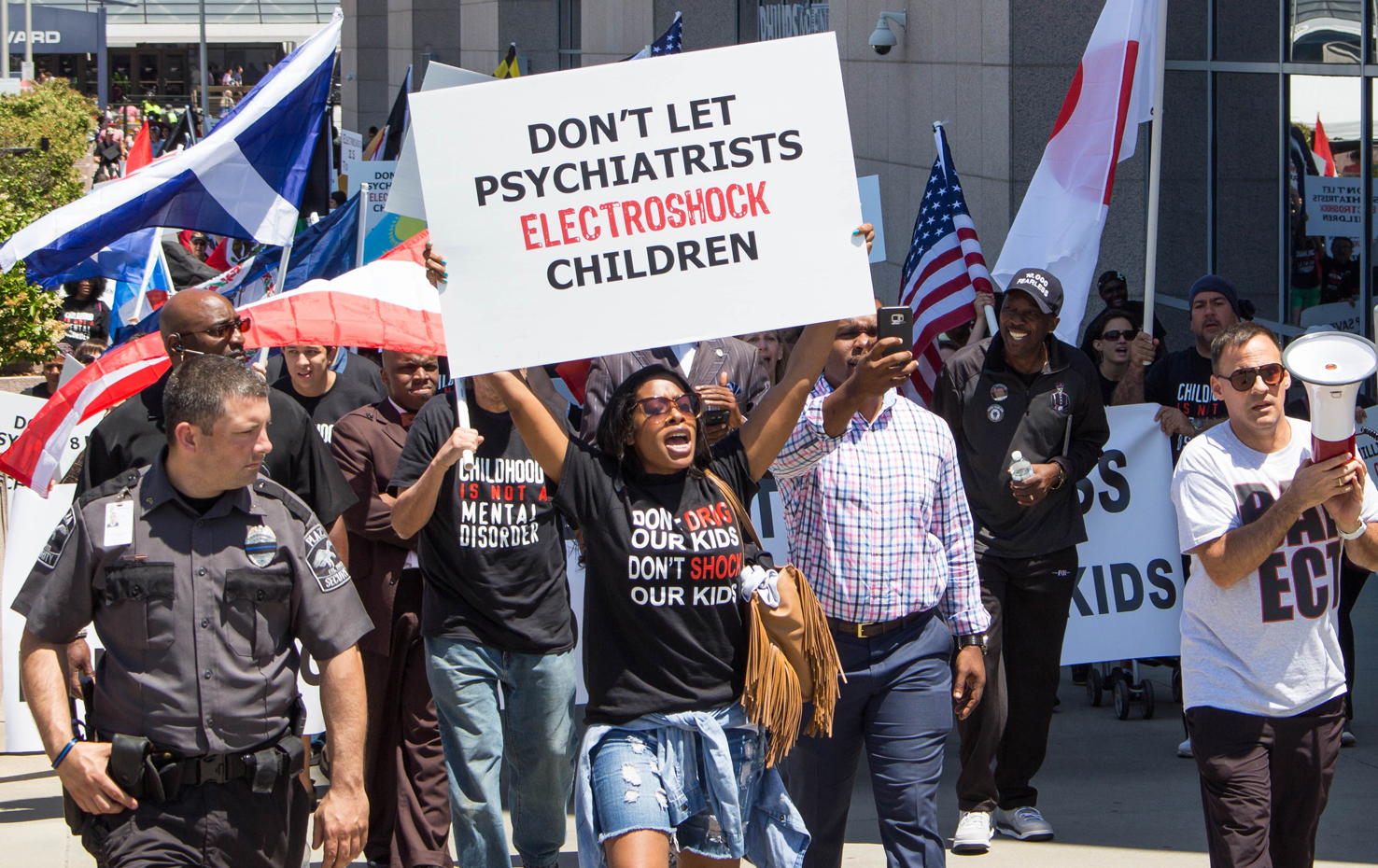
The FDA has banned the use of a painful and harmful “aversion therapy” device on the intellectually disabled but keeps a damaging electroshock device on the market that shocks and harms 5 to 95 year olds
The FDA banned the use of a painful and harmful “aversion therapy” device on the intellectually disabled but keeps a damaging electroshock device on the market
LOS ANGELES, CALIFORNIA, UNITED STATES, March 10, 2020 /EINPresswire.com/ -- After decades of controversy and United Nations allegations of torture, the Food and Drug Administration (FDA) has banned a shock device used on individuals with intellectual disabilities, largely at the Judge Rotenberg Center (JRC) in Massachusetts. On March 4, the FDA issued a Final Rule banning the use of electrical stimulation devices (ESDs) for use in aversive practices, which involves inflicting pain to condition behavior. After 25 years, the FDA finally admitted that the device they had approved in 1994 could cause pain, skin burns, trauma, and tissue damage among other serious risks, warranting a ban.[1]
A victory for patients’ rights and for the disabilities rights groups and legislators that have fought hard to ban the practice, the Citizens Commission on Human Rights International (CCHR) said the FDA’s handling of this was appalling: “It took over 20 years for the FDA to do the right thing. Let’s not wait another two more decades for them to figure out that electroshock ‘treatment,’ used on 100,000 Americans, including children and the elderly, is far, far worse.”
JRC’s Graduated Electronic Decelerator (GED) was FDA classified as an Aversive Conditioning Device.[2] FDA stated that researchers considered pain or discomfort to be an indicator of “effectiveness.”[3] But Jan Eastgate, international president of CCHR, said” “This rationale is as absurd as the idea that inducing a grand mal seizure through electroconvulsive therapy, or ECT, is ‘effective’ treatment for mental disorder.”
With ESD, electrodes are attached to the arms, legs, or stomachs of students and emit 60 volts and 15 milliamps of electricity in two-second bursts—sometimes up to 77 times a day. It was refined and patented by Matthew Israel, a Harvard-educated psychologist and co-founder of JRC and the milliamps were increased to 41 and the voltage to 66.[4] Neither the revised GED-3A nor the GED-4 were ever cleared or approved by FDA.[5] “This is testimony to the FDA’s lack of oversight,” Eastgate says.
A member of an FDA advisory panel looking into the GED in 2014 noted that a 20-milliamps shock can cause first-degree burns.[6] In comparison, electroshock treatment (ECT) uses up to 460 volts and about 900 milliamps—nearly 22 times the amps used by ESDs.[7] While any amount of current over 10 milliamps is capable of producing painful to severe shock, currents between 100 and 200 milliamps can be lethal.[8]
“Egregiously, this is what passes as ‘mental health care’ today,” Eastgate states and called for Congressional intervention into how, under the guise of ‘science,’ the FDA repeatedly ignores victims, their families, experts, disability rights groups and individuals, legislators and the UN that were opposed to both ESDs and ECT devices and kept them on the market.”
ESDs can cause suicidality, chronic and acute stress, nightmares, flashbacks of panic and rage, insensitivity to fatigue or pain, and difficulty concentrating.[9] “Trauma becomes more likely, for example, when the recipient does not have control over the shock or has developed a fear of future shocks….,” the FDA’s Final Rule states.[10]
“ECT has the same effect on patients who are forced to undergo it,” Eastgate says. FDA recognizes ECT can cause pain/somatic discomfort; skin burns; physical trauma (including fractures, contusions, injury from falls, dental and oral injury); prolonged or delayed seizures; pulmonary complications; cardiac arrhythmias; heart attack; blood pressure problems, stroke; memory loss; and death.[11] Permanent brain damage is also a risk.[12]
In 2013, the UN Committee against Torture wrote that the use of “skin shocks” to “treat” people with mental disorders or developmental disabilities was “torture.”[13] It called on the US Department of Justice to investigate possible violations of civil rights laws.[14]
In January this year, CCHR wrote to the FDA Commissioner Stephen Hahn seeking his help to execute a ban on ESDs.[15] In February, eight senators signed a letter sent Dr. Hahn requesting immediate action. One of the signatories, Senator Patty Murray stated: “It is unconscionable that in 2020, it is still legal to shock children and adults with disabilities to control behavior.”[16]
Laurie Ahern, president of Disability Rights International, which as exposed JRC’s shock device for many years, said, “Finally, the residents there might find some freedom from horrific pain and fear and live the rest of their lives in peace.”[17]
CCHR says that same peace is needed for all victims of electroshock devices, reiterating that ECT can cause permanent brain and memory loss remains and should also be banned.
CCHR urges people to sign the petition to ban electroshock.
CCHR is the mental health watchdog responsible for more than 180 laws that now protect patients from damaging practices. DONATE to support its work here: www.cchrint.org/cchrint-donate/
References:
[1] “Banned Devices; Electrical Stimulation Devices for Self-Injurious or Aggressive Behavior,” Food and Drug Administration Final Rule, 6 March 2020, Federal Register, 85 FR 13312, www.federalregister.gov/documents/2020/03/06/2020-04328/banned-devices-electrical-stimulation-devices-for-self-injurious-or-aggressive-behavior
[2] Op. cit., www.accessdata.fda.gov/
[3] Op. cit., Federal Register, 85 FR 13312
[4] Paul Kix, “The Shocking Truth,” Boston Magazine, 18 June 2008, www.bostonmagazine.com/articles/2008/06/the-shocking-truth/; “Founder of electric shock autism treatment school forced to quit: Institute uses punishment machine to discipline severely autistic and emotionally disturbed children by giving them electric shocks,” The Guardian, 25 May 2011, www.theguardian.com/world/2011/may/25/electric-shock-autism-treatment-school
[5] “Banned Devices; Proposal To Ban Electrical Stimulation Devices Used To Treat Self-Injurious or Aggressive Behavior,” Food and Drug Administration Proposed Rule, 25 April 2016, Federal Register, 81 FR 24385, www.federalregister.gov/documents/2016/04/25/2016-09433/banned-devices-proposal-to-ban-electrical-stimulation-devices-used-to-treat-self-injurious-or
[6] Op. cit., Federal Register, 85 FR 13312
[7] “Voltage of Electroshock Therapy,” Physics Fact Book, hypertextbook.com/facts/2005/GinaCastellano.shtml; Somatics Thymatron System IV Promotion
[8] www.asc.ohio-state.edu/physics/p616/safety/fatal_current.html
[9] Op. cit., Federal Register, 85 FR 13312
[10] Ibid.
[12] www.thymatron.com/downloads/system_iv_regulatory_update.pdf
[13] Emily Willingham, “Autism Shock Therapy Practiced in US Is Torture, Says UN Official,” Forbes, 8 Mar. 2013, www.forbes.com/sites/emilywillingham/2013/03/08/autism-shock-therapy-is-torture-says-un-official/#388d11c64fc2
[14] Human Rights Council Twenty-second session, Agenda item 3, "Promotion and protection of all human rights, civil, political, economic, social and cultural rights, including the right to development,"
Report of the Special Rapporteur on torture and other cruel, inhuman or degrading treatment or punishment, Juan E. Méndez, Addendum, 4 March 2013, A/HRC/22/53/Add.4, www.ohchr.org/Documents/HRBodies/HRCouncil/RegularSession/Session22/A.HRC.22.53.Add.4_Advance_version.pdf
[15] www.cchrint.org/pdfs/cchr-letter-to-fda-commissioner_13jan2020.pdf
[17] “US bans shock ‘treatment’ on children with special needs at Boston-area school,” The Guardian, 5 Mar. 2020www.theguardian.com/us-news/2020/mar/05/us-bans-electric-shock-treatment-children-boston-area
Amber Rauscher
Citizens Commission on Human Rights
+1 323-467-4242
email us here
Visit us on social media:
Facebook
Twitter
Legal Disclaimer:
EIN Presswire provides this news content "as is" without warranty of any kind. We do not accept any responsibility or liability for the accuracy, content, images, videos, licenses, completeness, legality, or reliability of the information contained in this article. If you have any complaints or copyright issues related to this article, kindly contact the author above.
